
AI in CNC machining is becoming visible in software assistance, manufacturing data workflows, and announced automation demonstrations. For a buyer, the useful question is which task a tool changes and how its output is checked. A faster way to prepare information is not automatically a validated cutting program, a lower quotation, or proof of a supplier's production capability. This analysis reviews official developments available as of September 7, 2026, then translates them into practical questions about industrial part orders. It distinguishes released functions from upcoming demonstrations and does not treat vendor announcements as evidence of industry-wide adoption.
What is changing in AI in CNC machining?
Recent official updates show specific assistance and automation functions, rather than one complete autonomous manufacturing workflow. Buyers should identify the task, the required inputs, and the release status before deciding what an announcement means for a real order.
Autodesk's 2026 Fusion release notes list August 17 additions for natural-language bulk property editing and custom property management through Autodesk Assistant. These are defined data-management functions. They do not, by themselves, establish automatic approval of machining geometry or inspection requirements.
FANUC's September 3 IMTS announcement describes planned demonstrations involving natural-language robot programming and AI-related machining tools. As of this article's research cutoff, the September 14–19 show has not taken place. These statements describe intended exhibits, not results observed by HongKe CNC or evidence that the systems suit every production environment.
Separate assistance, planning, and process authority
An assistant can help organize information without having authority to approve it. Planning software can propose an operation without proving that a machine-specific program is ready to run. Process control can respond to a defined condition without being permitted to change the drawing.
| Claimed application | Useful question | Evidence needed before relying on it |
|---|---|---|
| RFQ or document assistance | Which requirements are extracted and which are assumed? | Review against the controlled files |
| CAM preparation | What stock, tools, fixture, and machine are represented? | A verified route and program review |
| Robot programming assistance | Which movements and exception states are included? | Application-specific validation and operating controls |
| Inspection data assistance | Does it summarize data or make an acceptance decision? | Agreed measurement and disposition rules |
This distinction matters because the word AI can cover different functions in different offers. Ask the supplier to name the actual task instead of repeating the label. The answer may reveal a useful administrative improvement, a promising planning tool, or an application still under evaluation.
A good model still needs a complete part definition
Automation cannot resolve a missing design decision simply by processing the files faster. Material condition, critical tolerances, finish boundaries, and acceptance notes remain necessary inputs. If a tool chooses an interpretation without making it visible, the workflow may become faster at carrying an ambiguity into production.
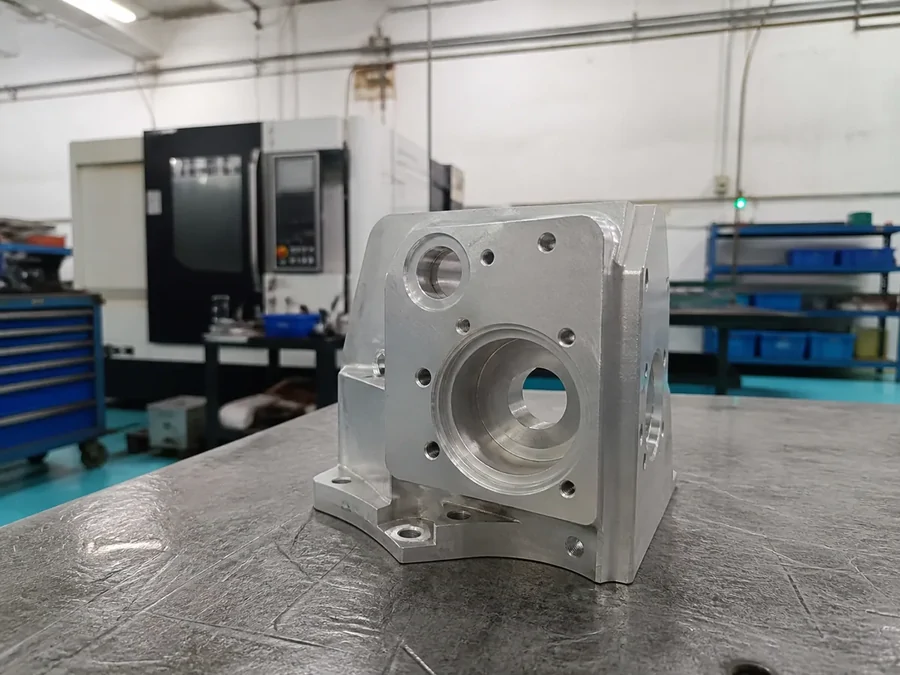
For an aluminum housing, the model may show pockets and bores while the drawing defines datum relationships and protected surfaces. A system that extracts the geometry but omits the finish condition has not captured the whole order. The drawing preparation guide explains the information that needs to travel with the model.
Ask how conflicts and missing requirements are flagged. An effective workflow should preserve the question, identify its owner, and record the accepted answer. It should not turn a suggested value into an approved requirement merely because the value appears in a generated summary.
Judge CAM improvements at the operation level
Evaluate a planning tool by the work it helps prepare and verify. A shorter programming step may be useful, but total preparation also includes stock definition, workholding, tool access, machine compatibility, and inspection planning. The supplier still needs a coherent route.
Autodesk's July 2026 Fusion update introduced 3+2 Clearing with direction selection and fixture-related controls. That is a concrete CAM development, but it should not be relabeled as AI merely because it automates part of planning. Conventional automation and AI assistance can coexist in the same software.
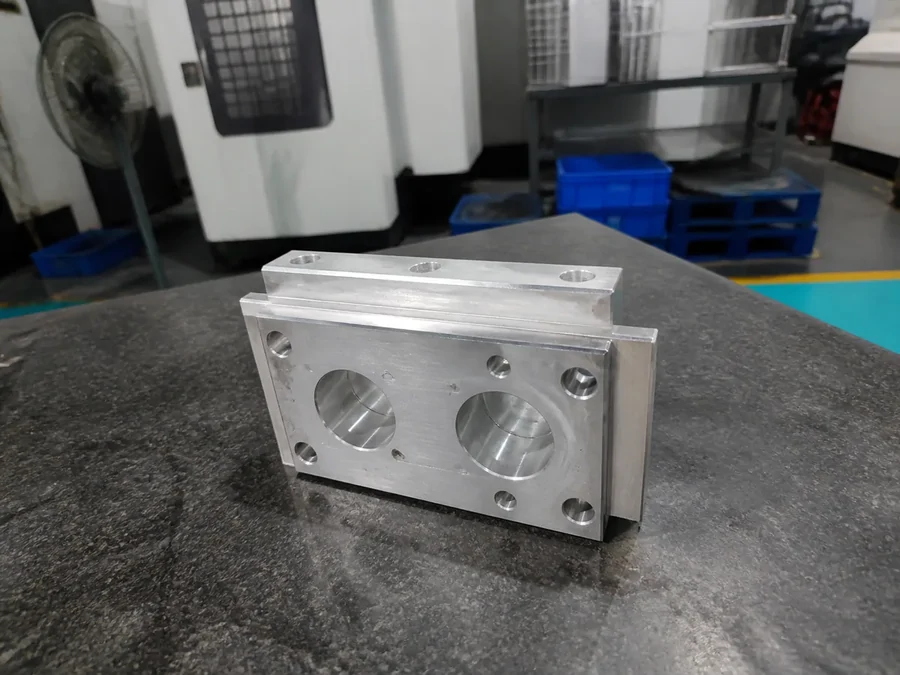
For a multi-face bracket, ask which setups the route removes and how the remaining clamping surfaces are finished. The five-axis service overview provides context for the geometry question. The purchasing benefit should be explained through changed work or evidence, not inferred from the newest software version alone.
Treat data quality as a manufacturing input
Names, revisions, units, material properties, and document relationships affect the reliability of an assisted workflow. If those fields are inconsistent, a system can organize the wrong information efficiently. Establish the controlled source and review the changes that affect the product definition.
For example, a batch property update can be useful for administrative metadata while still requiring care around material or revision fields. A workflow should distinguish a descriptive catalog field from an approved requirement. The people responsible for release need to know which changes occurred and which downstream files or programs depend on them.
This is our engineering interpretation of the workflow issue, not a claim about a particular vendor's internal controls. When evaluating a supplier, ask how the released model, drawing, program, and inspection plan remain connected after an assisted edit or import.
Ask what happens when the suggested result is wrong
A credible evaluation includes exceptions and recovery, not only a successful demonstration. Ask how a wrong feature interpretation, inaccessible tool approach, or inconsistent inspection result is detected. Identify who reviews the issue and how the approved process is restored.
For a new component, a tool may have less relevant context than it has for a stable family of parts. Changes to material, workholding, or geometry can also invalidate assumptions from an earlier job. A supplier should be able to explain the review boundary without claiming that an assistant never makes mistakes.
The quality control overview remains relevant because the finished part still needs agreed evidence. A generated process explanation or polished digital view is not a measurement record. Ask which characteristics are actually checked and how a nonconforming result is handled.
Connect a claimed efficiency gain to the quotation
Ask which activity becomes shorter, more consistent, or easier to review. Programming assistance may reduce preparation effort, while material, machining, finishing, and inspection remain substantial. A time saving in one task does not establish the same percentage saving on the whole order.
Request a part-specific explanation where a supplier claims a commercial benefit. It might involve fewer manual data entries, a reusable planning sequence, or a clearer review process. Keep any numeric estimate tied to the scope and baseline used to calculate it. Do not import a vendor demonstration's percentage into your own production budget.
Also distinguish an existing working method from an intended future investment. A quotation should stand on the process the supplier can actually provide under the order conditions. A planned upgrade can be discussed as a future option, with its assumptions visible.
A practical evaluation sequence for buyers
Begin with one representative component and a defined task. Record the current input package, the expected output, and the decisions that require review. Compare the assisted result with the controlled requirements and the established acceptance plan.
Then examine an exception: a changed revision, a missing finish note, or an unavailable tool. The purpose is to see whether the workflow exposes the issue and returns control to the right person. A successful routine example cannot answer every question about recovery.
Finally, decide whether the result changes supplier selection or only an internal preparation step. Buyers do not need to prescribe a software brand to require coherent files, a credible route, and conforming parts. The process should make those outcomes easier to verify.
Frequently asked questions
Does AI software make a CNC supplier more capable automatically?
No. Capability remains tied to the part, material, workholding, machines, tools, people, and inspection method. Software can assist particular tasks, but the relevant output and its verification need to be identified.
Should buyers require AI in an RFQ?
Usually the useful requirement is the accepted part and necessary evidence. If a specific digital workflow matters to the project, describe its purpose and controls. A broad AI requirement can obscure rather than clarify the deliverable.
Do the 2026 announcements prove lights-out production is universal?
No. The cited materials describe specific released functions and planned exhibits. They do not establish adoption across all shops, suitability for every geometry, or the performance of a particular supplier's installation.
Can an AI-generated report replace inspection results?
No. A summary can organize verified information, but it cannot establish dimensions that were not measured. Acceptance must remain connected to the agreed characteristics, measurement method, and actual records.
Keep the benefit tied to a verifiable task
The useful 2026 development is the availability or announcement of more specific digital functions to evaluate. For a manufacturing review grounded in your part requirements, send HongKe CNC the controlled files and required evidence so the route can be assessed on its actual work and acceptance conditions.