
Robotic CNC machine tending changes how parts move into and out of a machining operation, but its value depends on much more than the loading motion. Workpiece presentation, gripping, seating, chip control, inspection, and recovery must form a usable process. For a buyer of machined components, the question is whether the proposed arrangement supports the part and release schedule, not whether a robot appears in a factory photograph. This article reviews the current announcement context as of September 7, 2026, then explains the product and purchasing questions that turn an automation claim into a meaningful manufacturing discussion.
Why robotic CNC machine tending is worth reviewing in 2026
Recent supplier announcements provide concrete applications to examine, but they do not establish universal adoption or savings. Use the news as a prompt for a part-specific review, while keeping the distinction between a planned exhibit and an operating production arrangement clear.
FANUC's September 3 announcement for IMTS 2026 describes a connected manufacturing demonstration covering machine tending, transport, inspection, and washing. The show is scheduled for September 14–19 and remains upcoming at this article's research cutoff. The announcement does not verify any HongKe installation or predict the economics of an individual buyer's order.
Our practical interpretation is to evaluate the entire handoff around the machine. A visually smooth loading cycle is one step. The process also needs to distinguish ready blanks from completed parts, establish seating, maintain identity, and respond when the expected condition is absent.
Start with the part's gripping and locating surfaces
The workpiece must offer a usable way to be gripped and placed without compromising its required surfaces. A convenient external shape may help, but the actual gripping method depends on mass, balance, surface condition, geometry, and the application's approved design.
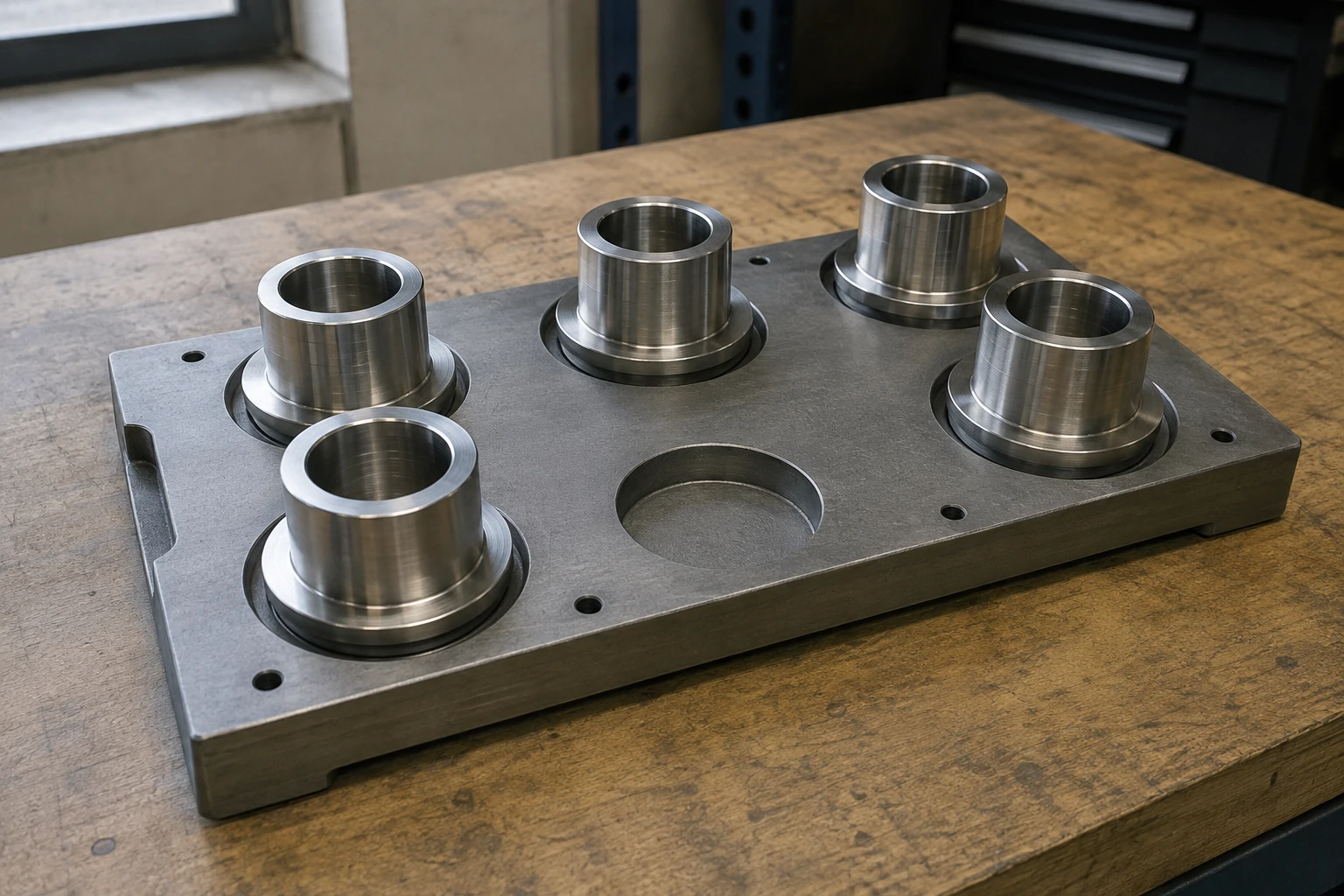
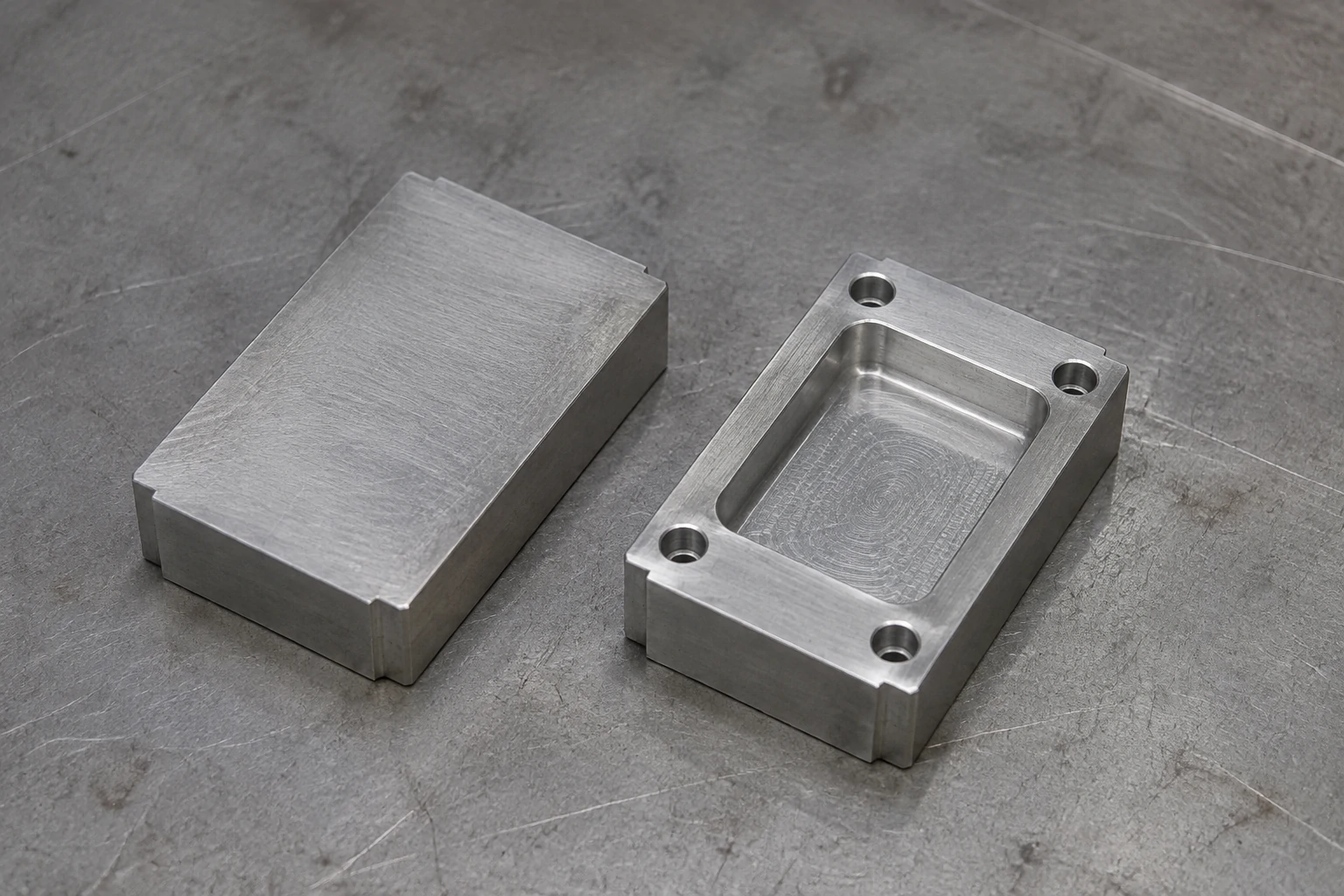
A flanged sleeve may provide an external section for handling while its bore remains a protected interface. A rectangular block may offer parallel faces that simplify presentation. Neither shape proves suitability on its own. The gripper must have access, and the fixture must locate the part consistently after the transfer.
Ask which surfaces are used for gripping, which establish machining location, and which remain functional finished surfaces. If those roles overlap, define acceptable contact and protection. A supplier should not quietly add handling marks to a sealing or cosmetic face because it was the easiest place to hold the component.
Review the tray and fixture as part of the product route
Presentation determines what the loading process can expect at pickup. A tray, nest, or feeder needs to support the intended orientation and distinguish usable stock from an empty or incorrect position. The arrangement should match the component family and changeover requirements.
For an initial evaluation, ask how the process recognizes that a blank is present and seated as intended. Also ask what prevents a finished component from returning to the raw-part position. The method can vary; the important point is that the condition is defined and verified within the proposed application.
The CNC machining overview helps frame the manufacturing sequence. In an automated route, the tray and fixture are not incidental accessories. They can affect stock allowance, available tool access, handling surfaces, and the steps needed to complete the part after the main operation.
Examine the handoffs a demonstration may not show
Useful automation needs defined responses when the expected cycle cannot continue. Buyers should ask about the consequence for part identity, inspection, and delivery. Detailed cell design and operating safety belong to qualified application review; a purchasing article cannot replace that work.
| Handoff | Condition to clarify | Purchasing consequence |
|---|---|---|
| Blank pickup | Missing, wrong, or incorrectly oriented stock | Interrupted production or wrong-part exposure |
| Fixture loading | Seating and clamping confirmation | Potential dimensional or handling problems |
| Machining completion | Tool or process exception | Affected quantity needs identification |
| Unloading | Finished surface protection and destination | Damage, mixing, or loss of status |
| Inspection | Failed or unavailable result | Hold, review, and restart conditions |
An answer should identify the intended response and responsibility rather than promise uninterrupted operation. Exceptions are part of real production. The quality of the recovery plan can matter more than a short demonstration's fastest cycle.
Account for chips, fluid, and surface condition
The handling interface exists in the actual machining environment. Chips or fluid can affect seating and contact, while sharp edges or burrs can affect transfer and later assembly. Ask how the process prepares the relevant surfaces before the next handoff.
For a pocketed block, identify whether debris can remain on the locating face or inside the cavity. For a sleeve, consider which faces contact the tray and fixture. The objective is not to prescribe a cleaning device from a photograph, but to establish the condition the transfer relies on and the step that creates it.
Keep deburring and final cleaning in the quoted scope where required. Automating loading does not make the finished edge requirement disappear. If those operations occur elsewhere, include their handling and status controls in the route rather than ending the process description at machine unload.
Batch size and part mix shape the economics
Automation preparation must be compared with the work it removes over realistic releases. Grippers, nests, fixtures, programs, and validation can require effort before repeat operation begins. A stable component family may support reuse differently from unrelated small batches.
Ask whether the quotation assumes one long production run or repeated changeovers. Identify which parts of the arrangement are reusable and which need adjustment for another revision or geometry. A shared external envelope does not guarantee that two parts have the same mass distribution, gripping surface, or fixture clearance.
The prototype versus production guide explains why a sample route is not automatically the repeat-production route. For a buyer, the relevant comparison includes preparation, changeover, inspection, and actual release quantity. Do not use a vendor's general payback claim as the cost model for an unreviewed part.
Ask where inspection sits in the cycle
Inspection needs a defined relationship to the machining and handling steps. A check before unloading may support process control, while a later check may be needed for the released or finished condition. The correct plan depends on the characteristic being accepted.
For a housing, the critical relationship may involve a bore and mounting surface. For a sleeve, it may involve diameter, length, or a functional fit. Identify the required evidence and whether every part or a defined sample is checked under the agreement. The quality control overview provides the framework for this conversation.
Ask what happens to a part that fails or cannot be measured. It needs an identifiable status and an authorized disposition. A cycle that keeps moving without preserving that distinction can produce an orderly tray whose contents have different acceptance states.
Evaluate the supplier's current arrangement
Distinguish an installed, evaluated route from a proposal or planned investment. A supplier can reasonably offer an engineering development phase, but its deliverables and conditions should be clear. Do not treat a photograph of equipment as confirmation that your component has been reviewed for it.
Request a concise explanation of the intended handling surfaces, fixture concept, release size, inspection, and exception response. For an existing component family, ask what changes for your geometry and revision. For a new arrangement, define what the first evaluation will demonstrate before relying on recurring output assumptions.
The strongest answer connects the robot application to the accepted part and its route. It does not need an unsupported claim about zero labor, zero defects, or unlimited unattended hours. Those slogans obscure the operational conditions a buyer actually needs to understand.
Frequently asked questions
Does robotic loading guarantee a lower piece price?
No. Compare preparation, changeover, handling, machining, and inspection at the intended release quantity. A robot can remove specific work, but its application also needs suitable tooling and validation. The net result is part-specific.
Must a part be redesigned for machine tending?
Not always. Existing gripping and locating surfaces may be usable. If a change is proposed, identify its effect on function and obtain the drawing owner's approval. Do not add a handling feature without considering the complete finished geometry.
Is a collaborative robot automatically suitable for an open cell?
No general conclusion follows from the robot category alone. The complete application, tooling, workpiece, machine interface, and operating conditions require the appropriate safety assessment and integration. Ask for application-specific evaluation rather than relying on a label.
Does automated loading replace final inspection?
No. Loading and acceptance are different tasks. Define the characteristics, measurement condition, sampling, and records required for the order, together with the response to a failed or missing result.
Review the component before the automation claim
A credible machine-tending proposal explains presentation, gripping, machining, inspection, and exceptions for the actual part. For a component manufacturing review, send HongKe CNC the drawing and expected release pattern, identifying protected interfaces and handling requirements that the route must preserve.