What is CNC Machining?
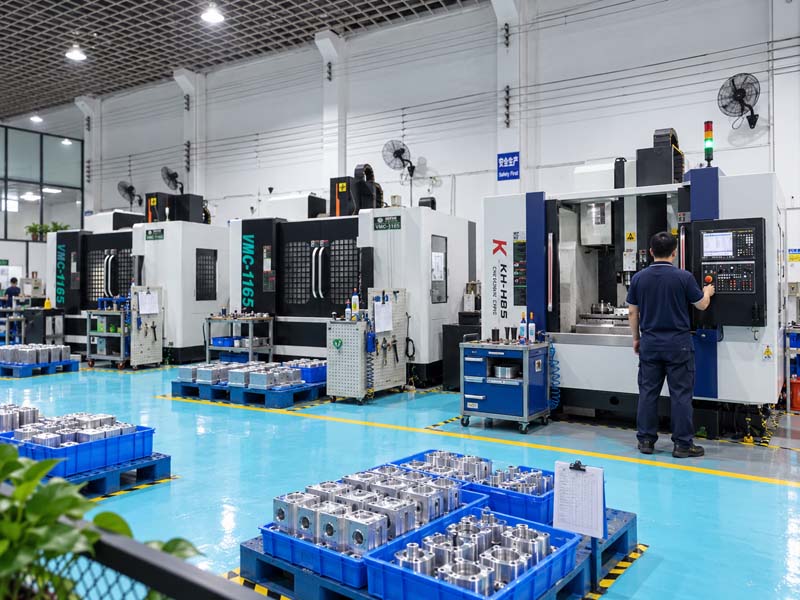
CNC (Computer Numerical Control) machining is a subtractive manufacturing process where pre-programmed computer software dictates the movement of factory tools and machinery. This process controls a range of complex machinery, from grinders and lathes to mills and routers. With CNC machining, three-dimensional cutting tasks can be accomplished in a single set of prompts.
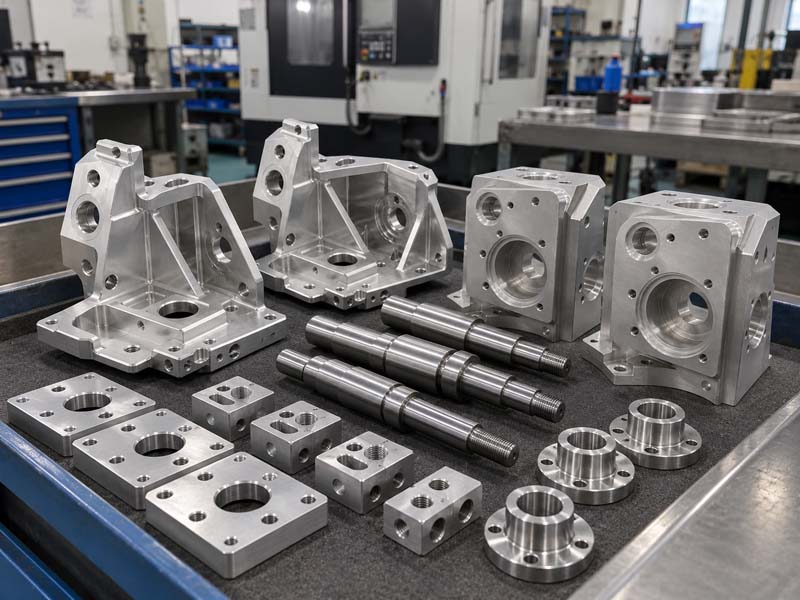
The key advantage of CNC machining is its high precision, repeatability, and ability to produce complex geometries that would be difficult or impossible to achieve with manual machining. Modern CNC machines can hold tolerances down to ±0.005 mm, making them ideal for industries such as aerospace, automotive, medical devices, and electronics.
The CNC Machining Process Step-by-Step
1. Design & CAD Modeling
Every CNC part begins with a 3D CAD model created in software like SolidWorks, Fusion 360, or STEP files. The design defines all geometric features, including holes, threads, pockets, and contours. Designers should follow Design for Machining (DFM) guidelines to avoid costly modifications later.
2. CAM Programming
The CAD model is imported into CAM (Computer-Aided Manufacturing) software, where toolpaths are generated. The programmer selects cutting tools, speeds, feeds, and depth of cut. The output is G-code, the language the CNC machine interprets.
3. Machine Setup
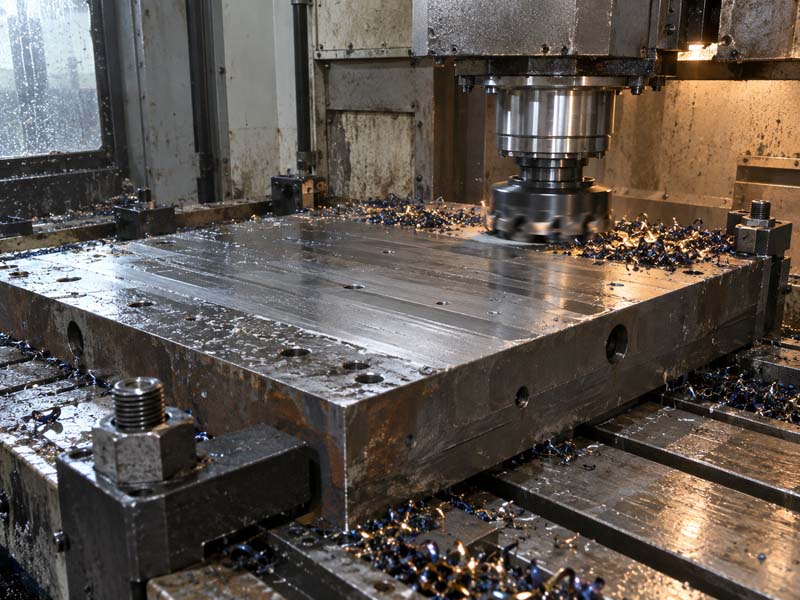
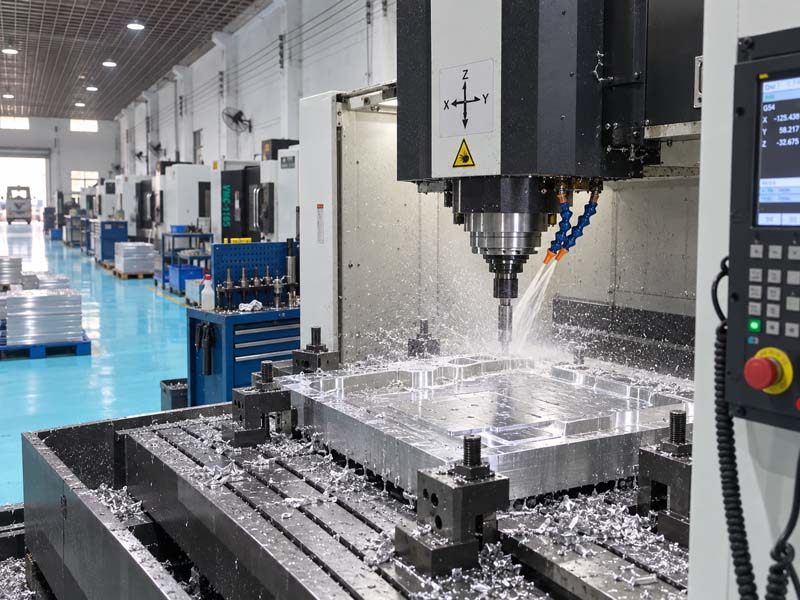
The workpiece is securely mounted on the machine table using vises, fixtures, or vacuum chucks. The operator loads the appropriate cutting tools (e.g., end mills, drills, taps) and sets the zero points (work offsets). Fixture plates with locating pins and clamps are often used for repeatable setups, especially in batch production.
4. Machining Operations
CNC operations include milling (face milling, contour milling, pocketing), turning (for cylindrical parts), drilling, tapping, and boring. Five-axis machines allow simultaneous movement along five axes, enabling complex shapes like turbine impellers and sculpted surfaces.
5. Inspection & Quality Control
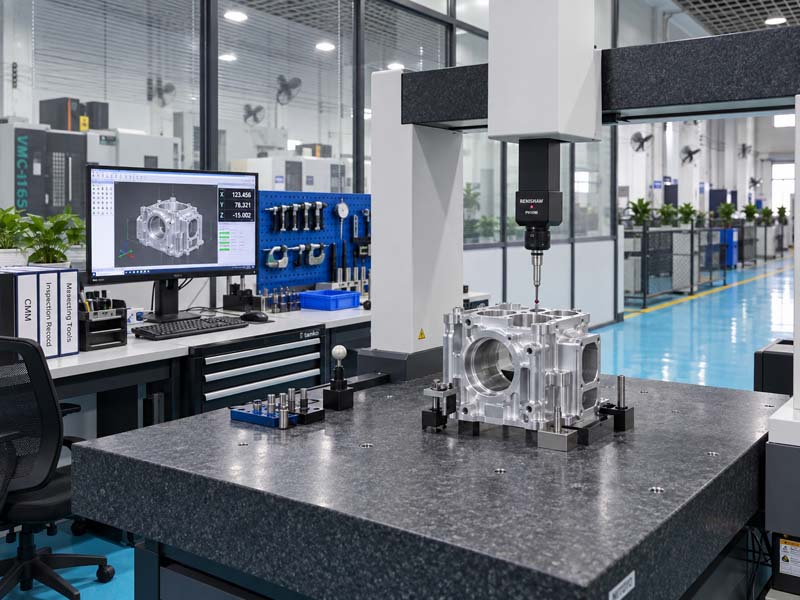
After machining, parts are inspected using CMM (Coordinate Measuring Machine), height gauges, micrometers, and thread gauges. Dimensional reports ensure compliance with drawing tolerances. Surface roughness is checked with profilometers.
Common Materials in CNC Machining
Selecting the right material strongly influences cost, machinability, and part performance. Here are the most frequently used materials:
Aluminum Alloys
Aluminum 6061 and 7075 are popular for their excellent strength-to-weight ratio, good machinability, and corrosion resistance. Aluminum parts like brackets, housings, and heat sinks are common in prototyping and production. Example: batch of aluminum heat sink enclosures.
Stainless Steel
304 and 316 stainless steel offer superior corrosion resistance and strength. They are harder to machine than aluminum, requiring slower speeds and more rigid setups. Applications include fittings, flanges, and medical instruments.
Brass
Brass is easy to machine, produces excellent surface finishes, and is often used for threaded fittings, valves, and decorative parts. It has good electrical conductivity.
Engineering Plastics
PEEK, Delrin (POM), Nylon, and PTFE are machined for bushings, insulators, and wear components. They offer chemical resistance and low friction but require sharp tools and spindle speed adjustments.
Tolerances and Surface Finishes
Standard Tolerances
General machining tolerances follow ISO 2768-m (medium). For tighter requirements, down to ±0.01 mm, specialists like Hongke CNC can achieve precision using high-end equipment and skilled operators. Tolerances should be specified on the drawing only where functionally necessary to control cost.
Surface Finish Options
As-machined surfaces typically range from Ra 0.8 to 3.2 µm. Additional finishes include:
- Anodizing (Type II or III) – increases wear resistance and adds color (common on aluminum).
- Bead blasting – creates a uniform matte texture.
- Passivation – for stainless steel to remove free iron.
- Plating – nickel, zinc, or chrome for corrosion protection.
Design Tips for CNC Machining
- Avoid sharp internal corners: Use fillets with radii at least 1/3 of the tool diameter to prevent stress concentrations and tool breakage.
- Limit deep cavities: Deep pockets require long tools that can deflect. Keep depth-to-width ratios below 4:1.
- Add standard thread sizes: Use common thread sizes (M3, M4, M6, etc.) to avoid custom taps.
- Consider wall thickness: Minimum wall thickness for metal is typically 0.5 mm, for plastics 1 mm (depending on material).
- Use symmetry: Symmetrical parts reduce setup complexity and improve machining accuracy.
Why Choose Hongke CNC for Your Machining Needs?
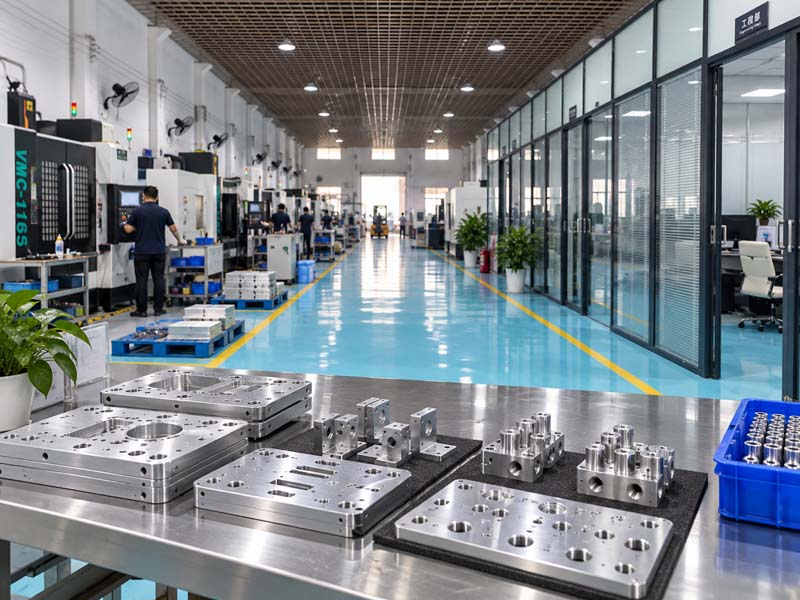
Hongke CNC offers comprehensive CNC machining services from prototyping to mass production. With a modern workshop housing 3-axis, 4-axis, and 5-axis machines, they handle materials including aluminum, steel, brass, and plastics. Their quality control team performs 100% inspection using CMM and other precision gauges, ensuring every part meets specifications.
Whether you need precision shafts, complex impellers, or batched brackets, Hongke CNC provides competitive pricing, fast lead times, and professional DFM feedback. Visit hongke-cnc.com for a quote and technical consultation.
Conclusion
Understanding CNC machining basics empowers product designers and engineers to create parts that are not only functional but also cost-effective and manufacturable. By following DFM principles, selecting appropriate materials and finishes, and partnering with an experienced machining shop, you can achieve high-quality results for any project.