Introduction
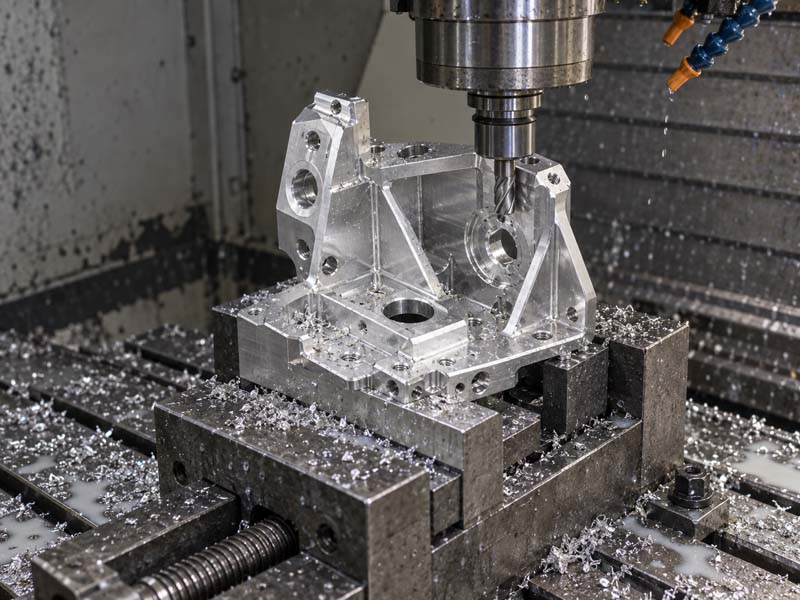
Aluminum is one of the most widely used materials in CNC machining, valued for its excellent strength-to-weight ratio, corrosion resistance, and machinability. From aerospace brackets to automotive housings and electronic enclosures, aluminum parts produced by CNC machining are integral to modern manufacturing. This guide provides a comprehensive overview of CNC machining aluminum parts — from material selection and design principles to machining processes, surface finishes, and quality control. Whether you are an engineer evaluating design options or a procurement specialist selecting a manufacturing partner, this article will help you make informed decisions.
Why Aluminum for CNC Machining?
Aluminum offers a unique combination of properties that make it ideal for CNC machining:
- Lightweight: Density about one-third that of steel, enabling weight reduction in critical applications.
- High Strength-to-Weight Ratio: Certain alloys (e.g., 7075) rival steel in strength while being much lighter.
- Excellent Machinability: Aluminum is relatively soft, allowing for high cutting speeds, longer tool life, and excellent surface finishes.
- Corrosion Resistance: Natural oxide layer protects against environmental corrosion, further enhanced by anodizing.
- Thermal Conductivity: Efficient heat dissipation, making it suitable for heat sinks and electronic components.
- Recyclability: Fully recyclable without loss of properties, supporting sustainability goals.
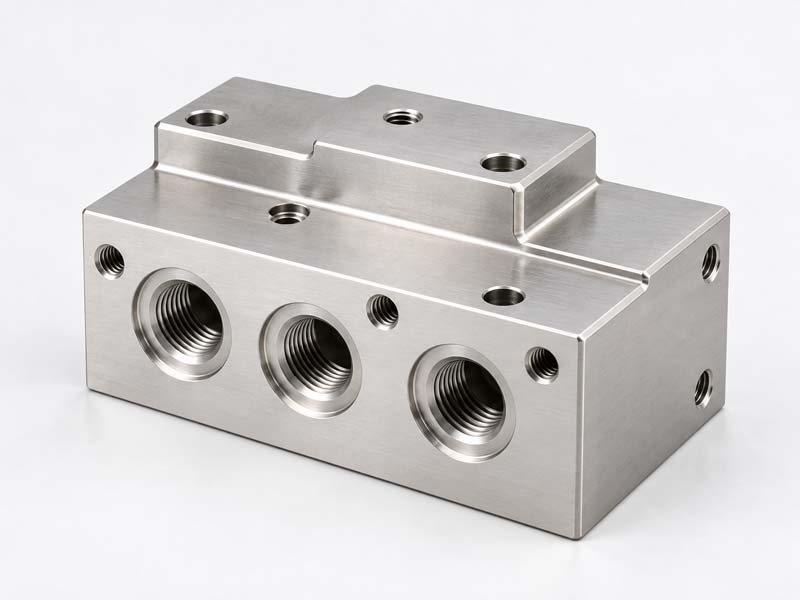
These attributes make aluminum the material of choice for a broad range of industries, including aerospace, automotive, robotics, medical devices, and consumer electronics.
Choosing the Right Aluminum Alloy
Not all aluminum alloys machine the same way. The alloy selection directly affects part strength, corrosion resistance, weldability, and cost. The most common alloys for CNC machining include:
6061 Aluminum
The workhorse of CNC machining. 6061 offers good mechanical properties, excellent machinability, and moderate corrosion resistance. It is suitable for structural parts, brackets, enclosures, and general-purpose components. Temper T6 provides the highest strength.
7075 Aluminum
One of the highest strength aluminum alloys, often used in aerospace and high-stress applications. It has lower corrosion resistance than 6061 but can be anodized. Its hardness requires sharp tools and appropriate feeds/speeds.
2024 Aluminum
High strength and fatigue resistance, commonly used in aircraft structures. It is less weldable and has lower corrosion resistance. Machining produces tight chips and requires good chip evacuation.
6082 Aluminum
Similar to 6061 but with higher strength. Often used in European markets for structural applications. Good machinability and anodizing response.
5052 Aluminum
Excellent corrosion resistance and formability, but lower strength. Common for sheet metal parts and enclosures. Machinability is good but not as high as 6061.
When selecting an alloy, consider the balance between strength, corrosion resistance, machinability, and cost. For most CNC-machined parts, 6061-T6 is the default choice unless specific requirements dictate otherwise.
Design Considerations for CNC Machined Aluminum Parts
Design for Manufacturability (DFM) is critical to ensure cost-effective production of high-quality aluminum parts. Key guidelines include:
- Wall Thickness: Avoid excessively thin walls (<0.8 mm) to prevent vibration and deflection. Minimum 1.0-1.5 mm recommended for structural integrity.
- Internal Corners: Use radiused internal corners (at least 1/3 of cavity depth) to allow standard tool sizes and reduce stress concentrations.
- Undercuts: Minimize undercuts; if necessary, use specialized tools or EDM, which increases cost.
- Tapped Holes: For threads in aluminum, specify thread depths at least 1.5x the diameter to ensure strength. Use thread inserts for high-stress applications.
- Tolerances: Aluminum expands and contracts with temperature. Allow for realistic tolerances (e.g., ISO 2768-m for general dimensions, tighter for critical features).
- Surface Finish: Specify roughness (Ra) values. Common as-machined finishes range from Ra 0.8 to 3.2 μm. Anodizing can slightly alter dimensions (typically +5-10 μm).
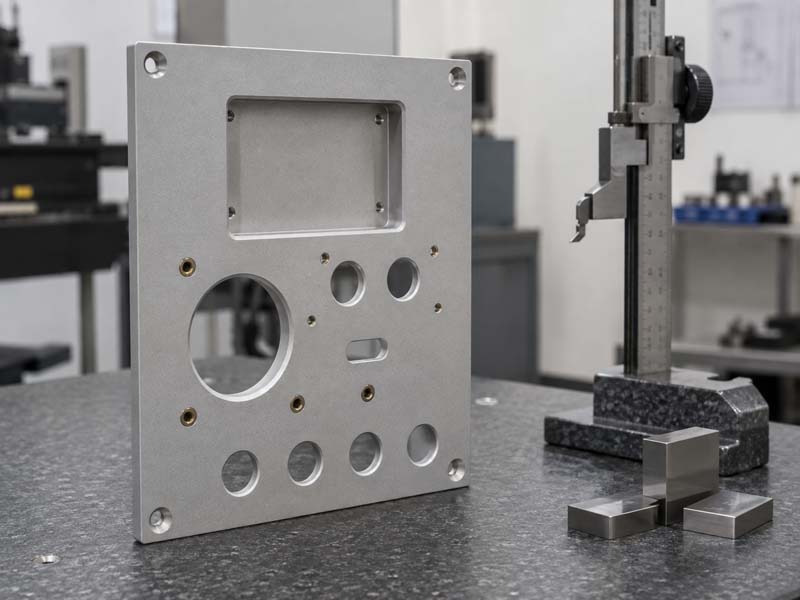
Proper DFM reduces machining time, tool wear, and scrap, ultimately lowering unit costs while maintaining quality.
CNC Machining Processes for Aluminum
Most aluminum parts are produced using 3-axis, 4-axis, or 5-axis CNC milling centers, with turning for cylindrical features. Key processes include:
3-Axis Milling
Ideal for flat or 2.5D parts. Efficient for pockets, holes, and contours. Suitable for most brackets, housings, and plates.
5-Axis Milling
Allows complex geometries, undercuts, and continuous curved surfaces without repositioning. Reduces setup time and improves accuracy for parts like impellers, manifolds, and aerospace components.
Turning and Mill-Turn
For cylindrical features, CNC turning with live tooling (mill-turn) can machine diameters, threads, and flats in one setup.
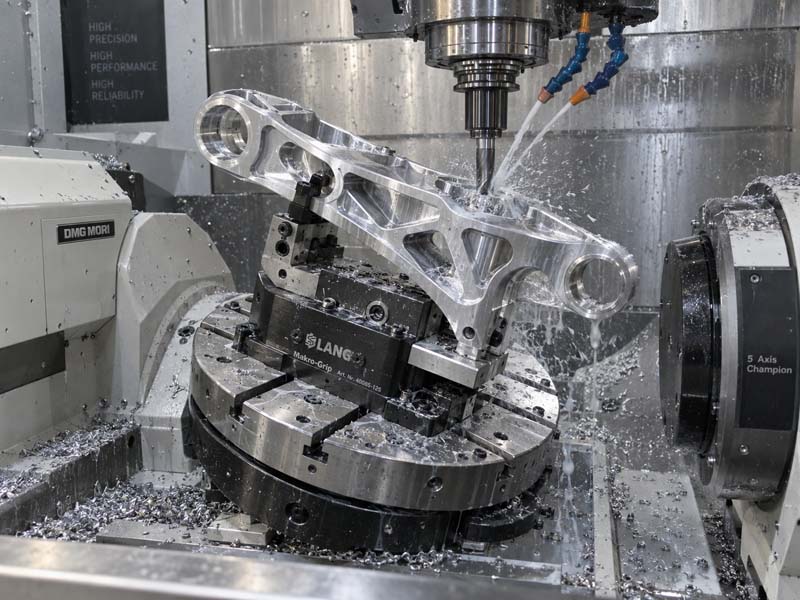
High-speed machining strategies with advanced CAM software optimize toolpaths, minimize cycle times, and achieve superior surface finishes.
Surface Finishes for Aluminum Parts
The surface finish of CNC-machined aluminum can be enhanced through post-processing. Common options include:
- As-Machined: Visible tool marks. Suitable for hidden surfaces or cost-sensitive applications. Ra typically 1.6-3.2 μm.
- Bead Blasting: Produces a uniform matte finish, hides minor scratches. Often used before anodizing.
- Anodizing (Type II and Type III): Electrochemical process that thickens the oxide layer. Type II provides decorative colors and moderate wear resistance; Type III (hard anodizing) offers exceptional hardness and wear resistance. Note that anodizing adds a thin layer (5-50 μm) and can affect dimensions.
- Polishing: Achieves a mirror-like finish for aesthetic parts. Requires careful handling to avoid marring.
- Powder Coating: Adds a durable colored layer; suitable for outdoor or high-abrasion environments.
The choice of surface finish depends on functional requirements (corrosion resistance, wear, aesthetics) and budget.
Quality Control and Inspection
Consistency and precision are hallmarks of professional CNC machining. Inspection methods for aluminum parts include:
- CMM (Coordinate Measuring Machine): For high-accuracy dimensional verification of complex geometries.
- Optical Comparators and Vision Systems: For small features and thread profiles.
- Surface Roughness Testers: To ensure Ra specifications are met.
- Hardness Testing: Verifies proper heat treatment (e.g., T6 temper).
- Go/No-Go Gages: For threaded holes and critical fits.
Reputable CNC shops like Hongke CNC employ rigorous inspection protocols, including first-article inspection and in-process checks, to ensure each part meets design requirements.
Why Choose Hongke CNC for Your Aluminum Parts?
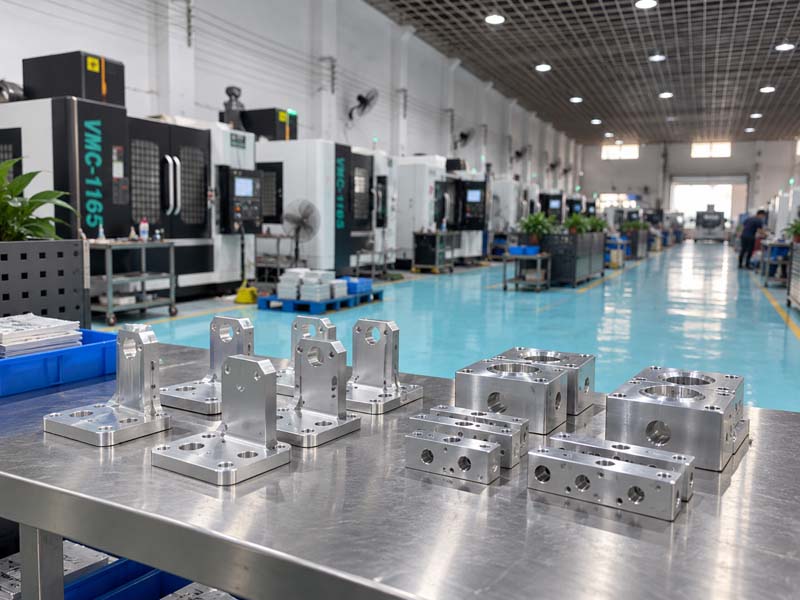
Hongke CNC specializes in precision machining of aluminum and other metals. With advanced 3-axis, 4-axis, and 5-axis CNC centers, plus experienced engineers, they offer fast turnaround, competitive pricing, and consistent quality. Their capabilities include prototyping and production runs, with a strong focus on DFM support to help customers optimize designs for manufacturability. For more information, visit the Technical Guides page or explore their CNC machining services.
Conclusion
CNC machining of aluminum parts is a mature and highly versatile manufacturing process. By understanding the material properties, selecting the appropriate alloy, following DFM guidelines, and applying suitable surface finishes, engineers can achieve high-performance, cost-effective components. Partnering with an experienced CNC machining provider ensures that your aluminum parts are produced to the highest standards of quality and precision.