What is CNC Machining?
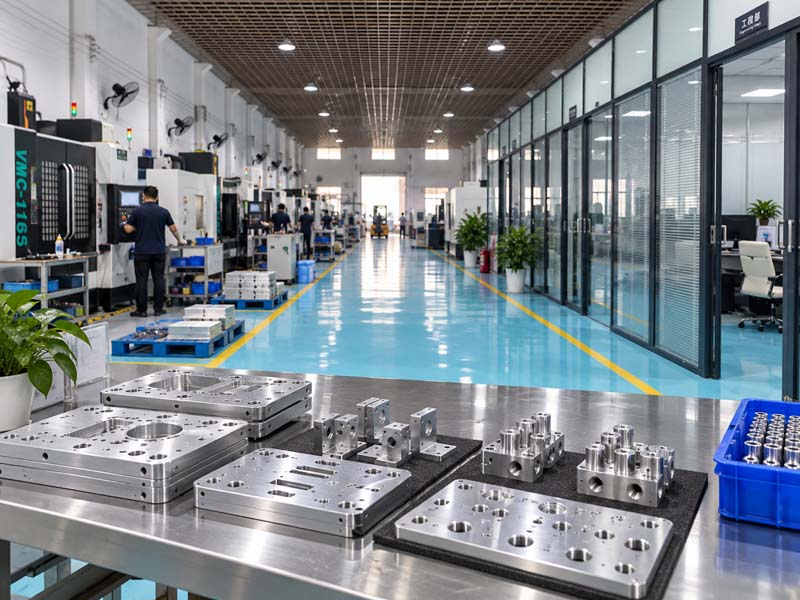
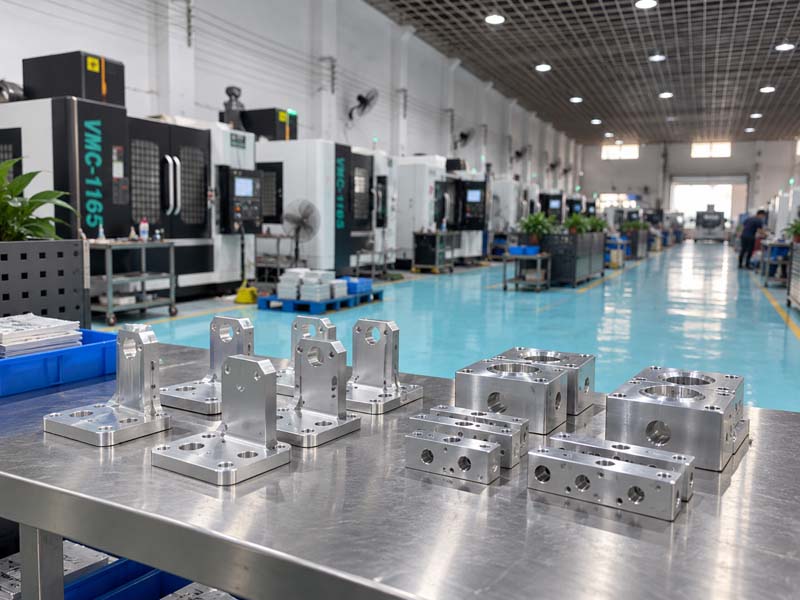
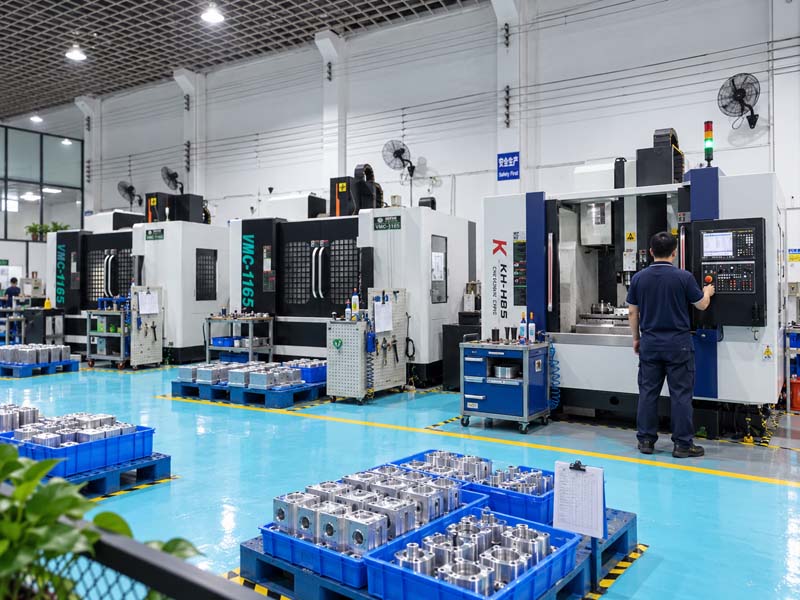
CNC (Computer Numerical Control) machining is a subtractive manufacturing process where computer-controlled machine tools remove material from a solid block (workpiece) to create a desired shape. Unlike 3D printing which adds material layer by layer, CNC machining cuts away excess material, offering high precision, excellent surface finish, and strong mechanical properties. It is widely used in industries such as aerospace, automotive, medical devices, electronics, and industrial automation.
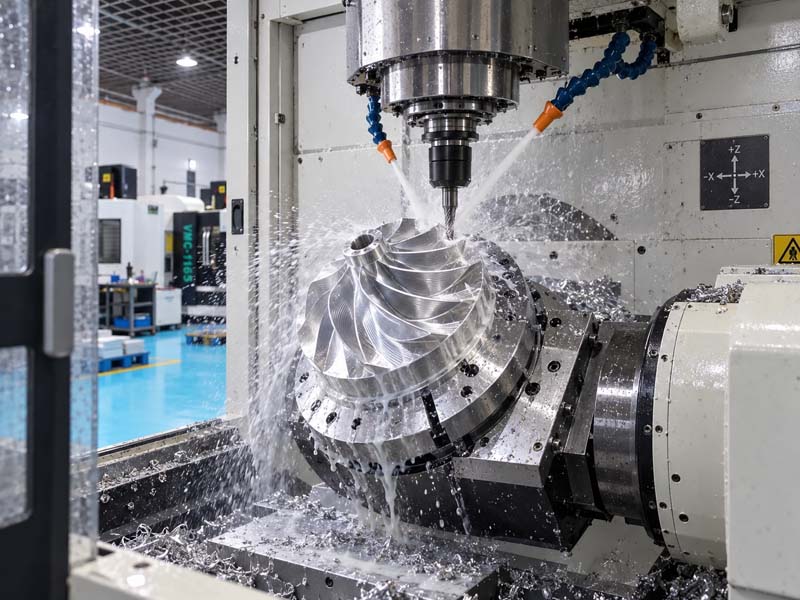
Common CNC processes include milling, turning, drilling, and grinding. Milling uses rotating multi-point cutters to remove material, while turning rotates the workpiece against a stationary cutting tool. Five-axis CNC machines add rotational axes, enabling complex geometries to be machined in a single setup.
Common Materials for CNC Machining
Choosing the right material is critical for part performance, cost, and machinability. Below are the most frequently used materials:
Aluminum Alloys
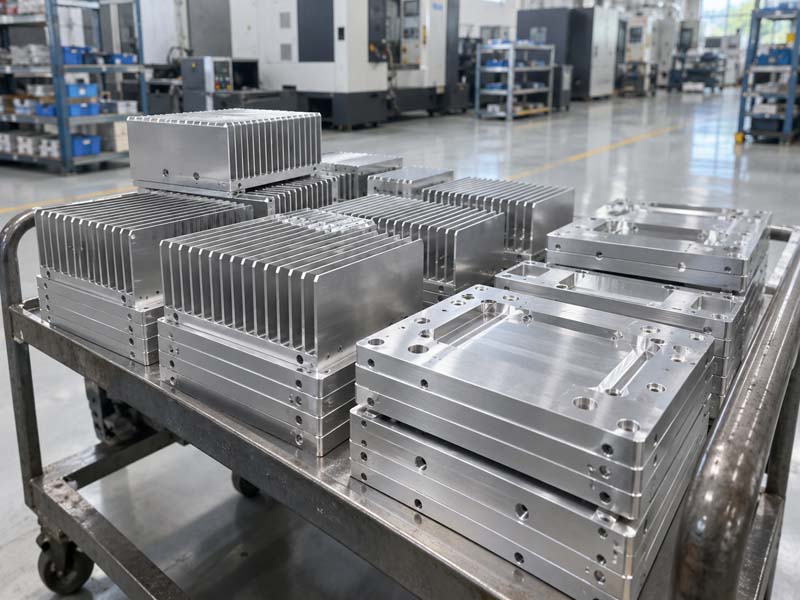
Aluminum (e.g., 6061, 7075, 6082) is lightweight, corrosion-resistant, and easy to machine. It is ideal for brackets, housings, heat sinks, and structural components. Aluminum offers good thermal conductivity and can be anodized for enhanced surface hardness and appearance.
Stainless Steel
Stainless steel (e.g., 304, 316) provides high strength, excellent corrosion resistance, and good wear resistance. It is commonly used for shafts, fittings, and medical devices. However, it is more difficult to machine than aluminum, requiring slower speeds and more rigid setups.
Brass and Copper
Brass is easy to machine, has good electrical conductivity, and is often used for threaded fittings, electrical connectors, and decorative parts. Copper offers superior thermal and electrical conductivity but can be sticky to cut.
Engineering Plastics
Plastics such as POM (Delrin), Nylon, and PTFE are lightweight, self-lubricating, and chemically resistant. They are used for bushings, gears, and fixtures. Plastic machining requires sharp tooling and proper chip evacuation to avoid melting.
CNC Machining Processes
CNC Milling
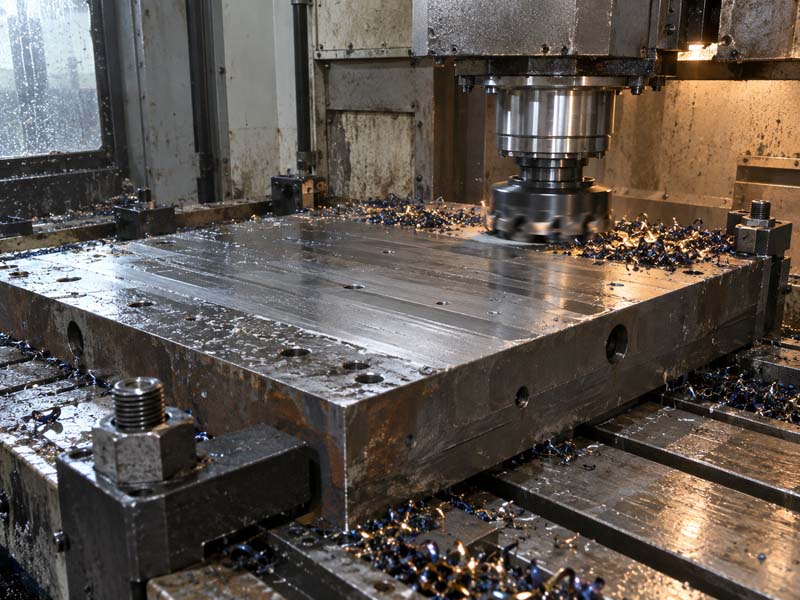
Milling can be performed on 3-axis, 4-axis, or 5-axis machines. 3-axis milling moves the tool in X, Y, and Z directions, suitable for prismatic parts. 5-axis milling adds rotation around X (A-axis) and Y (B-axis), allowing undercuts and complex contours without repositioning the workpiece. This reduces setup time and improves accuracy.
CNC Turning
Turning is used for cylindrical parts such as shafts, sleeves, and pulleys. The workpiece rotates while a stationary tool cuts the outer diameter, inner diameter, or threads. Modern CNC lathes with live tooling can also perform milling operations, enabling complete parts in one machine.
Wire EDM
Wire Electrical Discharge Machining uses a thin wire as an electrode to cut conductive materials with high precision, often used for dies, molds, and intricate shapes. It produces a very fine surface finish and can achieve tight tolerances.
Tolerances and Surface Finishes
Standard Tolerances
CNC machining can typically hold tolerances of ±0.005 mm (0.0002 in) for small features and ±0.1 mm for larger dimensions. Tight tolerances require careful tool selection, stable fixturing, and temperature-controlled environments. Designers should specify tolerances only where functionally necessary to avoid unnecessary cost.
Surface Finishes
Surface finish is measured in Ra (roughness average). Standard machined finishes range from Ra 0.8 μm (fine) to Ra 3.2 μm (rough). Post-processing options include bead blasting, anodizing, powder coating, and polishing. The choice of finish affects both aesthetics and functional properties like friction and wear.
Design Considerations for CNC Machining
To optimize manufacturability and cost, follow these guidelines:
- Avoid sharp internal corners: Use radii of at least 1/3 of cavity depth to allow tool access.
- Minimize deep pockets: Deep cavities require longer tools which may deflect, reducing accuracy.
- Add draft angles: For parts that need to be removed from molds or fixtures, 1-3° draft improves release.
- Standardize hole sizes: Use common drill and tap sizes to reduce tool changes.
- Consider wall thickness: Thin walls (under 0.5 mm in metal) can vibrate during machining, causing poor finish or breakage.
Quality Inspection
Inspection ensures that machined parts meet the required specifications. Common inspection tools include calipers, micrometers, height gauges, CMM (Coordinate Measuring Machine), and optical comparators. In-process probing can also verify critical dimensions while the part is still on the machine, enabling corrective actions without re-fixturing.
At Hongke CNC, every batch undergoes rigorous inspection to maintain high quality standards. Our skilled operators and advanced measurement equipment guarantee that your parts arrive as designed.
Why Choose Hongke CNC?
With years of experience in precision CNC machining, Hongke CNC offers a full range of services from prototyping to high-volume production. We work with a wide variety of metals and plastics, and provide value-added services like surface treatment and assembly. Our commitment to quality, on-time delivery, and competitive pricing makes us a trusted partner for engineers and businesses worldwide.
For more information about our capabilities, visit our website or contact our technical team.