What Is CNC Machining?
CNC (Computer Numerical Control) machining is a subtractive manufacturing process where pre-programmed computer software dictates the movement of factory tools and machinery. This process can control a range of complex machinery, from grinders and lathes to mills and routers. With CNC machining, three-dimensional cutting tasks can be accomplished in a single set of prompts.
The fundamental principle is simple: a digital design (CAD model) is translated into a series of precise instructions (G-code) that guide the cutting tools. The result is a highly accurate, repeatable, and efficient method for producing parts from metal, plastic, and other materials.
How CNC Machining Works: From CAD to Part
1. Design & Programming
Engineers create a 3D model using CAD software (e.g., SolidWorks, Fusion 360). This model is then converted into CAM (Computer-Aided Manufacturing) data, which generates the toolpaths and G-code. At Hongke CNC, we work closely with clients to ensure designs are optimized for manufacturability from the start.
2. Setup & Fixturing
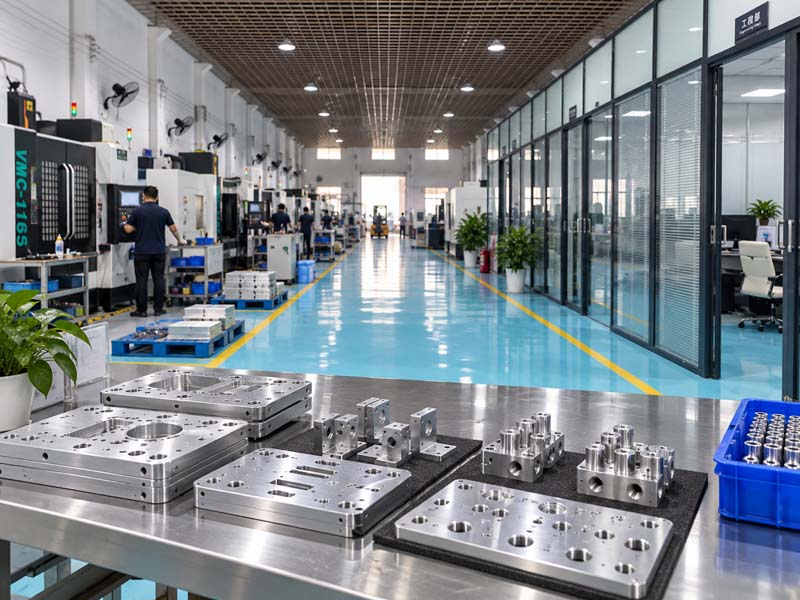
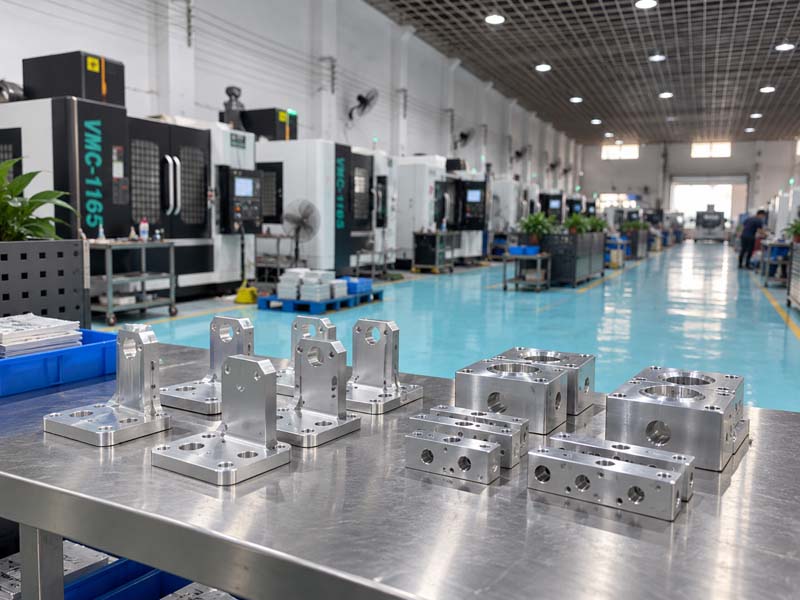
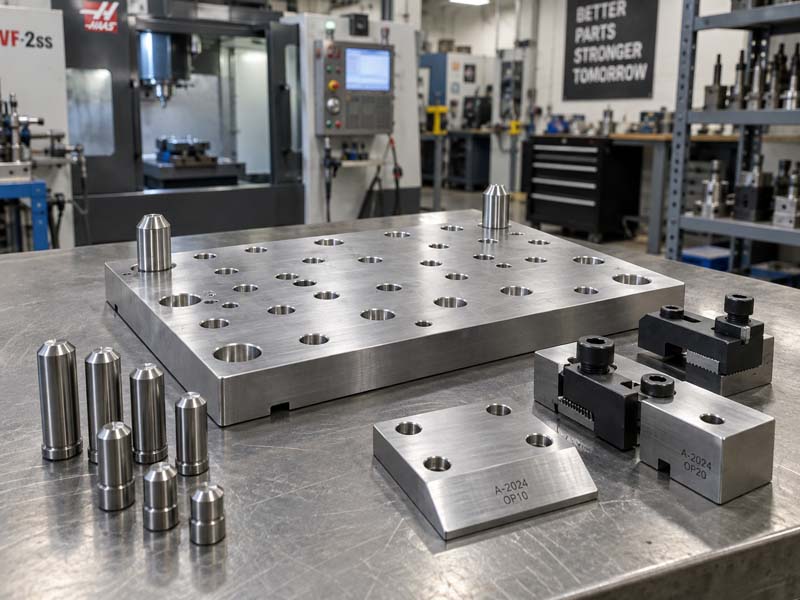
The raw material is securely mounted on the machine table using vises, clamps, or custom fixtures. Proper fixturing is critical to maintain accuracy during cutting. Modular fixture plates with locating pins and clamps are commonly used for batch production.
3. Machining Operations
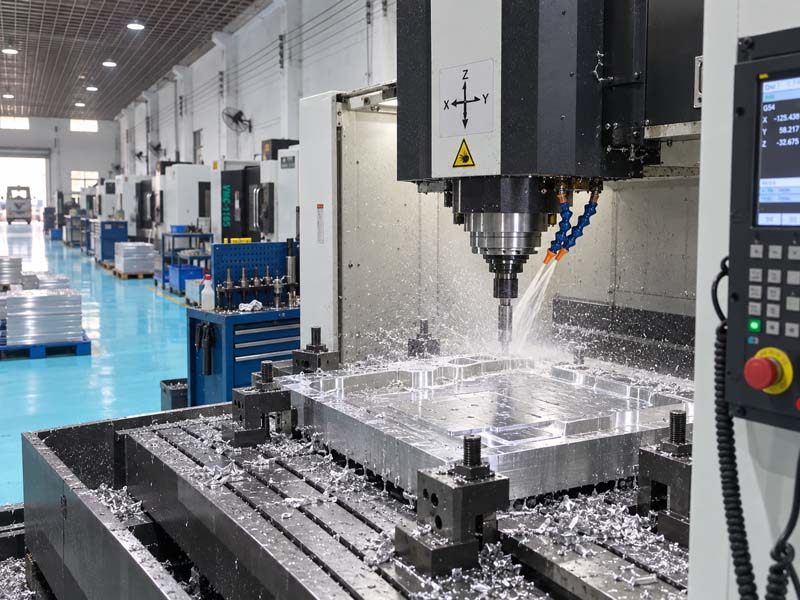
The CNC machine executes the programmed toolpaths, removing material layer by layer. Operations include:
- Face milling: flattening surfaces
- Contour milling: creating complex profiles
- Drilling & tapping: producing holes and threads
- Pocketing: making recesses
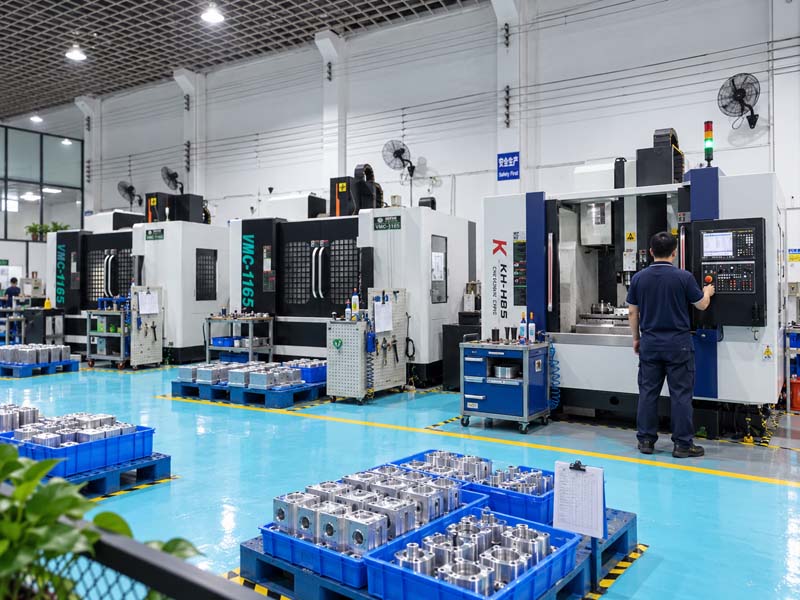
Modern 5-axis machines can perform multiple operations in a single setup, reducing lead time and improving accuracy.
Common CNC Machining Processes
| Process | Description | Typical Applications |
|---|---|---|
| CNC Milling | Rotating multi-point cutting tool removes material from a stationary workpiece | Brackets, housings, enclosures, complex 3D surfaces |
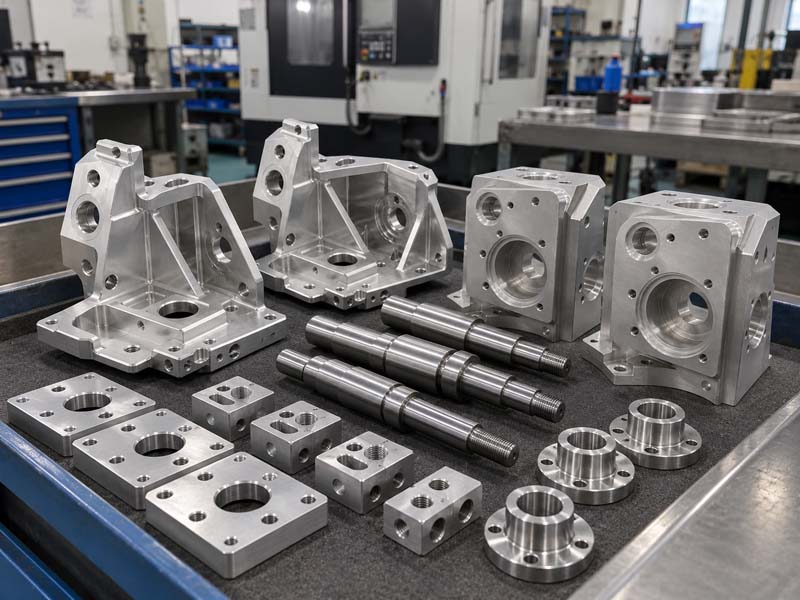
| CNC Turning | Workpiece rotates while a single-point cutting tool moves linearly | Shafts, bushings, threaded fittings, stepped components |
| Wire EDM | Electrical discharge using a thin wire to cut through conductive materials | Metal mold cavities, hardened steel inserts, precision dies |
| 5-Axis Machining | Simultaneous movement on five axes enables complex geometries with minimal setups | Impellers, turbine blades, aerospace structural parts |
Materials for CNC Machining
The selection of material directly impacts part performance, cost, and machinability. Common categories include:
Metals
- Aluminum alloys (6061, 7075): excellent machinability, good strength-to-weight ratio, widely used for enclosures, brackets, and heat sinks.
- Stainless steel (303, 304, 316): corrosion-resistant, higher cutting forces, ideal for medical and food-grade components.
- Brass: excellent machinability, low friction, used for fittings and decorative parts.
- Steel (1018, 4140): high strength, often used for structural parts and tooling.
Plastics & Engineering Polymers
- ABS: tough, impact-resistant, good for prototypes.
- Nylon & Delrin: low friction, wear-resistant, used for bushings and gears.
- PEEK: high-temperature resistance, chemical resistance, used in aerospace and medical.
At Hongke, we maintain a comprehensive inventory of standard materials and can source specialty alloys upon request.
Design for Machining (DFM) Best Practices
To reduce cost and improve quality, follow these guidelines when designing parts for CNC:
- Avoid sharp internal corners: use radiused corners (R≥0.5mm) to match standard tool diameters.
- Maintain uniform wall thickness: especially for thin-walled sections, to prevent vibration and deflection.
- Specify tolerances wisely: only tighten tolerance where necessary – every extra decimal increases cost.
- Consider tool access: deep narrow slots require special long-reach tools; deeper cavities may need EDM or 5-axis.
- Include adequate draft angles (if casting or molding is involved) but for machining, undercuts can be handled with 5-axis or special setups.
Surface Finishes & Post-Processing
After machining, parts often require surface treatment to enhance appearance, corrosion resistance, or wear properties:
| Finish | Application |
|---|---|
| As-machined (Ra 0.8–3.2 μm) | Functional parts without cosmetic requirements |
| Bead blasting | Matte, uniform surface; hides tool marks |
| Anodizing (Type II/III) | Hard, corrosion-resistant layer on aluminum; available in colors |
| Electroless nickel plating | Uniform coating on steel or copper alloys for wear/chemical resistance |
| Powder coating | Thick, durable paint for outdoor or heavy-duty parts |
Quality Inspection & Metrology
Precision manufacturing demands rigorous inspection. State-of-the-art CMM (Coordinate Measuring Machine) and manual gauges verify dimensional accuracy. At Hongke, we perform:
- First-article inspection for new parts
- In-process inspection using height gauges and micrometers
- Final inspection with CMM and surface roughness testers
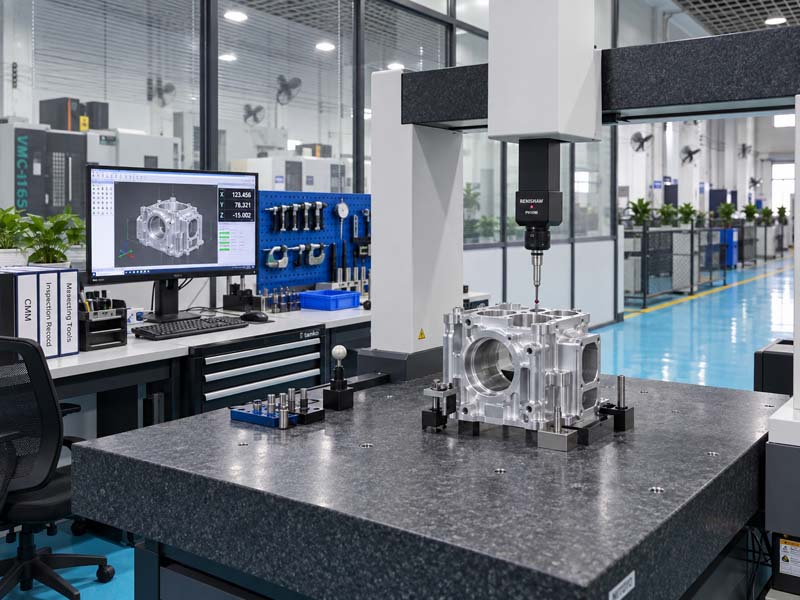
This ensures that every part matches the drawing specifications, from critical bore tolerances to thread pitch.
Why Choose Hongke CNC for Your Precision Parts?
Hongke CNC combines decades of machining expertise with advanced 3-, 4-, and 5-axis CNC centers. We handle everything from rapid prototypes to high-volume production runs. Our team of engineers provides DFM feedback to optimize your design, reduces costs, and delivers on time. Whether you need aluminum enclosures, stainless steel flanges, or complex impellers, we have the capability and quality system to succeed.
Frequently Asked Questions
What is the typical lead time for CNC machined parts?
It depends on complexity and quantity. Simple prototypes can ship in 3–5 days; production runs typically 2–4 weeks. Rush services are available.
Can you machine parts from customer-supplied materials?
Yes, we accept customer-supplied materials as long as they meet our quality requirements.
What tolerance can you hold?
Standard tolerance is ±0.1mm; tighter tolerances down to ±0.005mm are possible depending on material and geometry.
Do you provide surface finishing services?
Absolutely. We offer anodizing, bead blasting, powder coating, plating, and more.