
Understanding CNC Machining: The Digital Revolution in Manufacturing
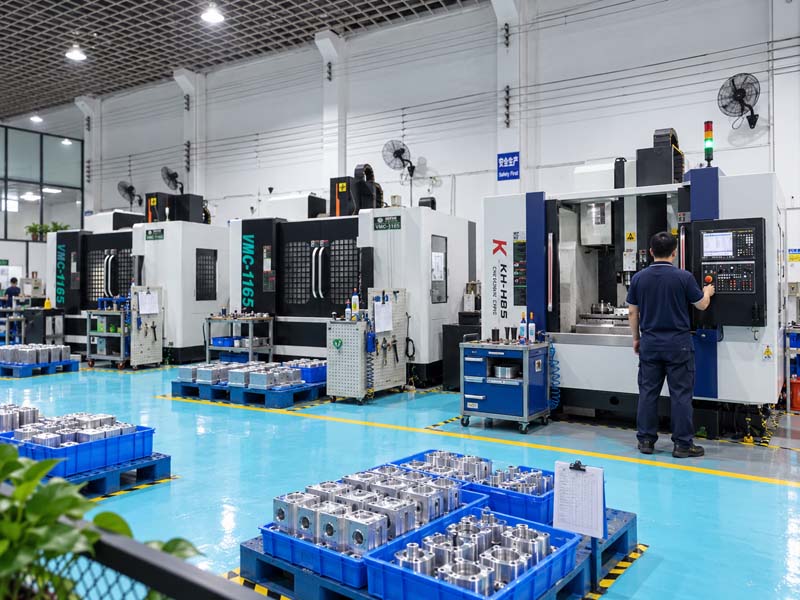
CNC (Computer Numerical Control) machining is a subtractive manufacturing process where pre-programmed computer software dictates the movement of factory tools and machinery. Unlike manual machining, which requires a skilled operator to control levers, wheels, and switches, CNC machining automates the entire process through precise digital instructions (G-code). This technology enables the production of complex, high-precision parts from a wide range of materials, including metals, plastics, and composites.
CNC machining has become the backbone of modern manufacturing across industries such as aerospace, automotive, medical devices, consumer electronics, and industrial equipment. For engineers and product designers, understanding the capabilities, limitations, and design considerations of CNC machining is essential for optimizing part performance, cost, and lead time.
How Does CNC Machining Work?
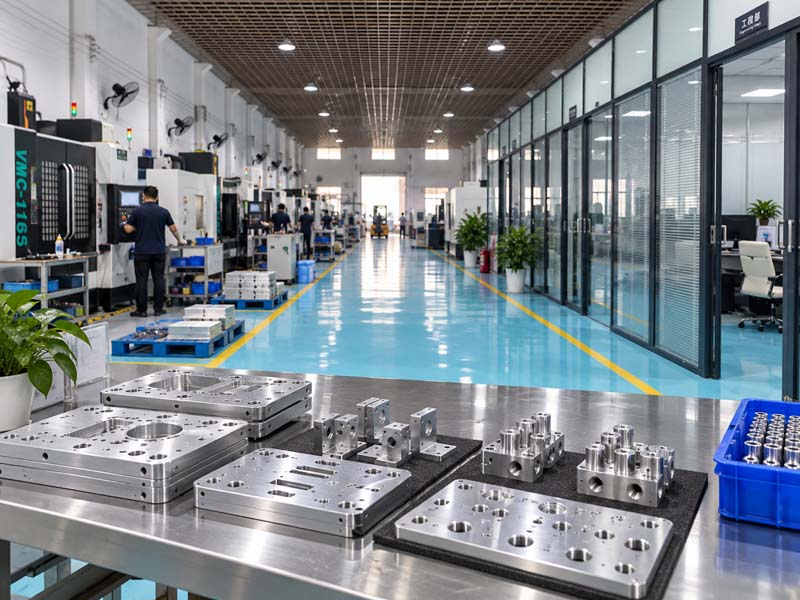
The CNC machining process begins with a 3D CAD (Computer-Aided Design) model of the part. This model is then converted into a set of machine-readable instructions using CAM (Computer-Aided Manufacturing) software. The CAM software generates toolpaths that define the cutting sequence, speeds, feeds, and depth of cuts. These instructions are transferred to the CNC controller, which precisely positions the cutting tool relative to the workpiece.
Most CNC machines operate on three or more axes. The most common configurations are:
3-Axis CNC Machining
The workpiece remains stationary on a table, while the cutting tool moves linearly along the X, Y, and Z axes. This is ideal for flat surfaces, simple pockets, holes, and 2.5D features. 3-axis machining is cost-effective and widely used for prototyping and low-volume production.
4-Axis CNC Machining
Adds a rotary axis (A-axis) that allows the workpiece to rotate, enabling the machining of cylindrical features, helical grooves, and undercuts without manual repositioning. This reduces setup time and improves accuracy.
5-Axis CNC Machining
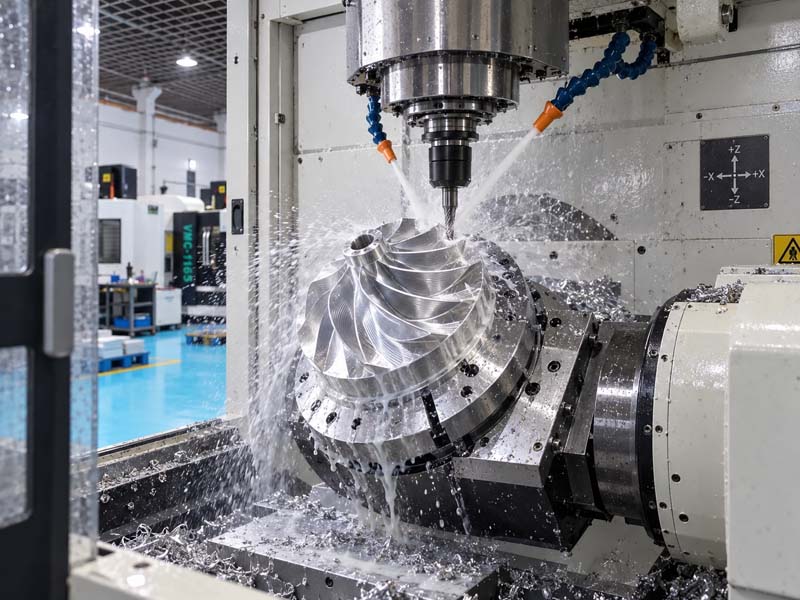
The cutting tool or workpiece can move along five axes simultaneously, allowing complex geometries, contour surfaces, and deep cavities to be machined in a single setup. 5-axis machining significantly reduces lead time and improves surface finish for parts like turbine blades, impellers, and aerospace structural components.
Key CNC Machining Processes
Milling
Milling uses rotating multi-point cutting tools to remove material from a stationary workpiece. It can produce a variety of features including slots, threads, cavities, and complex 3D surfaces. CNC milling centers are available in vertical and horizontal configurations, and can be equipped with automatic tool changers (ATC) for high efficiency.
Turning
In CNC turning, the workpiece rotates at high speed while a stationary single-point cutting tool removes material to create cylindrical shapes. Modern CNC lathes can perform drilling, boring, threading, and grooving operations. Live tooling systems allow milling operations on turned parts, making them highly versatile.
Electrical Discharge Machining (EDM)
EDM uses electrical sparks to erode conductive materials, making it ideal for hard metals and intricate cavities. Wire EDM and sinker EDM are common subtypes, often used for mold making and tooling.
Materials Suitable for CNC Machining
Choosing the right material is critical to part performance, machinability, and cost. Here are the most common categories:
Aluminum Alloys
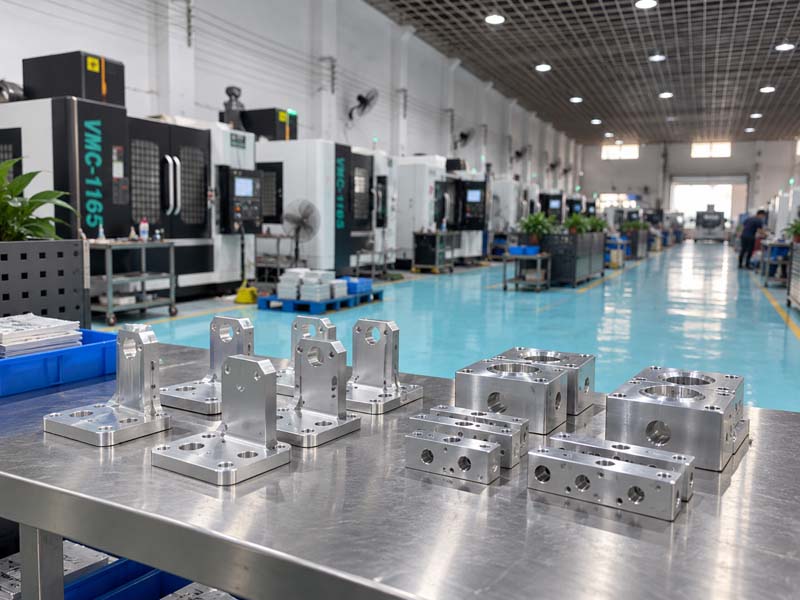
Aluminum (e.g., 6061-T6, 7075-T6) is the most popular metal for CNC machining due to its excellent machinability, strength-to-weight ratio, corrosion resistance, and thermal conductivity. It is widely used in aerospace brackets, electronic enclosures, and automotive components.
Stainless Steel
Stainless steels (304, 316, 17-4 PH) offer high strength, corrosion resistance, and wear resistance. They are harder to machine than aluminum, requiring slower speeds and more rigid setups, but are essential for medical instruments, food processing equipment, and marine parts.
Brass and Copper
Brass is easy to machine and provides good electrical conductivity, making it ideal for fittings, valves, and electrical connectors. Copper is also highly conductive and used for heat sinks and electrical components.
Engineering Plastics
Delrin (POM), Nylon, PTFE, and PEEK are common machinable plastics. They offer low friction, chemical resistance, and lightweight properties. Plastic parts are often used in bushings, insulators, and custom fixtures.
Steel Alloys
Carbon steels (1018, 1045) and alloy steels (4140, 4340) provide high strength and durability for structural components, shafts, and gears. Heat treatment can further enhance hardness.
Tolerances and Precision in CNC Machining
Tolerances define the allowable dimensional variation in a machined part. Standard CNC machining tolerances range from ±0.005″ (0.13 mm) for general applications to ±0.0005″ (0.013 mm) for high-precision work. Factors influencing achievable tolerance include machine condition, tool wear, material stability, and thermal effects.
Engineers should apply the tightest tolerance only where functionally necessary, as tighter tolerances increase machining time, inspection cost, and scrap rate. For non-critical surfaces, generous tolerances (e.g., ±0.010″ or ±0.25 mm) can significantly reduce part cost.
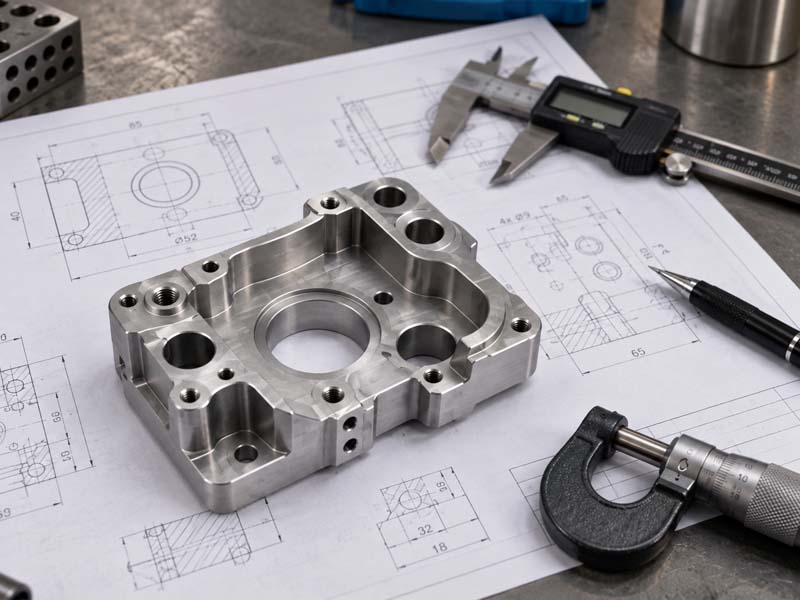
Common inspection tools include micrometers, calipers, height gauges, and CMM (Coordinate Measuring Machines). In-process probing on CNC machines can verify critical dimensions during the operation.
Surface Finishes for CNC Parts
Surface finish affects appearance, friction, wear resistance, and corrosion resistance. Common finishes include:
- As-Machined: Standard machined surface with visible tool marks. Suitable for internal or non-cosmetic surfaces.
- Bead Blasting: Uniform matte texture by blasting with fine media. Hides minor imperfections and improves aesthetics.
- Anodizing (Type II or III): Electrochemical process for aluminum that adds a durable, colored oxide layer. Provides corrosion resistance and can be dyed.
- Powder Coating: Thick, durable polymer coating for aluminum and steel. Available in many colors.
- Passivation: Chemical treatment for stainless steel to remove contaminants and enhance corrosion resistance.
- Plating: Electroless nickel or hard chrome plating for wear resistance and lubricity.
Design for Machinability (DFM) Guidelines
To reduce cost and improve quality, follow these best practices when designing parts for CNC machining:
- Consistent Wall Thickness: Avoid thick sections that require deep cuts; aim for uniform walls.
- Internal Radii: Use standard end mill sizes for internal corners. A corner radius larger than the tool diameter reduces machining time.
- Avoid Deep Pockets: Deep pockets (depth > 4× diameter) require special tooling and slow machining.
- Threads: Specify standard thread sizes; avoid blind threads near the bottom of deep holes.
- Tolerances: Only apply tight tolerances where absolutely necessary; let the rest follow standard +/-0.005″.
- Undercuts: Minimize or avoid undercuts that require special cutting tools or EDM.
Cost Drivers in CNC Machining
Understanding cost can help you optimize your design. Major cost drivers include:
- Material Selection: Exotic alloys and engineering plastics cost more than aluminum or carbon steel.
- Complexity: Multi-axis setups, tight tolerances, and complex geometries increase programming and machining time.
- Setup Time: Each operation that requires manual repositioning adds cost; 5-axis parts reduce setups.
- Quantity: Higher volumes benefit from production optimization and fixture savings.
- Surface Finish: Secondary operations like anodizing or plating add cost and lead time.
Choosing a CNC Machining Partner
When selecting a CNC shop, consider their equipment capability (number of axes, spindle power, material library), quality certifications (ISO 9001, AS9100), and experience with your industry. A reputable partner like Hongke CNC offers comprehensive services from prototyping to production, with rigorous inspection protocols and fast turnaround. Their facility includes 3-axis to 5-axis milling, turning, wire EDM, and a full metrology lab.
Conclusion
CNC machining remains the most versatile and reliable method for producing high-quality precision parts. By understanding the basics of the process, material options, tolerance considerations, and design for manufacturability, engineers can bring their ideas to reality with greater efficiency and confidence. Whether you are designing a one-off prototype or scaling to mass production, partnering with an experienced CNC manufacturer ensures that your parts meet the highest standards.