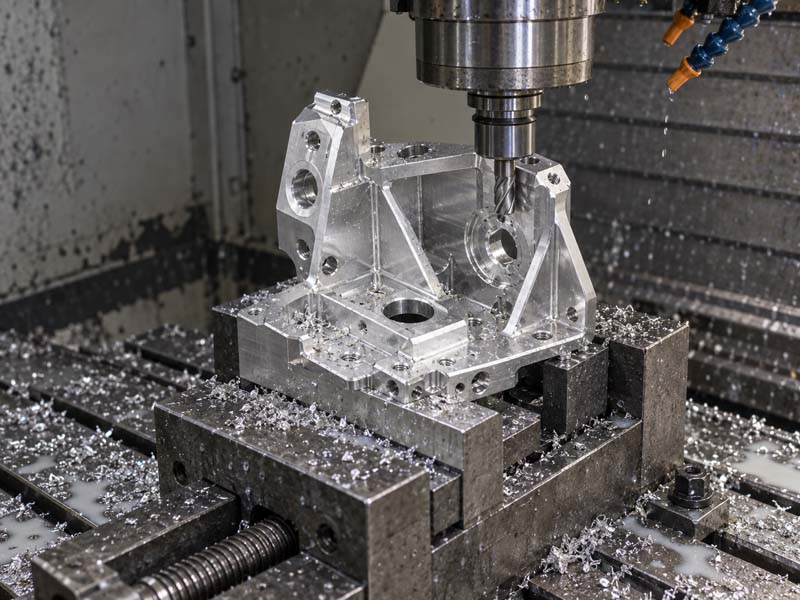
Introduction to CNC Machining of Aluminum
Aluminum is one of the most widely machined materials in the CNC industry. Its excellent strength-to-weight ratio, thermal conductivity, and corrosion resistance make it a top choice for industries ranging from aerospace to consumer electronics. However, achieving consistent quality and cost efficiency in CNC aluminum parts requires a thorough understanding of material properties, design constraints, and machining best practices. This guide covers the key factors that influence the quality, cost, and lead time of your aluminum CNC machined components.
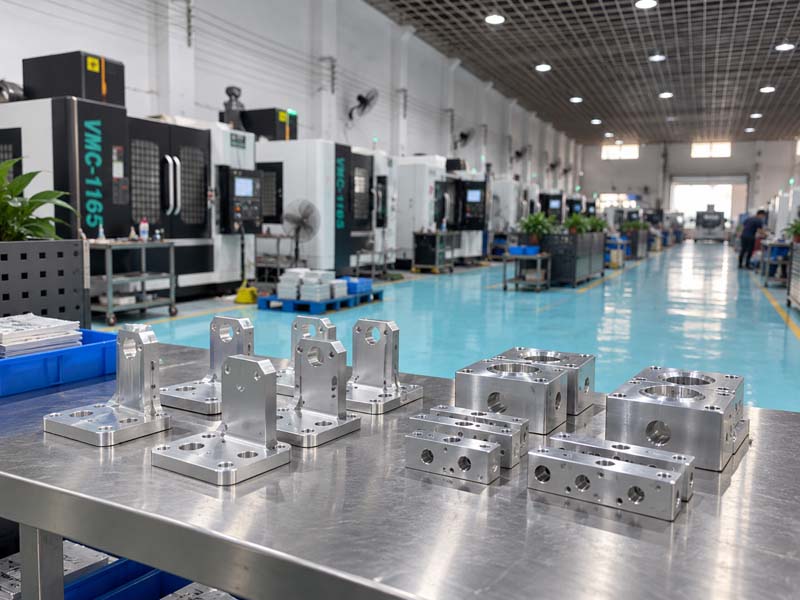
Choosing the Right Aluminum Alloy
Not all aluminum alloys machine the same way. The most common series for CNC machining are 6061, 7075, and 5083. 6061-T6 offers a good balance of machinability, strength, and cost, making it the default for general-purpose parts. 7075-T6 provides higher strength but is more prone to warping and requires slower cutting speeds. 5083 is favored for marine environments due to its excellent corrosion resistance. For high polish or anodizing, alloys like 6063 and 6463 are preferred because of their uniform grain structure.
Key Alloy Selection Guidelines
- 6061-T6: Best for structural brackets, housings, and frames.
- 7075-T651: Ideal for high-stress components like gearbox parts.
- 5083-H112: Suitable for large welded assemblies and marine applications.
- 2011: Excellent free-machining alloy for threaded fittings and small turned parts.
Design for Machinability (DFM) for Aluminum Parts
Design choices directly affect cycle time, tool wear, and part quality. Following these DFM rules will help reduce costs and avoid common machining defects.
Wall Thickness and Ribs
Avoid thin walls below 0.5 mm (0.020 in) for aluminum. Thin sections vibrate during cutting, causing chatter and poor surface finish. Increase wall thickness to at least 1.0 mm (0.040 in) for rigidity.
Internal Corners and Radii
Sharp internal corners should be avoided. Use a tool radius of at least R1.0 mm (0.039 in). Smaller radii require small-diameter end mills, which are weaker and slower. A generous fillet allows a larger tool and faster material removal.
Threaded Holes
Aluminum is soft and prone to thread stripping. For holes below M5, consider using threaded inserts. For larger threads, ensure hole depth accommodates full thread engagement without bottoming out. Avoid blind threads too close to the surface.
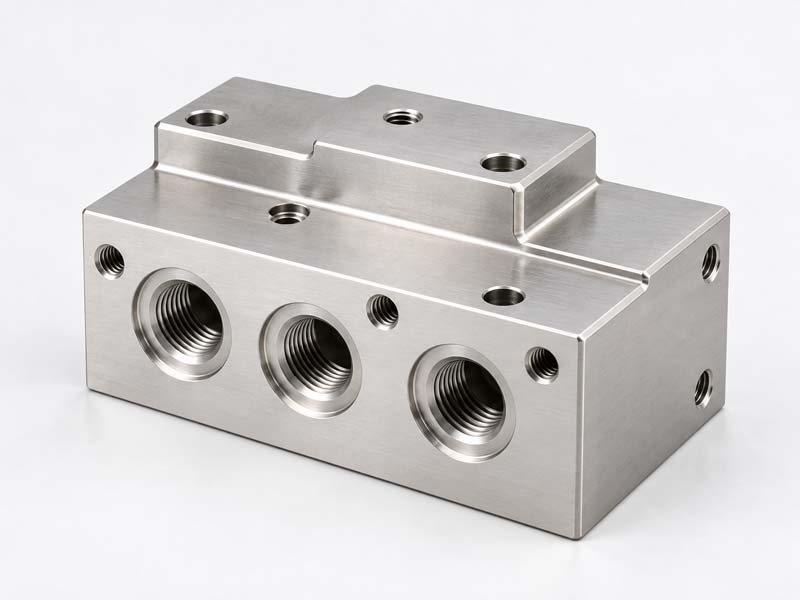
Tolerances and Surface Finish
Standard CNC machining tolerances for aluminum are ±0.1 mm (ISO 2768-m). Tighter tolerances down to ±0.025 mm are achievable but increase cost due to slower speeds, multiple passes, and frequent inspection.
Surface Roughness
Standard milling produces Ra 1.6–3.2 µm. For a smooth finish (Ra 0.8 µm), use fine finishing passes with small stepover. As-machined surfaces are usually acceptable for functional parts. Aesthetic parts often require secondary finishing like media blasting or chemical etching.
Flatness and Straightness
Thin and large aluminum parts can warp during machining due to residual stresses. Stress-relieving the raw stock (e.g., pre-stretching for 6061-T651) helps. Use damper toolpaths and reduce clamping pressure to minimize distortion.
Fixturing and Workholding Strategies
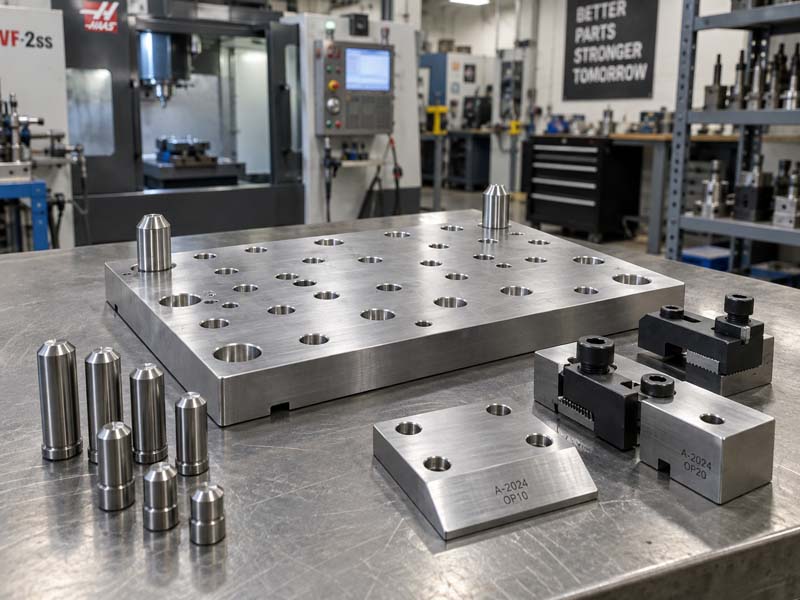
Proper fixturing is critical in aluminum machining because the material is lightweight and can vibrate. Common solutions include:
- Vacuum tables: Ideal for flat, thin parts to provide even support.
- Modular fixture plates with locating pins: Repeatable setup for batch production.
- Soft jaws and custom vises: For irregular profiles and complex geometries.
Tooling and Cutting Parameters
Aluminum is abrasive due to its oxide layer. Carbide end mills with AlTiN or DLC coatings reduce built-up edge. Recommended cutting speeds: 600–1200 m/min for roughing, 200–500 m/min for finishing. Use coolant (water-soluble) to prevent chip welding. Chip evacuation is key: employ high helix angles and peck drilling.
Quality Inspection Methods
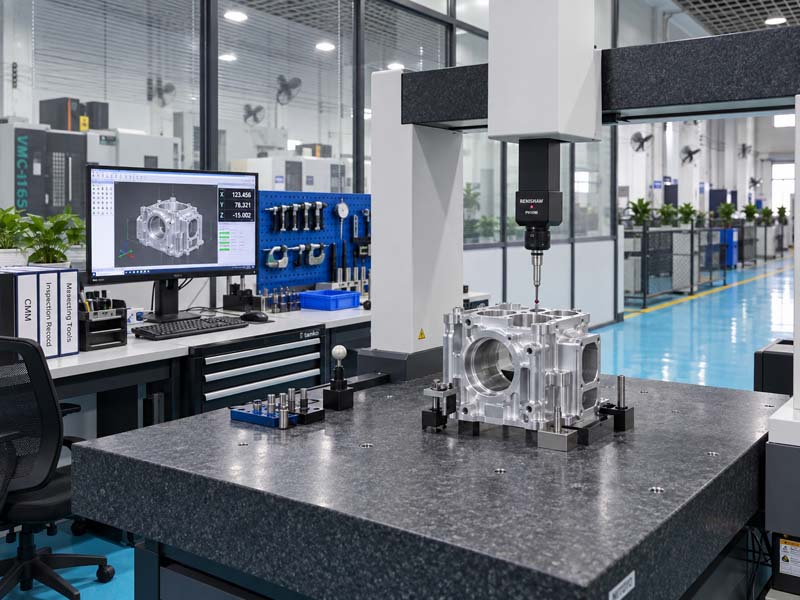
Inspection ensures conformance to drawing specifications. Common tools include CMM for complex geometries, height gauges for flatness and hole positions, and thread gauges for internal threads. Optical comparators check contour profiles. For critical aerospace parts, coordinate measuring machines (CMM) are used with full reporting.
Surface Finishes for Aluminum Parts
Post-machining treatments improve appearance and corrosion resistance. Common options:
- Clear anodizing (Type II): Thin transparent layer for protective and aesthetic.
- Hard anodizing (Type III): Thicker, wear-resistant coating for harsh environments.
- Powder coating: Durable color finish for outdoor enclosures.
- Bead blasting: Uniform matte surface to remove tool marks.
Common Challenges and How to Overcome Them
Burr Formation
Aluminum tends to produce burrs on edges. Use sharp tools, climb milling, and deburring tools or cycles. Design chamfers (e.g., 0.5×45°) to break sharp edges.
Chatter and Vibration
Reduce tool overhang, increase feed, and use variable helix end mills. For thin walls, use adaptive roughing strategies and leave a finishing allowance of 0.2–0.5 mm.
Dimensional Instability After Machining
Stress relief by natural aging or thermal cycling is recommended for precision parts. Rough in stages: first rough, allow stress release, then finish. This stabilizes dimensions.
Conclusion
Successful CNC machining of aluminum parts requires a holistic approach—from material selection and design for manufacturability to proper fixturing and finishing. By understanding the behavior of aluminum alloys and applying best practices in tooling and inspection, engineers and buyers can achieve high-quality, cost-effective parts with short lead times. For complex projects, collaborating with an experienced CNC machining shop like Hongke CNC ensures that your design is optimized for manufacturing from the start.