
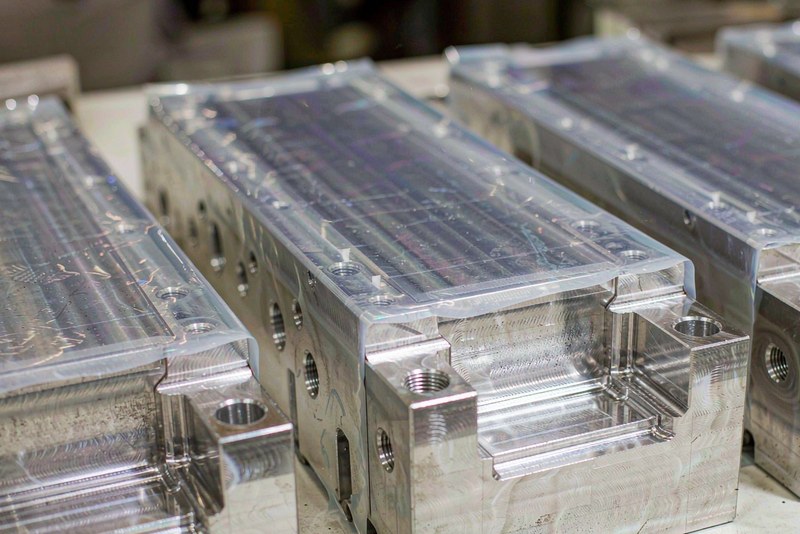
Quick Answer
Chromate conversion coating, often called chem film, is a chemical film grown into an aluminum surface rather than a layer built on top of it. It adds a fraction of a micrometre, keeps contact resistance low enough for grounding, and gives primer something to grip. The drawing decision comes down to chemistry — hexavalent Type I or trivalent Type II — and class, because the class sets the trade between corrosion protection and electrical resistance. Masking follows from fits and threads, not from habit.
Key Takeaways
- Conversion coating reacts with the metal; it does not build a film the way plating or anodizing does.
- Trivalent chemistry has displaced hexavalent chemistry in many supply chains, yet older drawings may still name the older process.
- Class selection trades corrosion protection against lowest contact resistance; read the revision your drawing cites.
- Growth is small but not zero, so bores and press fits deserve a check before you assume no masking.
- Defects usually trace back to surface preparation, not to the bath chemistry.
What Chromate Conversion Coating Actually Does
The process is a controlled reaction, not a deposition. An acidic solution dissolves a thin layer of aluminum and reprecipitates a mixed oxide film containing chromium compounds, so the film stays continuous with the substrate beneath it. Nothing is plated on, so there is no build-up at hole edges and no layer that can flake away.
For the same reason it hides nothing: tool marks, chatter and smeared aluminum from a dull cutter survive the process and often stand out more, because the film takes colour differently on a torn surface. What the film does is slow corrosion, give primer a surface to key into, and leave the face conductive. It does not resist abrasion, insulate or fill porosity, and the surface finish selection guide for CNC parts covers what to change when a visible face is the problem.
Type I vs Type II, and the Class Question
Type I covers coatings based on hexavalent chromium. It is the older family, still established in aerospace and defence chains, partly because self-healing at damage is strong. Hexavalent chromium is also heavily regulated, so availability varies by region.
Type II uses trivalent chromium. It simplifies compliance, but the film heals less readily and leans harder on surface preparation, and colour runs clear to a light blue tint rather than the yellow iridescence of the older process. Non-chromate alternatives exist, though they are not interchangeable without review.
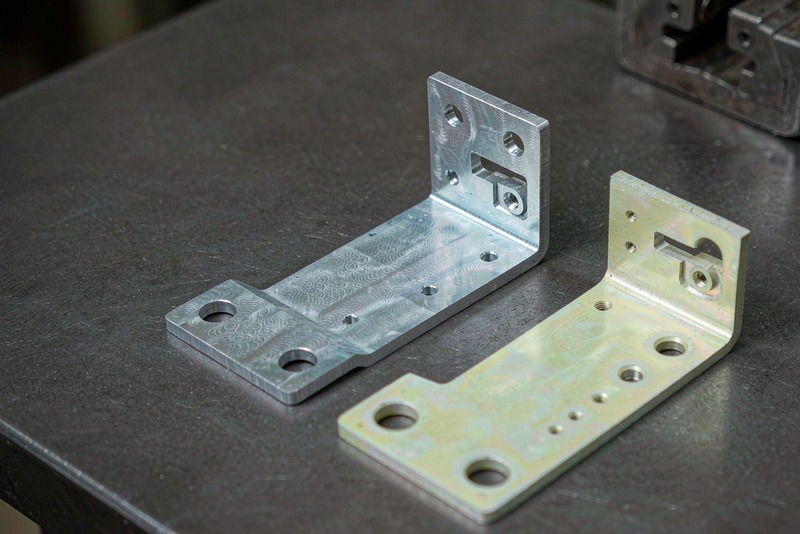
The class is a separate decision, and the one buyers get wrong most often. For aluminum the usual reference is the governing military specification, where classes separate maximum corrosion protection from low electrical resistance. Read the class definition in the revision your drawing cites, then state chemistry, class and revision on the 2D drawing for machining.
Masking, Threads, and Dimension Control
The film is thin enough that most features need no protection, and that is where the savings sit. Masking is manual labour, and every masked hole or stud adds handling plus a route for adhesive residue to reach the surface around it.
The exceptions deserve a feature-by-feature check. A precision bore held at one end of its band, a bearing seat or a ground mating face has limited room, so treat the coating as one more variable in the stack. It is nothing like plating: the electroless nickel plating guide shows how quickly tens of micrometres eat a thread allowance.
Threads are decided by fit class. Coarse threads usually gauge correctly after coating, while fine pitches and close fits are worth checking with the drawing's gauge, the same reasoning behind hole tolerances and fits. Coating also belongs after machining and deburring, because tapping a masked hole afterwards breaks the film.
Electrical Bonding and Paint Adhesion
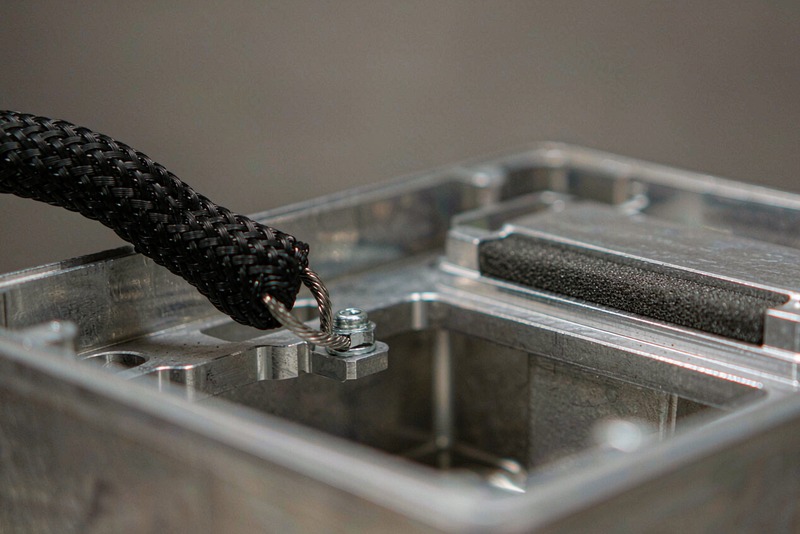
Contact resistance is where chem film separates itself from anodizing. An anodized layer is a dielectric, so it has to be masked or fitted with a grounding insert wherever the housing carries current. A conversion-coated surface stays conductive, so gaskets and grounding studs can land directly on it.
The number is not zero, though. Coating weight, contamination and corrosion products raise resistance, and a class picked for maximum protection will not give the lowest value. If a bond limit appears on the drawing, verify it on the first article instead of assuming it from the class label.
Paint adhesion is the second function. Conversion coating is a conventional pretreatment under primer and powder, improving adhesion and undercut resistance at scribes. Cleanliness before coating and the interval before priming decide whether that holds: a part left for weeks in a humid shop is not the same substrate as one primed inside the primer supplier's recoat window.
Common Mistakes That Cost Real Money
- A callout that names the process but neither chemistry nor class. The finisher picks something reasonable for the alloy, and the next lot arrives in a different colour with different resistance.
- Finishing before the last machining operation. Re-cut features show bare aluminum, touch-up is visible, and the part is rejected on appearance although it functions.
- Substituting trivalent for hexavalent without written approval. The change reads as minor on paper and is not minor where a drawing or a qualification test names Type I.
FAQ
Does chromate conversion coating change part dimensions?
Barely. The film sits in the sub-micrometre range and does not move a general tolerance. Where a bore sits at the edge of a narrow band, ask the finisher what growth the class produces rather than assume zero.
Can chem film replace anodizing?
No. Anodizing builds a thicker, harder, insulating film, which is what a sliding surface or a dielectric barrier needs. Chem film is a thin, conductive corrosion barrier and paint base.
Is Type II a drop-in replacement for Type I?
Not automatically. It removes hexavalent chromium and simplifies compliance, but self-healing is weaker and pretreatment quality matters more. Where a drawing or a customer qualification names Type I, get written approval first.