
Introduction: Why Surface Finishes Matter in CNC Machining
In CNC machining, the surface finish of a part is often as critical as its dimensional accuracy. A well-chosen finish can improve corrosion resistance, wear life, aesthetics, and even electrical conductivity. Conversely, an inappropriate finish can lead to part failure, increased cost, or unnecessary lead time. This guide covers the most common post-machining surface finishes, their characteristics, when to use them, and how to specify them on your engineering drawings.
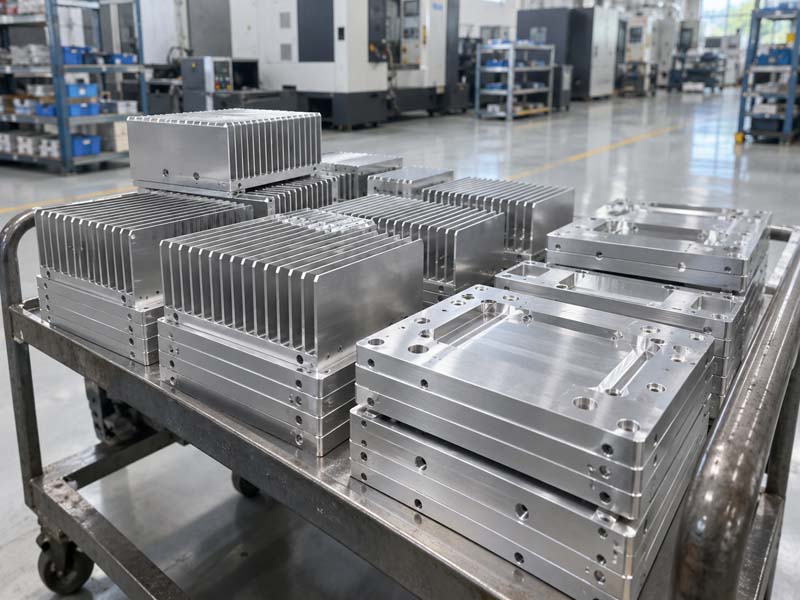
As-Machined Finish
The as-machined finish is the surface left directly after the cutting tool passes. It is the default and most economical option. Typical surface roughness (Ra) values range from 3.2 μm (125 μin) for standard milling to 0.8 μm (32 μin) for fine turning. The appearance is matte with visible tool marks in a uniform direction. For many internal components or parts that will be fully enclosed, this finish is sufficient. However, as-machined surfaces may have sharp burrs and are more susceptible to corrosion, especially on aluminum alloys.
When to Choose As-Machined
- Prototypes and low‑volume production where cost is the primary concern.
- Internal components that do not require high aesthetics or corrosion protection.
- Parts that will later be coated or plated.
Bead Blasting
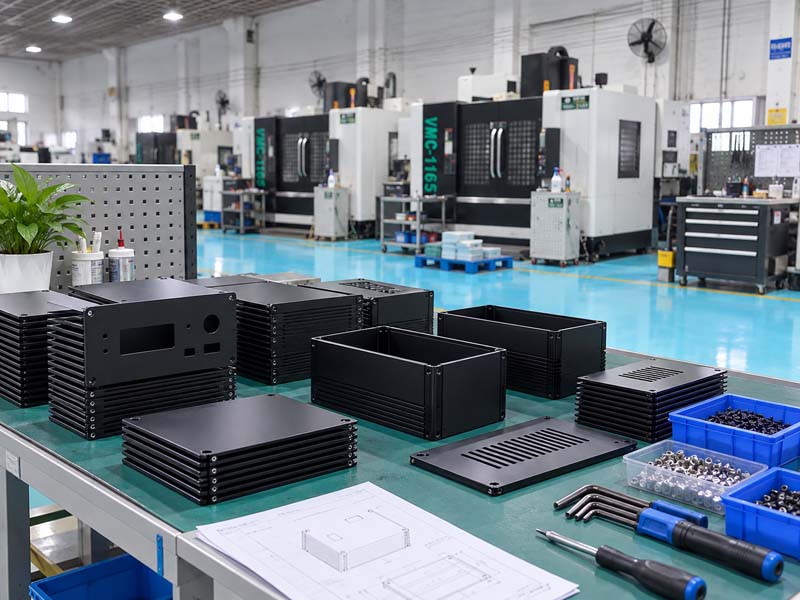
Bead blasting uses fine glass or ceramic beads propelled by compressed air to create a uniform, matte surface. It removes tool marks and burrs while reducing surface roughness to around 1.6–3.2 μm Ra. The resulting finish is clean and non‑reflective, often used as a preparation step for anodizing or painting. Bead blasting does not change part dimensions significantly, but it can round sharp edges slightly.
Key Benefits
- Consistent matte appearance across complex geometries.
- Improves adhesion for subsequent coatings.
- Cost‑effective for medium‑size batches.
Anodizing (Type II and Type III)
Anodizing is an electrochemical process that thickens the natural oxide layer on aluminum and titanium parts. It is the most popular finish for CNC‑machined aluminum due to its excellent corrosion resistance, hardness, and ability to accept dyes. Type II (sulfuric anodizing) produces a decorative, dyeable coating up to 25 μm thick. Type III (hard anodizing) creates a much thicker, harder layer (up to 100 μm) ideal for wear‑prone surfaces. The finish can be dyed in various colors, with black, clear, and gold being the most common. Anodizing is highly durable and does not peel or chip like paint.
Design Considerations
- Anodizing adds thickness (about 50% inward, 50% outward). For tight tolerances, pre‑anodizing dimensions must account for this.
- Threads and critical bores should be masked or machined after anodizing.
- Type III hard anodizing can make the surface brittle; avoid it on thin walls or parts subject to impact.
Powder Coating
Powder coating is a dry finishing process where electrostatically charged powder is sprayed onto the part and then cured under heat to form a tough, thick coating (60–150 μm). It offers outstanding impact resistance, UV stability, and a wide range of colors and textures (smooth, wrinkle, textured). Powder coating can be applied to aluminum, steel, and stainless steel. It is thicker than anodizing and less suitable for tight tolerances, but it provides excellent protection for outdoor components.
Limitations
- Not suitable for parts with fine threads or small holes that cannot be masked.
- Thick coating may affect fit and assembly.
- Edges may chip if the part is struck sharply.
Other Common Finishes
Electroless Nickel Plating: Used on steel and aluminum for uniform deposit thickness and high hardness. Often applied to hydraulic manifolds and valve bodies.
Passivation: A chemical treatment for stainless steel to remove free iron and enhance corrosion resistance. Does not change appearance or dimension.
Black Oxide: A conversion coating for steel that provides mild corrosion resistance and a black matte appearance. Often used on tooling and fasteners.
How to Specify Surface Finishes on Drawings
To avoid miscommunication with your CNC shop, always include the following information on your technical drawing:
- Surface roughness symbol (Ra): Define the required Ra value for functional surfaces.
- Finish callout: Use standard abbreviations (e.g., "ANODIZE PER MIL‑A‑8625 TYPE II, BLACK").
- Masking requirements: Specify which areas must remain uncoated (e.g., threads, sealing faces).
- Tolerance implications: Indicate if critical dimensions are to be measured before or after finishing.
Cost Considerations
Surface finishing can add 10–50% to the total part cost depending on complexity. As‑machined is always the cheapest. Bead blasting adds a modest cost per part. Anodizing (Type II) is generally affordable for batches, while Type III hard anodizing can be significantly more expensive due to process time. Powder coating is cost‑effective for high volumes but may become expensive for small runs due to setup and masking. Electroless nickel and specialty finishes command premium prices.
Quality Inspection of Surface Finishes
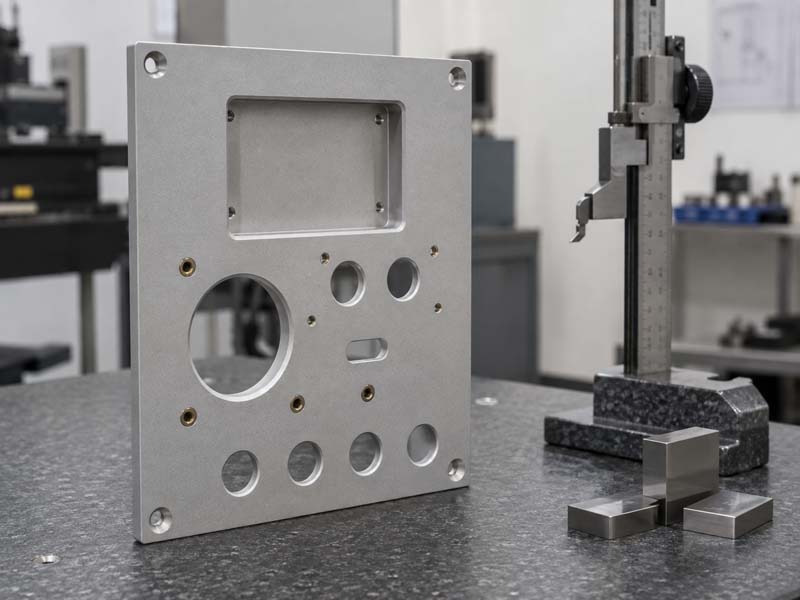
Inspection methods for surface finishes include visual comparison with standards (e.g., Ra comparators), profilometry for quantitative roughness measurement, and adhesion tests for coatings (tape pull, cross‑hatch). For anodizing, thickness can be checked with eddy current gauges, and seal quality with dye penetration tests. A reliable CNC machining partner will document these inspection results and provide certificates of compliance upon request.
Conclusion: Choosing the Right Finish
Selecting the optimal surface finish for your CNC machined parts requires balancing aesthetics, function, environment, and budget. For aluminum prototypes, as‑machined or bead blasted finishes are often sufficient. For production parts exposed to moisture, anodizing or powder coating is recommended. Always communicate your finish requirements clearly on the drawing, and partner with a shop that understands the process capabilities and limitations. With the right finish, your parts will perform better, last longer, and look professional.