Introduction: Why Material Selection Matters in CNC Machining
Choosing the right material for your CNC machined parts is one of the most critical decisions in product development. The material affects not only the machining process itself—speeds, feeds, tool wear—but also the final part's mechanical properties, surface quality, dimensional accuracy, and cost. Whether you are designing a lightweight bracket for aerospace, a corrosion-resistant fitting for marine applications, or a high-precision bushing for medical devices, understanding the trade-offs between different materials is essential. This guide provides a comprehensive overview of the most common materials used in CNC machining, their characteristics, typical tolerances achievable, and practical considerations for engineers and product designers.
Key Considerations for Material Selection
Before diving into specific materials, it is important to understand the criteria that drive material choice in CNC machining:
- Machinability: How easily can the material be cut? Materials with high machinability (e.g., aluminum, brass) allow faster cutting speeds, longer tool life, and better surface finishes.
- Mechanical Strength: Does the part need to withstand high loads, impact, or fatigue? Steel and titanium offer high strength, while plastics may be suitable for lower-stress applications.
- Corrosion Resistance: Will the part be exposed to moisture, chemicals, or salt? Stainless steel and some plastics excel in corrosive environments.
- Thermal Properties: Consider thermal expansion, conductivity, and heat resistance. For high-temperature applications, materials like PEEK or Inconel are used.
- Dimensional Stability and Tolerances: Certain materials hold tight tolerances better than others. For example, aluminum can maintain ±0.005 mm under proper conditions, while softer plastics may require looser tolerances.
- Surface Finish and Aesthetics: Some materials can be polished, anodized, or coated to achieve desired appearance and protection.
- Cost and Availability: Material cost varies significantly. Aluminum is inexpensive, while exotic alloys and high-performance plastics can be costly.
Common Metals for CNC Machining
Aluminum (e.g., 6061-T6, 7075-T6)
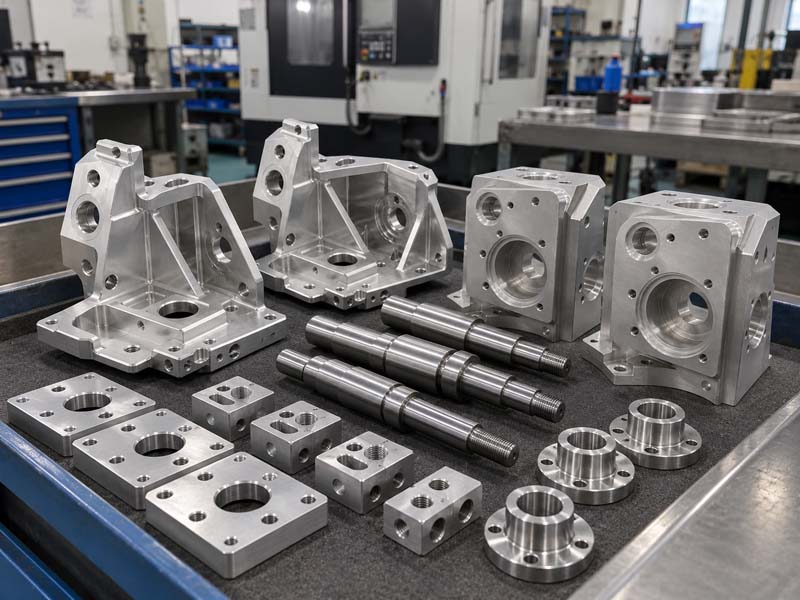
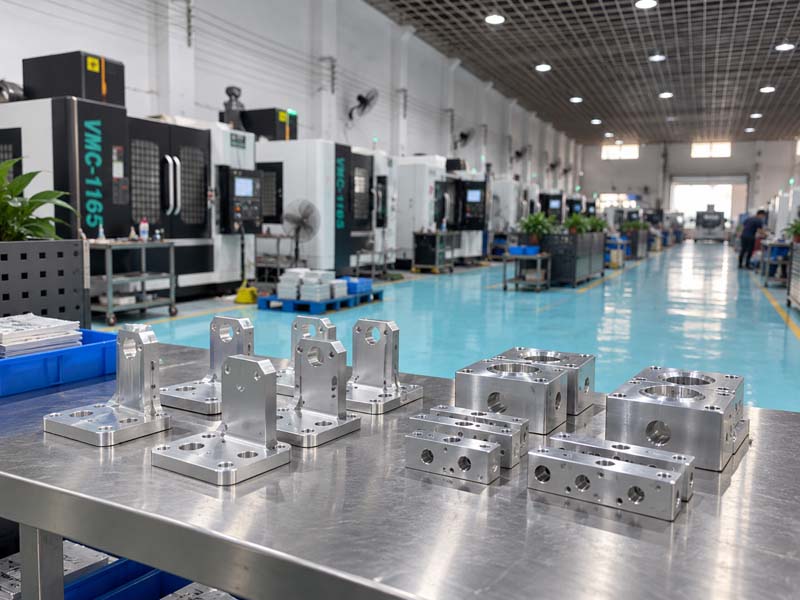
Aluminum is the workhorse of CNC machining. It offers excellent machinability, a good strength-to-weight ratio, and natural corrosion resistance. 6061-T6 is the most common grade, suitable for structural parts, enclosures, brackets, and heat sinks. 7075-T6 provides higher strength, similar to many steels, and is used in aerospace and high-stress applications. Aluminum can achieve tight tolerances (down to ±0.005 mm) and excellent surface finishes. It is also receptive to post-processing like anodizing (adding color and wear resistance) and bead blasting. The image below shows a batch of aluminum brackets and housings machined to precise specifications.
Stainless Steel (e.g., 303, 304, 316)
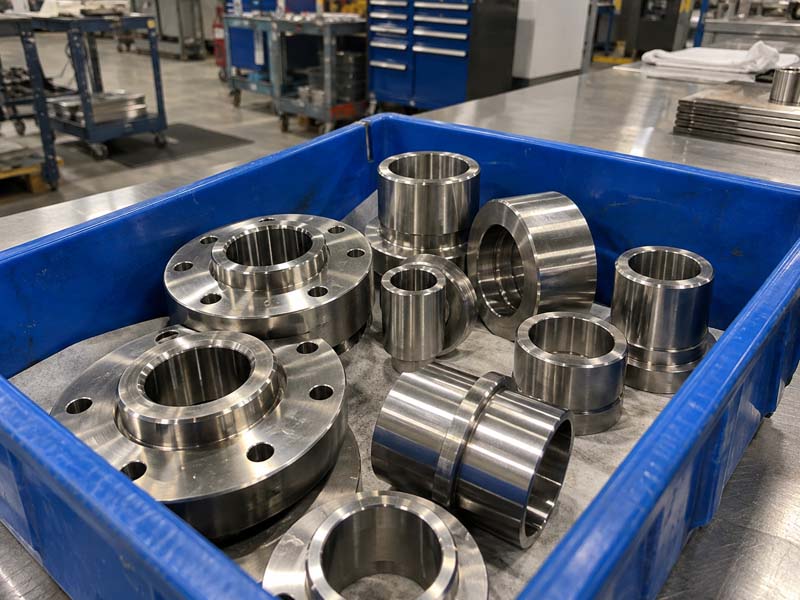
Stainless steel is prized for its strength and corrosion resistance. Grade 303 is the easiest to machine due to added sulfur, making it ideal for fittings, fasteners, and bushings. 304 and 316 are more corrosion-resistant but harder to machine, requiring slower speeds and rigid setups. Stainless steel can hold tolerances of ±0.01 mm with careful programming and sharp tooling. It is commonly used in food processing, medical, and marine environments. Surface finishes can be passivated or electropolished for enhanced corrosion protection.
Brass (e.g., C36000)
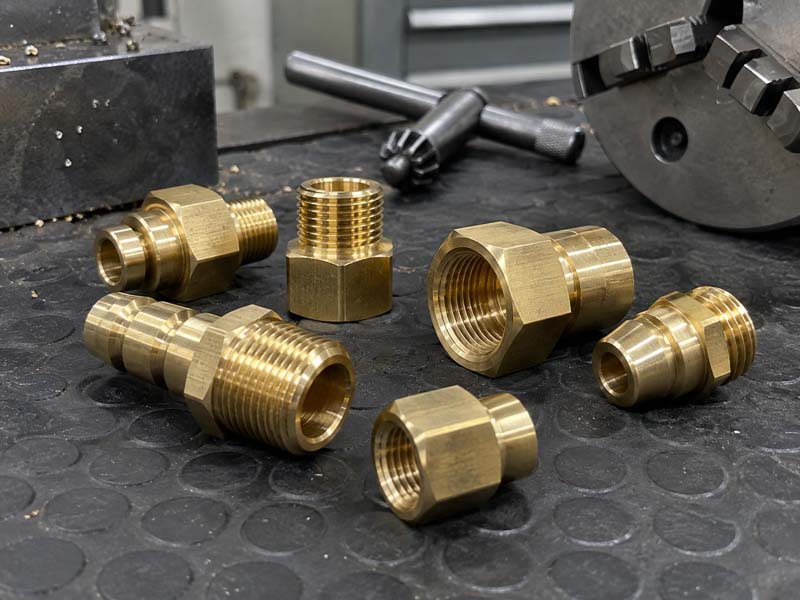
Brass is one of the most machinable metals. C360 free-cutting brass is an excellent choice for threaded components, valve parts, and decorative fittings. Its high thermal conductivity and low friction make it suitable for bushings and gears. Brass can achieve very tight tolerances (±0.005 mm) and a beautiful bright finish. It is also cost-effective for high-volume production.
Other Metals (Steel, Copper, Titanium)
Carbon steel (e.g., 1018, 12L14) offers high strength at low cost, but requires protective coatings to prevent rust. Copper and copper alloys provide excellent electrical and thermal conductivity, used in heatsinks and electrical contacts. Titanium (Grade 2, Grade 5) is strong, lightweight, and biocompatible, but difficult to machine—requiring specialized tooling and slow feeds.
Engineering Plastics for CNC Machining
Plastics are increasingly used in CNC machining for their light weight, chemical resistance, electrical insulation, and self-lubricating properties. Common engineering plastics include:
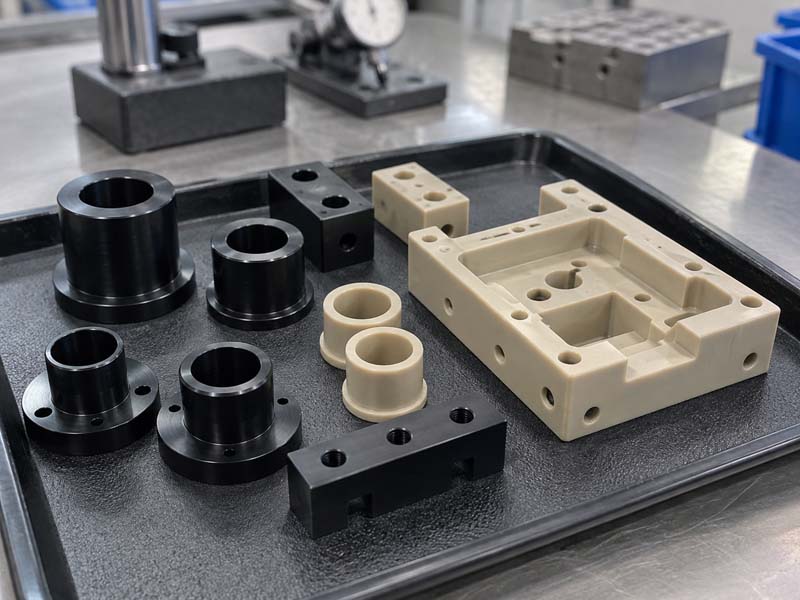
- Delrin (POM): High stiffness, low friction, excellent dimensional stability. Holds tolerances of ±0.025 mm. Ideal for gears, bushings, and jigs.
- Nylon (PA6, PA66): Tough, wear-resistant, but can absorb moisture causing dimensional changes. Used for bearings, rollers, and structural parts.
- PTFE (Teflon): Extremely low friction, chemically inert, but soft and difficult to hold tight tolerances. Used for seals, linings, and electrical insulators.
- PEEK: High-performance plastic with excellent mechanical and thermal properties. Can withstand continuous temperatures up to 250°C. Used in aerospace, medical, and semiconductor applications. Tolerances around ±0.05 mm.
- ABS: Affordable, impact-resistant, easy to machine. Often used for prototypes and housings.
Material Comparison in Brief
| Material | Machinability | Typical Tolerance (mm) | Strength | Corrosion Resistance | Relative Cost |
|---|---|---|---|---|---|
| Aluminum 6061 | Excellent | ±0.005 | Medium | Good (with anodizing) | Low |
| Stainless Steel 304 | Good | ±0.01 | High | Excellent | Medium |
| Brass C360 | Excellent | ±0.005 | Medium | Moderate | Low-Medium |
| Delrin | Excellent | ±0.025 | Medium | Excellent | Low |
| PEEK | Fair | ±0.05 | High | Excellent | High |
Surface Finishes and Post-Processing
After machining, surface finishes enhance appearance and functionality. For metals, common options include anodizing (aluminum), passivation (stainless steel), bead blasting, powder coating, and plating. For plastics, polishing, flame treating, and painting can improve aesthetics. The required surface roughness (Ra) depends on the material and process; for example, CNC milling aluminum can achieve Ra 0.4–0.8 µm, while grinding can achieve Ra 0.2 µm. Always specify the desired finish on your drawing.
How Hongke CNC Can Help with Your Material Selection
At Hongke CNC, we have extensive experience machining a wide range of materials for industries such as aerospace, automotive, medical, and electronics. Our skilled team can advise on the best material for your application, considering machinability, tolerances, and cost. We offer comprehensive capabilities including 3-axis, 5-axis, and multi-axis CNC milling and turning, with in-house inspection using CMM and other precision tools. Contact us to discuss your next project.
Conclusion
Material selection is a balancing act among performance, manufacturability, and budget. By understanding the properties and machining characteristics of common materials—from aluminum and stainless steel to engineering plastics—you can make informed decisions that reduce production time, improve part quality, and lower costs. Use this guide as a starting point, and partner with a skilled CNC machining service like Hongke CNC to achieve the best results.