Quick Answer
The short answer to 304 vs 316 stainless steel is molybdenum. Both are austenitic, machine similarly and work-harden the same way, but 316 carries roughly 2–3% molybdenum for chloride resistance, which raises material cost and usually trims cutting speed. Choose 316 where the part meets salt, marine air or chloride process fluids; choose 304 for general-purpose parts in non-chloride environments.
Key Takeaways
- Molybdenum content, not machinability, decides most grade calls; both grades cut at comparable rates, so the service environment should drive the choice.
- Austenitic grades work-harden, so a light pass that rubs the surface hardens the next cut instead of removing it.
- 303 machines better than either, but its sulfur addition restricts welding and lowers corrosion resistance.
- Tolerances and finish are achievable on selected critical features, depending on material, geometry, workholding, process route and inspection.
304 vs 316 Stainless Steel: What Actually Differs
Both grades sit in the austenitic 300 series, so they share the same structure, a non-magnetic baseline and broadly the same machining behavior.
| Characteristic | 304 | 316 |
|---|---|---|
| Chromium (nominal) | 18% | 16–18% |
| Molybdenum | None | 2–3% |
| Chloride pitting resistance | Moderate | Higher |
| Relative material price | Baseline | Higher |
Composition ranges move with product form and with the ordered standard, so treat this as orientation rather than a purchasing specification. Low-carbon variants — 304L and 316L — exist for welded assemblies, where carbon precipitation near the weld can reduce corrosion resistance.
Molybdenum is what the premium buys: it stabilizes the passive oxide layer against chloride attack, which is why 316 outlasts 304 in coastal air and road-salt exposure. Indoors and dry, that resistance delivers little.
Why Austenitic Stainless Machines Differently
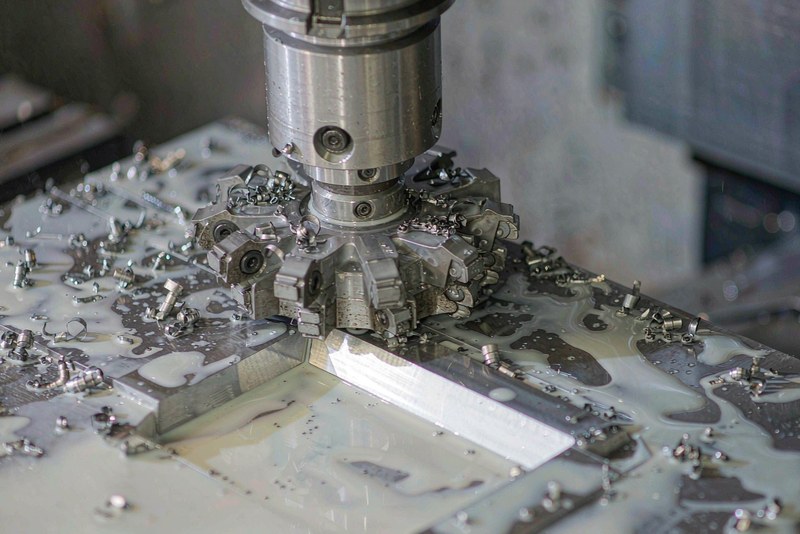
Austenitic stainless work-hardens faster than most carbon and alloy steels: instead of shearing cleanly, the material deforms and hardens ahead of the cutting edge, so the next pass meets a harder surface than the one just cut.
- Keep the tool engaged and clear the hardened layer. A feed slow enough to rub hardens the surface, and shaving at that skin removes no sound material.
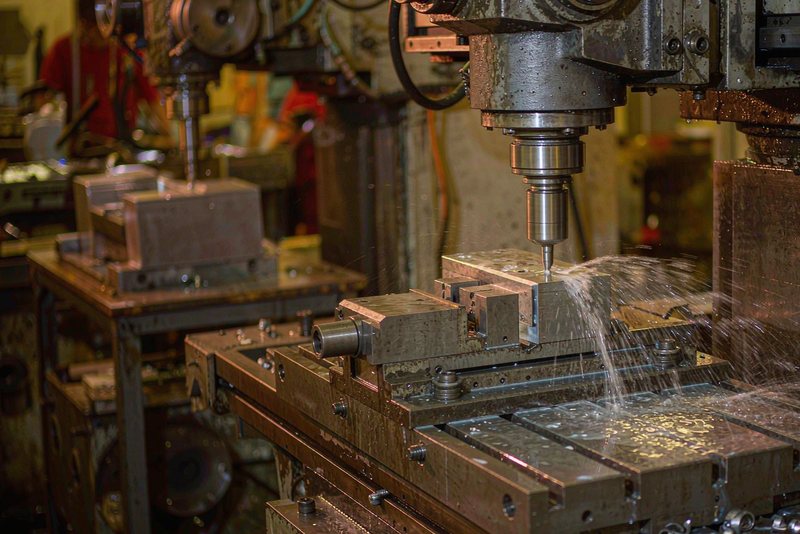
- Expect heat at the tip. Stainless conducts heat poorly, so much of the cutting heat stays in the tool; coolant aimed at the edge matters more than total flow.
- Watch threads and sealing faces. Stainless galls readily, and a torn thread is a scrapped part.
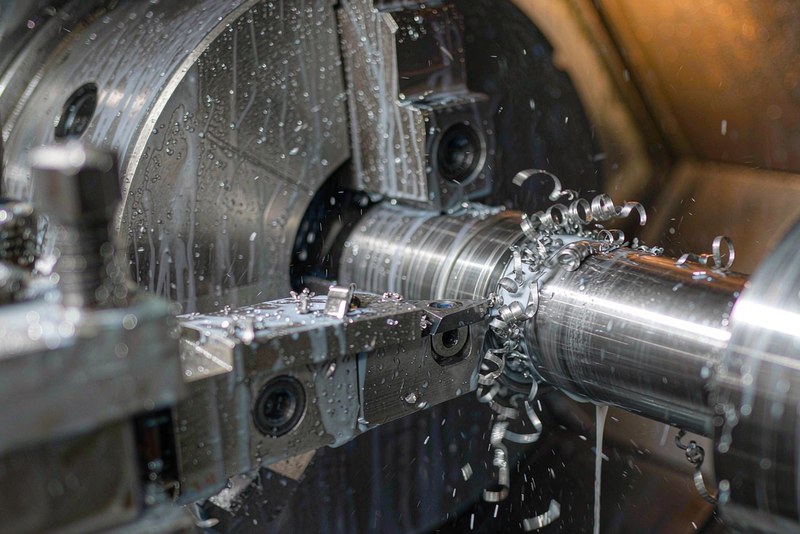
The machinability gap between the grades is modest — lower surface speed and shorter insert life on 316. Grade choice is rarely the largest lever on cycle time; insert geometry, coolant delivery and rigidity usually matter more.
Choosing Between 304 and 316
316 earns its premium when the part has a credible chloride exposure path: coastal and marine atmospheres, road salt, chloride process fluids, regular washdown in food or pharmaceutical equipment, and repeatedly disinfected laboratory hardware. Crevices, stagnant pools and weld heat-affected zones are where pitting starts, so a heavily creviced part near chlorides can justify 316 even when the environment looks mild.
316 still has a ceiling: it resists pitting better than 304, but hot concentrated chlorides can cause stress corrosion cracking, which calls for a duplex or nickel-alloy grade.
The mirror image holds for 304: indoor machinery, brackets and housings with no chloride exposure, fresh-water fluid handling, and high-volume parts where the material delta multiplies all point to the lower grade. Specifying 316 by default "to be safe" pays a premium for no functional gain; specifying 304 into chlorides trades a small saving for pitting.
Free-Machining and Higher-Strength Alternatives
When corrosion demand is modest and cycle time is the binding constraint, the grade list does not stop at 304 and 316.
303 is the usual answer: it machines better than either grade because the sulfur addition improves chip control, at the cost of weldability and some corrosion resistance. Where strength matters more than corrosion, 17-4 PH develops high strength through precipitation hardening after machining, so the part is cut in a softer condition and hardens in the aging furnace. The trade is consistent: easier machining comes from additions that cost corrosion resistance or weldability.
If you are weighing stainless against lighter options, the CNC machining materials guide compares aluminum, brass and engineering plastics on machinability and cost, while the aluminum 6061 vs 7075 comparison shows the spread inside one material family.
Passivation, Finishing and Inspection Notes
Machining leaves free iron and smeared material on a stainless surface. Those contaminants are what rust — not the base metal — so removing them is part of making the part.
- Passivation restores the passive oxide layer and dissolves surface contamination. Citric and nitric processes are both in use; which applies depends on the governing specification.
- Deburring matters more on stainless than on most steels, because the material holds a burr and the burr is a corrosion site.
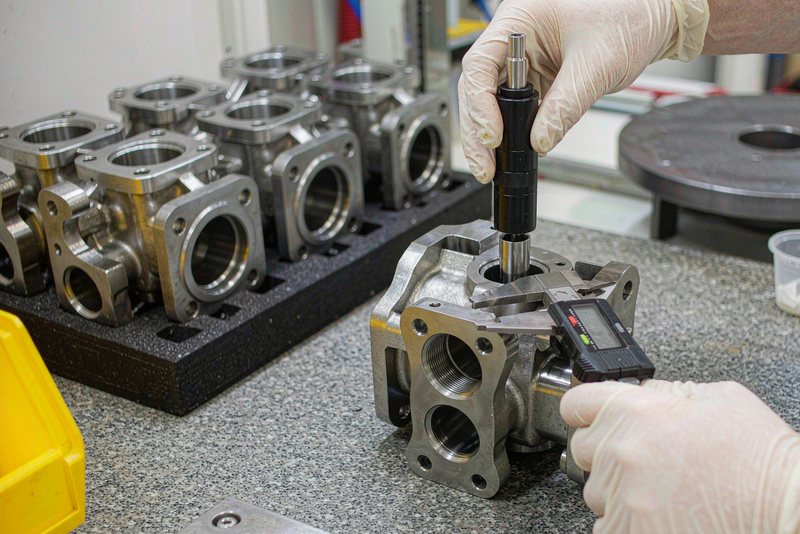
- Threads and sealing faces should be gauged rather than judged by feel, and a thread design guide helps set the class and callout before metal is cut.
- Surface treatment follows the same logic as surface finishes on machined parts: state the requirement, the acceptance criteria, and who arranges the work.
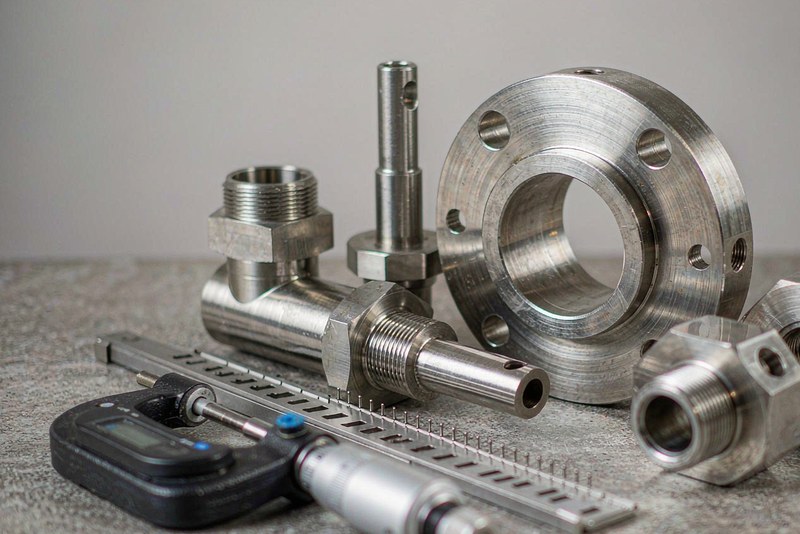
Inspection is conventional — calipers, micrometers, height gauges, thread gauges and CMM work where the drawing calls for it; the method does not change with the grade.
FAQ
Is 316 harder to machine than 304?
Slightly. The molybdenum addition reduces practical surface speed and shortens insert life a little, but setup, rigidity and coolant delivery have a larger effect than the grade.
Can we substitute 316 for 304 without telling the supplier?
Tell the supplier. A higher grade in the same family is usually acceptable functionally, but it changes cost and stock availability, and in regulated work the certificate must match the drawing.
Does 316 stainless resist all corrosion?
No. It resists chloride pitting better than 304, a bounded advantage. Strong acids and hot concentrated chlorides can still attack it, and those applications usually need a duplex or nickel-alloy grade.