
When you need metal parts manufactured, the choice of production process directly affects cost, lead time, quality, and design flexibility. Three common methods – cold heading, stamping, and CNC machining – each have distinct strengths and limitations. Understanding these differences helps engineers and procurement professionals select the most efficient and economical route for their specific part geometry, production volume, and tolerance requirements.
Understanding the Three Processes
Cold Heading
Cold heading is a high-speed forging process that forms metal at room temperature using progressive dies and a series of impacts. It is primarily used to produce fasteners (screws, bolts, rivets) and other simple symmetrical parts. The process can achieve very high production rates (up to hundreds of parts per minute) with excellent material utilization, as scrap is minimal. Cold heading relies on the plasticity of the metal; common materials include low-carbon steel, stainless steel, brass, and aluminum.
Stamping
Stamping encompasses a range of sheet metal forming operations such as blanking, piercing, bending, deep drawing, and embossing. It uses a press and dies to transform flat metal sheets into desired shapes. Stamping is ideal for high-volume production of thin-walled parts like brackets, enclosures, and structural components. Tooling cost is high, but per-part cost drops significantly with volume. Stamped parts typically have moderate dimensional accuracy and smooth surfaces, though secondary operations may be needed for tight tolerances.
CNC Machining
CNC (Computer Numerical Control) machining is a subtractive manufacturing process that removes material from a solid block (billet or bar) using rotating cutting tools and precise movements. It offers the highest flexibility regarding part complexity, tolerances, and surface finish. CNC machining can produce intricate geometries, internal features, threads, and tight corner radii that are impossible with cold heading or stamping. While material waste is higher and cycle times longer, CNC machining is ideal for prototypes, low-to-medium volumes, and parts requiring high precision.
Key Comparison Factors
Part Geometry and Complexity
Cold heading is limited to relatively simple, symmetrical parts without undercuts or complex internal features. Stamping can create more complex shapes, but depth is constrained by material thickness and drawability. Deep cavities, thin walls, and sharp internal corners are challenging. CNC machining excels here: it can produce virtually any geometry defined in a CAD model, including deep pockets, internal threads, fine holes, and complex contoured surfaces. If your part has multiple features on different planes, CNC machining often reduces the need for fixture complexity.
Production Volume
Cold heading and stamping both require expensive tooling (dies) but offer very low unit costs at high volumes – typically above 10,000 to 100,000 parts. For lower volumes, the tooling amortization becomes prohibitive. CNC machining has minimal tooling cost (only workholding fixtures and standard cutting tools) and is cost-effective for prototype runs of 1–50 parts, as well as for small to medium batches (50–5,000 parts). For occasional high-volume runs, CNC machining can still be viable if the part complexity justifies it.
Material Utilization
Cold heading is near net shape: material is displaced rather than cut away, resulting in virtually no scrap. Stamping also produces very little waste (the skeleton is often recycled). CNC machining is subtractive, generating chips and swarf; material utilization can be as low as 10–30% for complex parts. However, high-value materials like titanium or copper can still be economical with CNC if the part design demands it, because the cost of material may be offset by the elimination of additional processes.
Tolerances and Surface Finish
Cold headed parts typically achieve tolerances in the range of ±0.1 mm to ±0.5 mm, depending on material and complexity. Stampings can hold ±0.05 mm to ±0.2 mm on critical dimensions with dedicated tooling. CNC machining routinely achieves tolerances of ±0.01 mm (10 microns) and surface finishes down to Ra 0.4 μm. For applications requiring tight fits, bearing surfaces, or sealing, CNC machining is the superior choice. When you need a part with fine threads or concentric features, CNC turning or milling can hold strict TIR values.
Tooling Cost and Lead Time
Cold heading dies and stamping dies are custom-made and can cost from a few thousand to tens of thousands of U.S. dollars per set, with lead times of 4–12 weeks. CNC machining requires only generic cutting tools and simple workholding, which can be prepared in a few days. The initial investment for CNC is much lower, making it the preferred route for early-stage product development and custom parts.
Unit Cost
For cold heading and stamping, unit cost drops significantly after the initial tooling investment. A screw that costs $0.01 in volume might cost $1.00 at low quantities. CNC machining has a more linear cost relationship: each part incurs material and machining time. At quantities above 5,000, cold heading or stamping usually become cheaper for suitable geometries. At 50,000+, those processes dominate.
When to Choose Cold Heading
Cold heading is your best option if you need high volumes of fasteners, pins, balls, or other simple rotational parts. Typical applications include: screws, bolts, nuts, rivets, studs, electrical connectors, and ball studs. The process is also suitable for parts that need excellent material grain flow, as cold working aligns grain structure to increase strength. However, if the part requires undercuts, cross holes, or details on multiple sides, you will need secondary operations (e.g., drilling, slotting) that add cost. In such cases, CNC machining may be a better overall solution.
When to Choose Stamping
Stamping is ideal for flat or formed sheet metal parts: brackets, housings, covers, chassis components, and spring clips. It excels in high-volume production of shapes with consistent cross‑sections. Progressive die stamping can combine multiple operations in one press stroke, delivering complete parts at rates exceeding 100 strokes per minute. If your part can be made from a metal sheet up to about 6 mm thick and has no deep internal cavities, stamping is likely the most economical choice. For parts requiring tight tolerances on formed features or for small quantities (less than 1,000), CNC machining may be cheaper and faster.
When to Choose CNC Machining
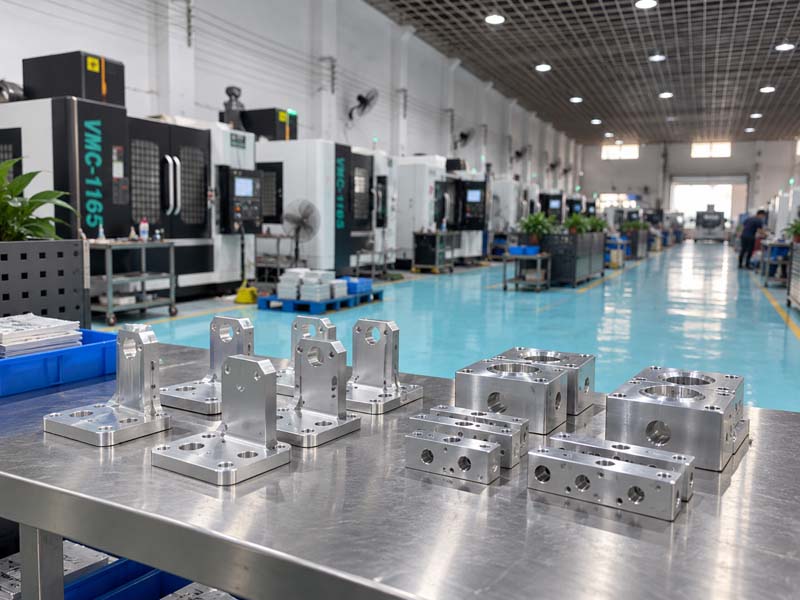
CNC machining is the go‑to process for prototypes, one‑off parts, low‑to‑medium volume production, and parts with complex geometry. Examples include: custom fittings, valve bodies, manifolds, impellers, enclosures with intricate holes and threads, parts with fine surface finish requirements, and components that must be made from difficult‑to‑form materials like hardened steel, titanium, or engineering plastics. CNC machining also allows for easy design changes – you simply update the CAM program. If your project timeline is tight and you cannot afford long tooling cycles, CNC machining becomes the most flexible solution.
Combining Processes for Optimal Results
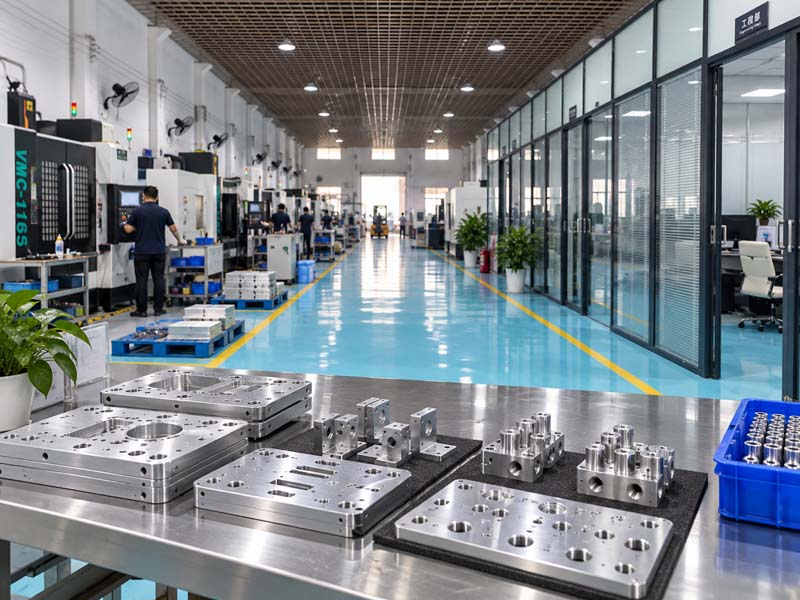
In many cases, the best approach is a hybrid manufacturing strategy: cold head or stamp a near‑net shape, then finish critical features with CNC machining. This reduces material waste and cycle time while achieving tight tolerances where needed. For example, a bolt can be cold headed, then the thread or hex drive is secondary machined to a higher precision. A stamped bracket may need drilled and tapped holes that are added on a CNC machining center. Many manufacturers offer these combined capabilities. If your supplier can coordinate both primary forming and precision machining, you benefit from a single point of contact and reduced logistics.
Final Recommendations for Engineers and Buyers
When evaluating manufacturing processes for your metal parts, start by defining the required volume, tolerance, and geometry. For high volumes of simple parts, cold heading or stamping will likely provide the lowest cost per part. For parts that demand complex features, tight tolerances, or low initial investment, CNC machining is the most practical route. Remember that CNC machining also offers fast turnaround for prototypes and design iterations, making it essential for product development cycles.
At HONGKE, we specialize in precision CNC machining services for custom metal parts. Our experienced team can review your part design, suggest DFM improvements, and provide competitive quotations for prototype through low‑volume production. We also collaborate with partners for cold heading and stamping when those processes better suit your volume and budget. Contact us to discuss the optimal manufacturing strategy for your project.