
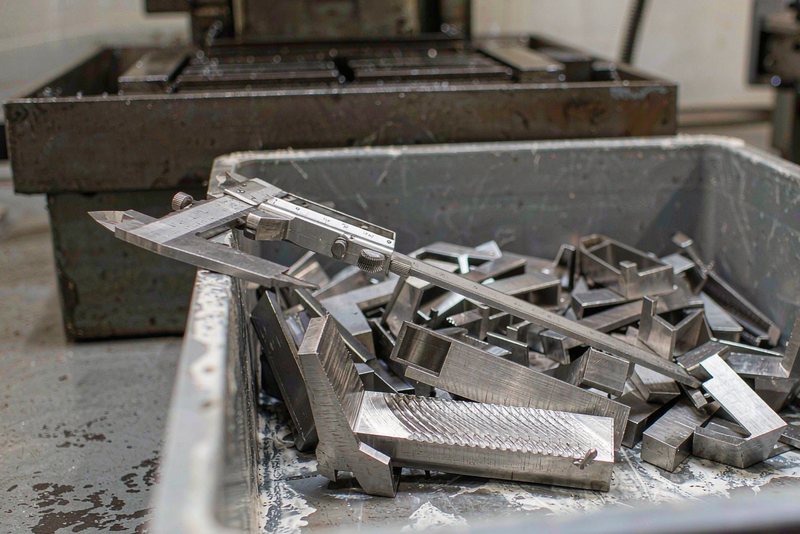
Cost of poor quality rarely appears as a line on a purchase order. It arrives later: a rejected lot, a sorting shift nobody scheduled, an assembly line that stops. Comparing only piece price assumes every supplier will deliver conforming parts on time. When that assumption breaks, the ranking between two quotes can invert inside a single non-conformance.
What Cost of Poor Quality Covers Beyond the Invoice
The usual framing is four buckets: prevention, appraisal, internal failure, and external failure. Prevention is what a shop spends to stop defects forming — drawing review, process planning, fixture design, operator training. Appraisal is what it spends to find them — first article inspection, in-process checks, incoming inspection at your dock. Internal failure is what it spends once a defect exists: scrap, rework, re-inspection, schedule recovery. External failure is what it spends after an escape: your line standing still, sorting under your roof, field returns, claim paperwork.
Piece price carries only part of the first two. The rest are contingent, which is why they vanish from comparisons and hurt when they land. External failure lands on whoever owns the part when it fails, and scrap and rework get discussed openly in a shop, while the cost of your line waiting does not appear on their books.
Why the Cheapest Quote Can Carry the Highest Quality Cost
A low piece price comes from somewhere. It may come from a better process route, a machine better suited to the geometry, or a shop that runs that family well. It may also come from a thinner inspection plan, a lighter fixture, or an assumption that the drawing is looser than it is. From outside the shop these look identical, because the quote sheet rarely says which applies.
This is why price-only comparisons reward the supplier who inspects least. A shop that checks every critical feature prices the checking in and rejects more lots, so its quality cost shows up early. One that spot-checks quotes lower and looks cleaner until the escape reaches your dock. The comparison criteria that go beyond piece price matter more here than any single number.
Supplier quality performance also tracks volume: one rejected part on a five-piece prototype order is noise, while on a monthly release the same rate compounds with every lot you accept without checking.
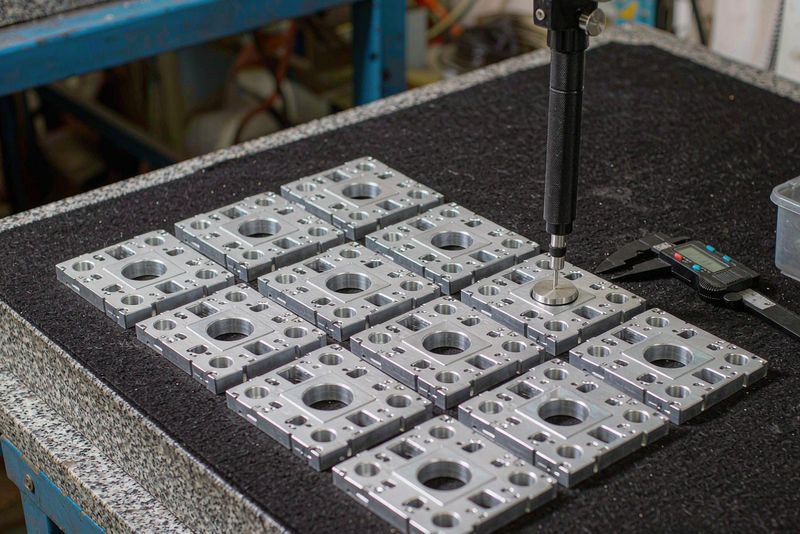
A Working Model: Putting a Quality Cost on One Part Number
You do not need a cost accounting system to build a usable quality cost model. Pick one part number, one year of demand, and four inputs.
| Input | Where to find it | Why it drives the total |
|---|---|---|
| Lot rejection rate | Incoming records or supplier data | Multiplies every failure cost below |
| Cost per rejected lot | Sorting hours, rework, expedite freight | The real unit of pain |
| Hours lost per escape | Production and planning logs | Usually exceeds the parts value |
| Admin hours per claim | Purchasing and quality time | Small per event, large per year |
Multiply rejection rate by cost per lot, add disruption and administration, then set the annual figure against the price gap between two quotes rather than the invoice total. If the gap is smaller than the expected failure cost, the cheaper quote is not cheaper.
The estimate is only as good as the history behind it, and a new supplier has none, so first article results and a pilot lot have to stand in for it.
Which Quality Costs a Buyer Can Shift, and Which Stay Yours
Containment, sorting, and rework of nonconforming lots are negotiable, as is who pays expedite freight when a delivery is late or wrong through no fault of yours. Harder to shift is the cost of your line standing still while a disposition is decided, and the engineering hours spent judging whether a deviation is acceptable.
The disposition path decides who pays what, and it is worth agreeing on it before the first lot ships rather than during the first dispute. A non-conformance report that documents the decision properly turns an argument into a record, which is the closest thing to a recoverable cost you will get.
Some of it stays with you whatever the contract says: the risk of accepting a use-as-is concession, and the cost of your customer finding the problem after you shipped. Those items sit inside total cost of ownership, and no purchase order clause transfers them.
What to Ask Before Award, Without Inviting Guesswork
Questions about quality cost produce confident numbers nobody can check. Ask for artifacts instead — documents that either exist or do not.
- The first article report for a comparable part, listing which features were measured and with what.
- The inspection plan for this part number, with sampling frequency stated per feature rather than per lot.
- Lot acceptance history on similar work over the past year, if the supplier will share it.
- The process route, naming which operations are in-house, which are subcontracted, and how finishing coordination is handled.
A first article inspection submission reveals more about inspection discipline than any statement about a quality system: it shows a real part measured against a real drawing. For a part with a demanding callout, ask which feature the process is likely to struggle with and how they intend to hold it.
Where the Estimate Usually Goes Wrong
Three errors recur. The first is counting only scrap: rework, sorting, and re-inspection usually consume more labor than the scrapped material was worth, so a scrap-only figure understates the total badly. The second is treating a rejection rate as fixed. On a new part number it tends to drift down after the first few lots, and a first-lot rate applied across a year overstates the annual number.
The third is ignoring the second-order effect. A supplier absorbing repeated rework eventually reprices the part, tightens acceptance criteria, or declines the next release. The price you had is no longer the price you have.
The cost of poor quality is not a penalty negotiated away at quotation stage. It is a property of the process route, the inspection plan, and the commercial relationship, and it appears whether or not it was in your comparison. Buyers who model it before award are pricing the same part the supplier is pricing, minus the assumptions.