
Understanding CNC Machining Cost
CNC machining cost is not a single number. It is the sum of several independent factors — material, machine time, setup, tooling, inspection, surface finishing and part geometry. A small change in design or requirement can shift the cost significantly. Understanding what drives cost allows you to make informed decisions during design and procurement. This guide explains the seven most influential factors and provides practical strategies to reduce CNC machining cost without sacrificing part function.
1. Material Selection
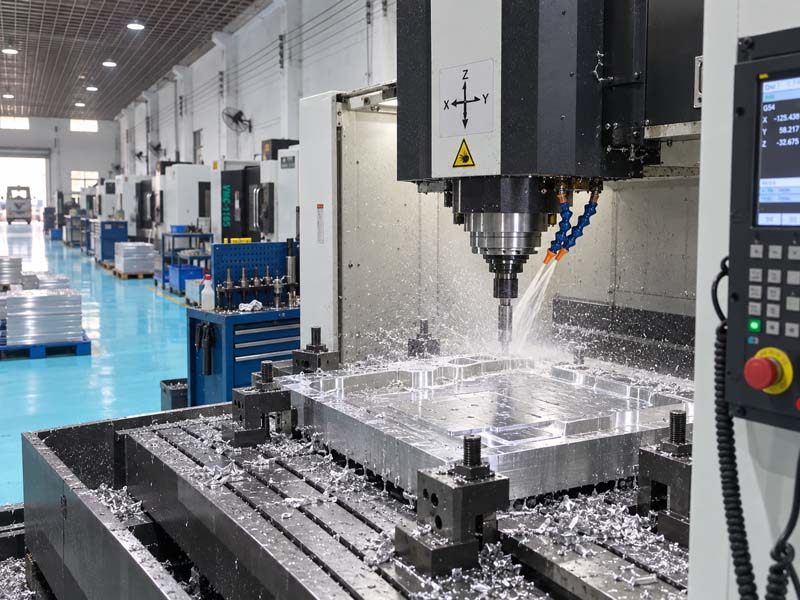
Material cost is often the first visible component in a CNC machining quote. But the material itself is only part of the story. Different materials behave differently under cutting tools. Softer materials like aluminum 6061 machine quickly, generate less heat and cause minimal tool wear. Harder materials like stainless steel 304 or titanium take longer to cut, require slower spindle speeds, reduce tool life and increase the risk of work hardening or built-up edge. This directly increases machine time and tooling cost. Engineered plastics like PEEK or Ultem machine differently than metals and often require specialized cutting parameters to avoid melting or poor surface finish. Material availability also matters. Exotic alloys or non-standard grades may require longer lead times or minimum purchase quantities from suppliers, which adds to your total part cost.
How to Reduce Material Cost
Select a material grade that meets your mechanical and environmental requirements without over-specifying. For example, if your part operates in a low-stress indoor environment, 6061 aluminum is usually sufficient. There is no need to specify 7075 or 2024 unless strength or fatigue properties require it. When possible, choose materials that suppliers commonly stock. Standard grades like 6061, 304 stainless, 1215 steel and 360 brass are widely available and cost less per unit than specialty grades. For prototype or low volume runs, consider using a readily machinable material and confirming performance through testing before committing to expensive alloys.
2. Part Complexity and Geometry
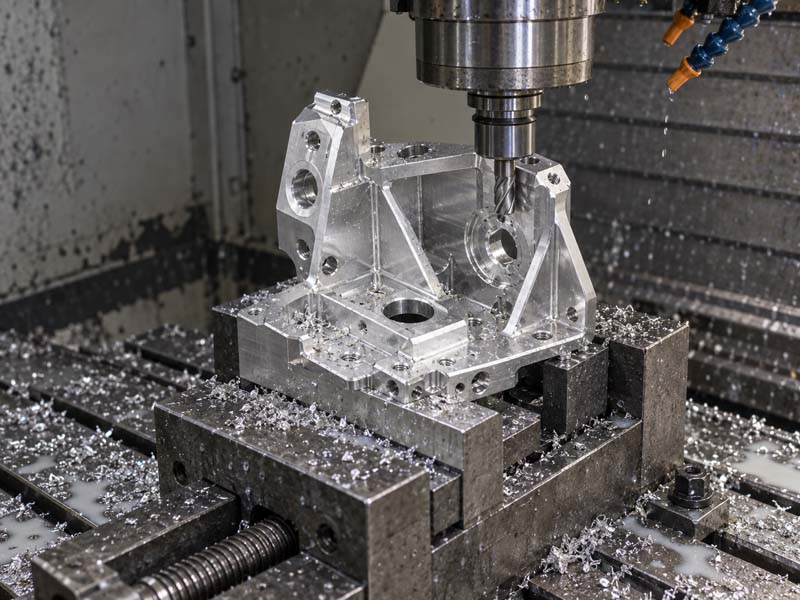
Part geometry is the most influential factor in CNC machining services cost. Simple prismatic shapes with few features can often be machined in one or two setups using standard tooling. Complex geometries with deep pockets, internal undercuts, thin walls, small internal radii or multiple angled surfaces often require more setups, longer tools, specialized workholding and sometimes 5-axis machining. Each additional operation — drilling, tapping, boring, reaming, slotting, contouring — adds machine time. Each setup change adds labor and increases the risk of tolerance stack-up. The overall form of the part determines the number of operations and the total time on the machine.
How to Reduce Geometry Cost
Simplify where function allows. Avoid unnecessary pockets, blind holes with tight depth tolerances, deep slots and sharp internal corners. Design internal fillets with radii that allow standard end mills — for example, avoid specifying R1 when an R2 or R3 end mill is readily available. Minimize the number of different hole sizes and thread types to reduce tool changes. Consider whether a complex contour truly requires 5-axis machining or if a 3-axis operation with one repositioning is feasible. Every feature that requires a special tool or additional operation increases cost. A focused DFM review during the design phase can reduce machining time by 20-40% without affecting the final assembly function.
3. Tolerances and Surface Finish
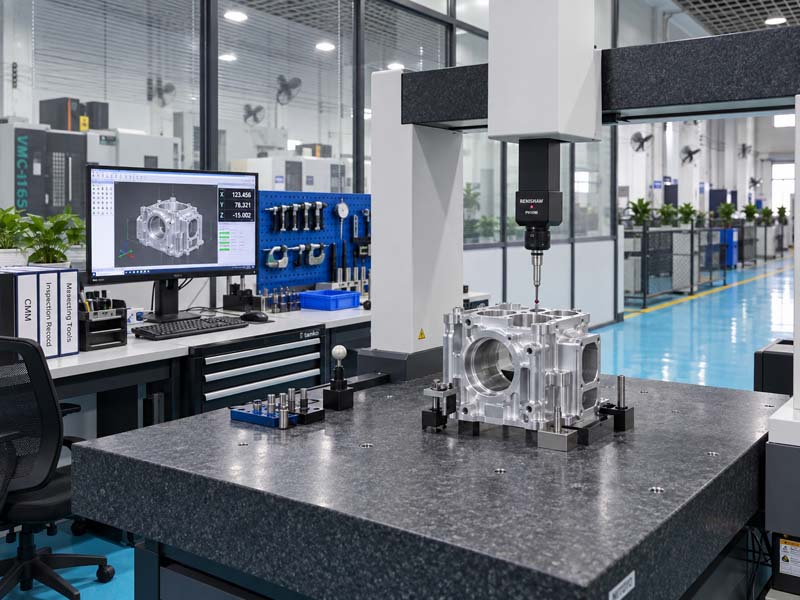
Tolerance is one of the most misunderstood cost drivers. Many designers assign tight tolerances to every dimension without considering functional necessity. In CNC machining, tighter tolerances increase cost in several ways. They require more precise machine setup, slower cutting feeds and speeds, additional tool offsets, multiple finishing passes and more frequent dimensional inspection. For example, a general dimension at ±0.1 mm can be achieved in a single pass with standard tooling. A critical dimension at ±0.02 mm may require roughing, semi-finishing and finishing passes, with CMM inspection and tool compensation adjustments. Surface finish requirements follow the same logic. A machined surface finish of Ra 3.2 μm is standard for most functional surfaces. Achieving Ra 0.8 μm or Ra 0.4 μm requires finer end mills, slower feed rates, additional finishing passes and sometimes manual polishing. Every stricter requirement adds machine time and inspection cost.
How to Reduce Tolerance Cost
Only apply tight tolerances where assembly fit, sliding contact or sealing performance demands them. Use general tolerances for all other dimensions — ISO 2768-m or equivalent is commonly acceptable for non-critical features. When marking GD&T symbols on the drawing, ensure the datum references make sense for machining and inspection. A datum that is inaccessible or difficult to measure on the machine will force additional setups and inspection operations. Communicate clearly with your machining supplier about which dimensions are critical. Many experienced shops can provide feedback on whether a tolerance is realistically achievable or if a slight loosening can reduce cost without affecting function.
4. Production Quantity
Quantity directly affects per-unit cost due to the way setup and programming costs are distributed. In CNC machining, the first part is always the most expensive. Programming time, fixture design, tool selection, machine setup and first-piece inspection are all fixed costs that do not change whether you order one part or one thousand. For prototype runs or very low volumes (1-10 pieces), the per-unit price is high because the fixed costs are spread across few parts. As quantity increases, the per-unit price drops significantly — often by 50% or more when moving from 1 to 100 pieces. Further reductions occur as quantities reach hundreds or low thousands because the process stabilizes, tooling is amortized and inspection can be reduced to sampling.
How to Optimize for Quantity
If you are in the early design phase, consider running 5-10 prototype parts to confirm form and fit, then ordering a larger batch once the design is frozen. Avoid ordering single parts repeatedly from different suppliers, as each order incurs its own setup and programming cost. If you need 200 parts per year but your supplier can run 400 parts in one setup, consider ordering a full year's supply upfront. The per-unit cost will be lower, and you will have spare parts. Communicate your expected annual volume to the supplier so they can optimize the production plan and minimize setup frequency.
5. Fixturing and Workholding
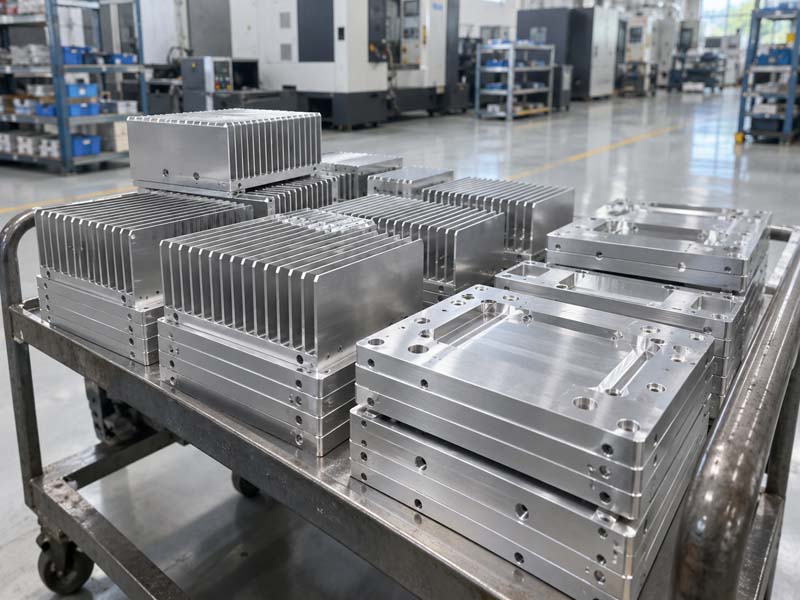
Workholding is a frequently overlooked cost factor. A simple part that can be held in a standard vise requires no custom fixture. For complex parts or multiple part orientations, you may need dedicated jigs, soft jaws, vacuum plates or custom clamping fixtures. The cost of designing, machining and proving out a fixture is passed to the customer, especially for low-volume orders where the fixture cost cannot be amortized across many parts. The number of setups is directly related to workholding. Each time a part is repositioned in a different fixture or vise, it requires new setup time, re-indicating the part zero and often additional inspection to verify position. Reducing the number of setups reduces total machining time and improves dimensional consistency.
How to Reduce Fixturing Cost
Design parts with flat base surfaces and accessible clamping areas whenever possible. This allows standard vises or modular fixtures to hold the part securely without custom solutions. Avoid complex curved bases that require vacuum fixtures or 5-axis workholding. Discuss fixturing options with your machining supplier early. Many shops have a library of modular fixture components that can be reconfigured for different parts, reducing the need for dedicated tooling. If you anticipate multiple orders of the same part over time, the initial fixture cost may be justified, but communicate your long-term plan to the supplier so they can recommend the most economical approach.
6. Machine Type and Setup
The type of CNC machine used to produce your part directly affects the hourly machine rate. Standard 3-axis vertical machining centers generally have the lowest hourly rate. 4-axis and 5-axis machines carry higher capital costs, spindles with higher power and more complex control systems, so their hourly rates are higher. However, a 5-axis machine can often complete a complex part in one or two setups that would require five or six setups on a 3-axis machine. The total cost may still be lower despite the higher hourly rate. The decision depends on part geometry. For simple prismatic parts, 3-axis is almost always the most cost-effective choice. For parts with angled holes, contoured surfaces or features on multiple faces, 5-axis reduces total setup and handling time.
How to Choose the Right Machine Type
Do not specify 5-axis machining unless it is necessary. Work with your supplier to evaluate the part geometry and determine the minimum number of setups required. Often a part can be machined on a 3-axis machine with one or two simple repositioning moves using a tombstone or indexer. If the geometry is rotationally symmetric or requires machining on five faces, 5-axis is likely the better option. Provide a clear 3D model and 2D drawing so the supplier can simulate the machining sequence and recommend the most efficient setup strategy.
7. Finishing and Secondary Operations
Secondary operations such as anodizing, plating, powder coating, passivation, heat treatment and manual deburring add cost to any machined part. Each process requires additional handling, processing time, quality control and often transportation between facilities. Some secondary finishes require specific surface conditions. For example, anodizing requires the part to be free of burrs, sharp edges and contamination. Hard anodizing may require masking of threaded holes. If the part geometry makes it difficult to rack for electroplating or powder coating, the finishing supplier may charge extra. Secondary operations are often managed through qualified external processing partners. The cost varies depending on the coating type, color, required thickness and quantity. It is important to include these costs in the total part cost estimation, not just the machining portion.
How to Reduce Finishing Cost
Specify finishing only when the application demands it. If corrosion resistance or cosmetic appearance is not critical, as-machined condition is usually acceptable. When finishing is required, choose a standard finish. For example, clear anodizing is less expensive than black or colored anodizing. Avoid multiple finishes on the same part unless absolutely necessary. Each additional finish requires separate processing steps and often separate handling. Provide clear callouts on the drawing for which surfaces require finishing and which can remain as-machined. This reduces masking work and prevents the supplier from applying coating to surfaces where it is not needed.
How to Prepare an Effective RFQ to Reduce Cost
A well-prepared RFQ helps your machining supplier provide an accurate and competitive CNC machining quote. Include a complete 3D model (STEP or STP format) and a detailed 2D drawing with all critical dimensions, tolerances, surface finish callouts, material specification and any secondary finishing requirements. Clearly mark which dimensions are critical and which are reference. Provide the expected annual or total quantity, desired lead time and any special packaging requirements. The more information you provide upfront, the less the supplier needs to assume — and assumptions often lead to higher quoted prices to cover risk. Review your drawing for common issues: missing tolerances, over-tolerancing, missing datum references, conflicting dimensions between the 3D model and 2D drawing, and unclear thread or surface finish specifications. A clean, well-organized RFQ reduces engineering back-and-forth and reduces the supplier's risk, which can translate into a lower quoted price.
Collaborating with Your Machining Supplier for Cost Optimization
The relationship between the designer and the machining shop is critical for cost optimization. An experienced machining team can review your design and identify features that increase cost without adding functional value. They can suggest alternative tool paths, recommend material grades, propose tolerance adjustments and advise on surface finishes that reduce processing time. For complex parts, early engagement with the supplier during the design phase is the most effective way to reduce cost. The supplier can simulate the machining process, estimate the number of setups and warn you about potential issues like tool deflection, thin-wall deformation or difficult workholding before the part goes into production. This collaborative approach often results in a better part at a lower total cost.
If you are currently sourcing CNC machining services and want to understand how to reduce your component cost, our engineering team can review your design and provide specific recommendations. Contact us to discuss your project.