
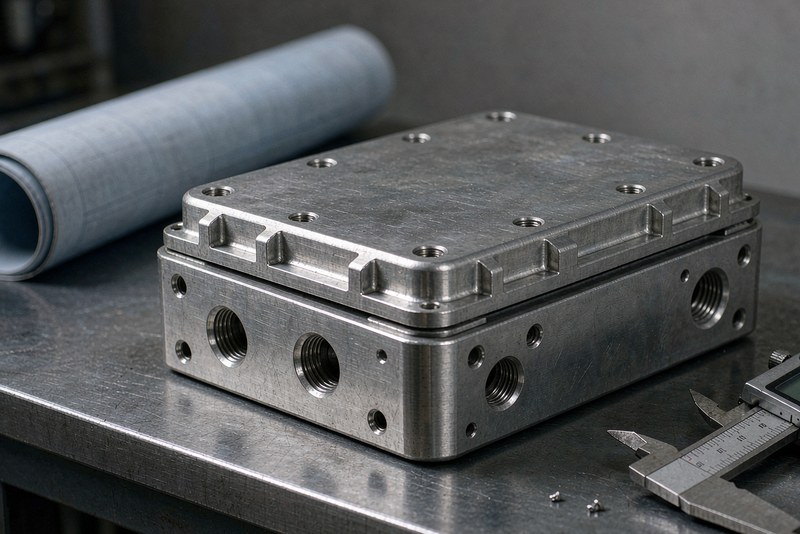
CNC machining IP protection is decided before the first quote arrives, by what you attach to the RFQ and what you hold back. Many buyers send a complete 3D model to several shops on day one and look for a confidentiality agreement afterwards. Reversing that order costs nothing and removes most of the exposure.
Protection here is commercial practice rather than a legal product.
What CNC Machining IP Protection Actually Covers
Four assets get bundled under one heading, and they need different treatment. The design itself — geometry, tolerances, material specification — is the one buyers think about first. Production tooling and fixtures built for your part are the second. The third is process knowledge: the feeds, sequences and workholding that make a difficult feature repeatable. The fourth is commercial data, including volumes, target prices and who your customer is.
A shop that cannot see a critical bore diameter cannot quote it honestly. Where the design is the product itself, outsourcing versus in-house production covers when keeping the work in-house is worth the cost.
Where CNC Machining IP Protection Usually Fails
Failures tend to be administrative rather than technical. A complete model goes out by email to five shops for pricing purposes, and the confidentiality agreement is signed a week later. Nobody records which revision reached which supplier, and a drawing without a confidentiality notice can be passed on without breaking the shop's own procedures.
The leak path that surprises buyers is the sub-tier. Finishing coordination, heat treatment and laser cutting frequently go to third parties, and a DXF sent out for a cutting quote has left your control.
- Full CAD released before any agreement exists
- No log of which supplier holds which revision
- No confidentiality marking on the drawing
- Uncontrolled disclosure to a sub-tier
Staged Disclosure: What to Send Before the NDA Is Signed
Staging the release reduces risk without slowing sourcing down. At the pre-NDA stage you need enough for a credible price: envelope, material family, quantity band, the tolerances that drive process choice, and the inspection level. A 2D drawing without the 3D model usually covers it.
| Stage | Release | Hold back |
|---|---|---|
| Pre-NDA quote | Envelope, material, quantity band, key tolerances | Model, GD&T scheme, customer identity |
| After NDA | Model, critical-to-quality list, packaging spec | Native CAD, tooling details |
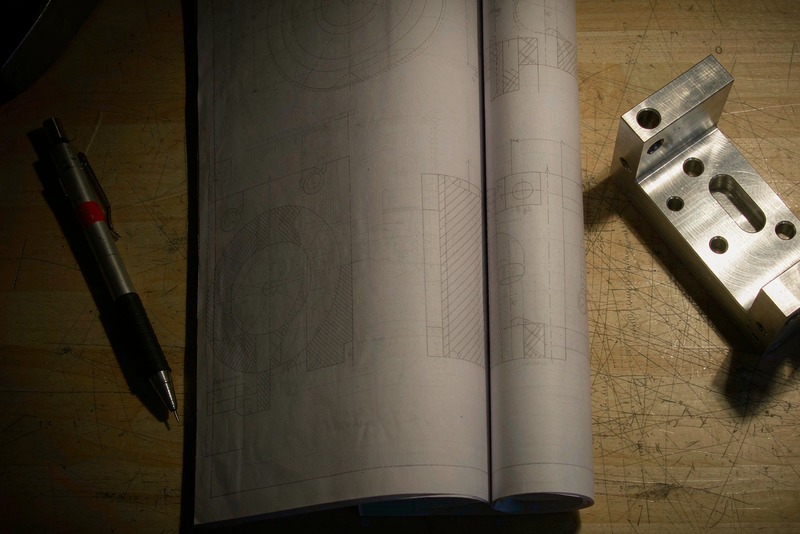
After the agreement is in place, release the full model, the tolerance scheme, the critical-to-quality list and packaging requirements. Native CAD, tooling drawings and inspection reports belong with the purchase order, where there is a contract to attach obligations to.
The CNC machining RFQ guide covers what a shop needs to return comparable numbers. Insisting on an agreement before any file moves is defensible, though it slows first-round pricing.
What Belongs in an NDA That Holds Up
A short agreement both sides understand beats a long one nobody reads. The definition of confidential information should name drawings, models, tooling data, process information and volumes, because a clause that says "technical information" invites argument later. Add a purpose limitation: the material is used for quoting and fulfilling this order, and nothing else.
Two clauses do most of the practical work. Written consent before any sub-tier disclosure, or a named list of approved sub-tiers, closes the most common leak. A return-or-destroy obligation with written confirmation gives you a documented end state, and a term surviving order completion keeps it meaningful.
An NDA is a deterrent and a record, not a technical control, and cross-border enforcement is expensive for small buyers. If one feature carries the value of the product, the surer protection is keeping it off the drawing that circulates.
Tooling Ownership, Files, and Sub-Tier Disclosure
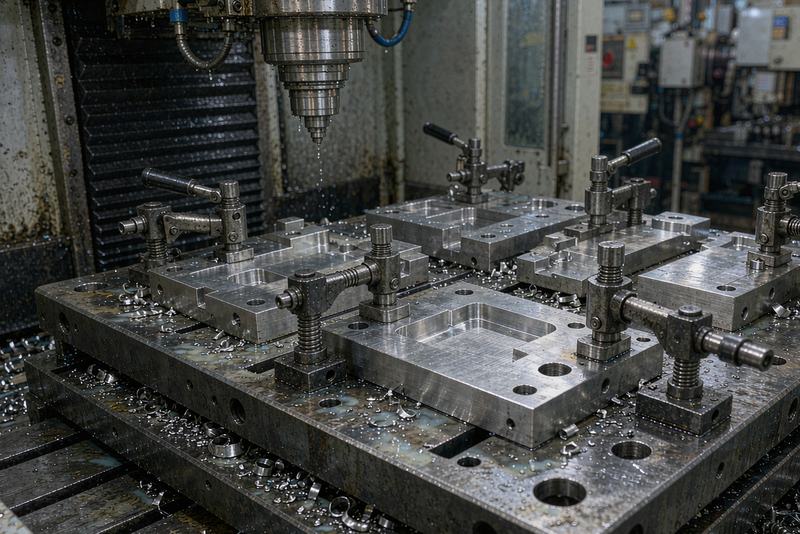
Tooling questions tend to surface at the wrong moment. Buyers discover late in a program that the fixture, and sometimes the gauge, belongs to the shop. Settle at purchase order stage whether tooling is amortized into the piece price or paid up front; if it is paid up front, ask for an itemized tooling list with the right to take possession. How that tooling is designed is covered in workholding and fixture design.
File-format control is often overstated. Native files are convenient for a shop running CAM, but a neutral format converts back into usable geometry, so treating a STEP file as protection is a speed bump rather than a barrier. What matters more is knowing where your files ended up.
Sub-tier disclosure deserves the same treatment: ask which operations leave the shop, get consent or an approved list, and require notification when that list changes.
Counterfeit Parts and Overruns: Risks the Paperwork Does Not Cover
Two risks survive a well-written agreement. The first is surplus production: a shop holding production tooling can run extra units after the order closes, so state run quantities and require surplus to be declared. The second is marking — a logo or part number laser-marked on a machined face can be reproduced, so buyers who care about exclusivity should write lot or serial marking into the drawing notes.
Certificates solve neither problem. A mill certificate establishes material origin, an inspection report establishes dimensions, and neither speaks to exclusivity. Traceability per batch is the substitute.
For most small and mid-size buyers, cross-border enforcement is not a realistic remedy. What holds is a supplier relationship with something at stake on both sides, plus the process discipline that turns CNC machining IP protection into routine practice rather than a signed document. Comparing suppliers beyond piece price covers the signals worth checking.
A Pre-Order Checklist
- Decide which features carry the value of the part before the RFQ goes out
- Put a mutual NDA in place that names models, tooling data and volumes
- Release files in stages and log which revision each supplier received
- Fix tooling ownership, surplus disposition and file return in the purchase order