
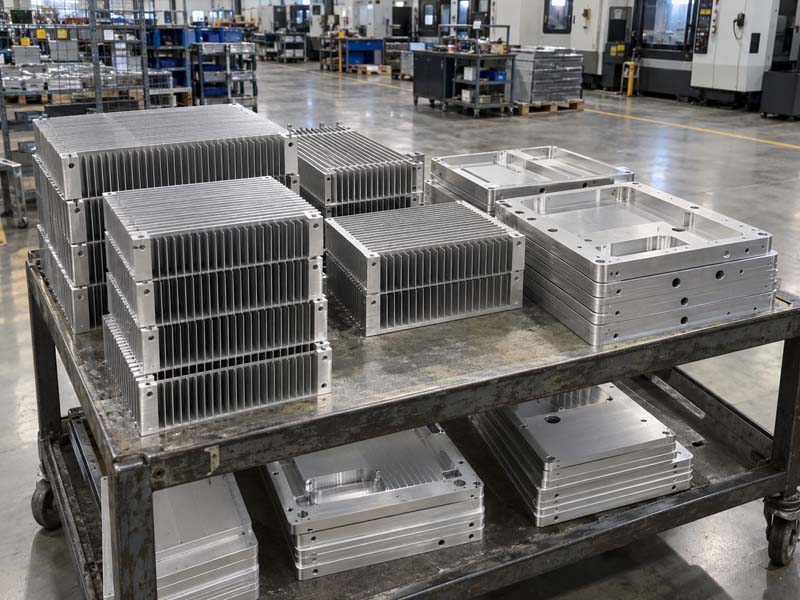
Choosing a reliable CNC machining supplier is rarely a straightforward process. A supplier that performs well on one part may struggle with a different geometry, material, or tolerance requirement. Engineers and procurement professionals often find that similar queries produce substantially different quotes, capabilities, and lead times. The challenge is not simply finding a supplier, but finding one whose technical capability, quality system, engineering approach, and communication style align with the specific requirements of each project.
This guide is written for engineers and buyers who evaluate CNC machining suppliers. It focuses on what actually matters during selection: how to assess a supplier's machining capability, what a quality system should include during production, how to interpret cost differences between quotes, and what questions to ask before placing an order. Rather than listing generic evaluation criteria, this guide explains the engineering and procurement logic behind each aspect of supplier selection.
Understanding CNC Machining Capability Beyond Machine Count
Many buyers begin supplier evaluation by asking about the number of CNC machines a shop operates. While machine count can indicate production capacity, it does not reveal whether the supplier can machine a specific part correctly. A more meaningful assessment involves understanding the range of machining processes, the typical part sizes, the geometric complexity handled, and the tolerance capability that the supplier routinely achieves.
Process Capability: Which Machining Operations Are Available In-House?
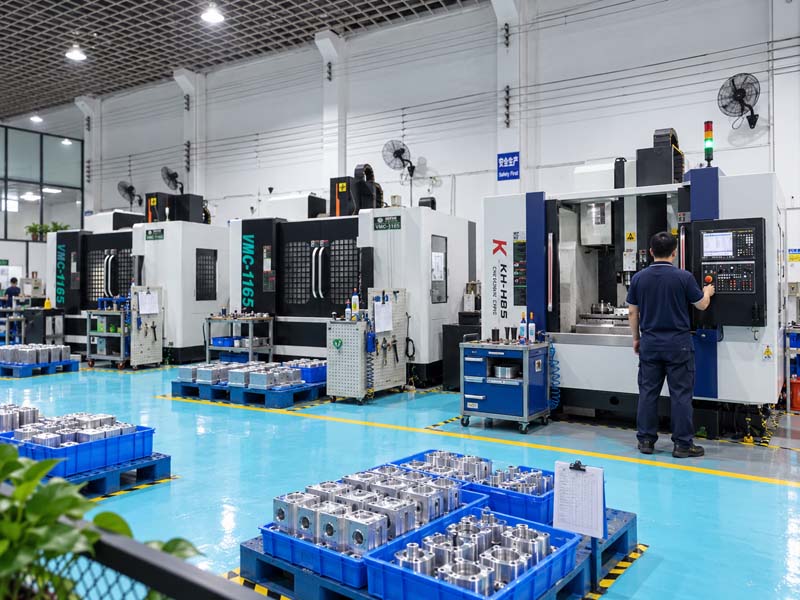
A supplier's process capability directly determines whether a part can be manufactured efficiently without excessive subcontracting. Ideally, a CNC machining supplier should offer the following processes in-house, or at least demonstrate strong coordination with reliable partners:
- CNC milling: 3-axis, 4-axis, and 5-axis machining for prismatic parts, complex geometries, and multi-sided features.
- CNC turning: For cylindrical parts, shafts, and components requiring concentricity and precise diameters.
- Drilling, tapping, reaming, and boring: For threaded holes, precision bores, and deep hole applications.
- Wire EDM and surface grinding: For tight-tolerance features, hardened materials, or parts requiring very fine surface finishes.
- Secondary operations: Deburring, thread rolling, heat treatment, and surface finishing (anodizing, plating, powder coating). If these are outsourced, the supplier should manage the entire chain, including quality inspection and delivery coordination.
If a part requires a process the supplier does not offer in-house, ask how they manage subcontracting. A well-managed supplier will qualify their partners, include inspection steps, and take full responsibility for quality, not just pass the work to an unknown shop.
Part Size and Geometry Range
Every CNC machine has a work envelope. A supplier specializing in small precision parts may not have a machine large enough to accommodate a part that requires a 1-meter travel in X and Y. Conversely, a shop with only large horizontal machining centers may not hold tight tolerances on small, delicate components.
During evaluation, provide the approximate dimensions of your typical parts and ask whether they fall within the supplier's machine range. For complex parts requiring 5-axis machining, or multi-sided features, confirm that the supplier has experience with similar geometries and can demonstrate how they approach workholding and setup reduction.
Tolerance Capability: What a Supplier Really Achieves
Many suppliers claim tolerances of ±0.005 mm or better. However, a realistic assessment of tolerance capability involves understanding the interaction between material, geometry, tooling, and machine condition.
- Standard tolerances: ±0.1 mm is easily achievable for most machining processes. It adds virtually no cost or inspection burden.
- Precision tolerances: ±0.025 mm to ±0.05 mm requires stable machine condition, sharp tooling, and careful setup. Most experienced suppliers can achieve this range on well-designed features.
- High-precision tolerances: ±0.005 mm to ±0.01 mm is achievable but requires a controlled environment, high-quality machines, advanced workholding, and often multiple inspection passes. This tolerance range increases cost substantially.
A good supplier will not accept a tolerance on a drawing without reviewing whether it is functionally necessary and whether the chosen material and geometry allow it to be held consistently. If a supplier blindly quotes tight tolerances without asking questions, that is often a red flag. A reputable shop will discuss which dimensions are critical and which can be opened up to reduce costs without affecting function.
Evaluating Quality Systems: What Matters During Production
Supplier quality is not just about ISO 9001 certification. It is about how the supplier controls the manufacturing process at every stage: from drawing review and incoming material inspection, through in-process checks and final dimensional verification, to packaging and documentation.
Drawing Review and Engineering Feedback
Before a single tool path is generated, a skilled CNC machining supplier should review the customer's drawing and 3D model. This review should identify:
- Missing or ambiguous dimensions and tolerances.
- Conflicting requirements, such as a surface finish callout that cannot be achieved with the specified material or geometry.
- Features that are difficult or impossible to machine as drawn: sharp internal corners, very deep pockets, thin walls, or inaccessible undercuts.
- Datum references that may cause tolerance stack-up issues during manufacturing or inspection.
A supplier that provides constructive DFM (Design for Manufacturability) feedback during the quotation stage demonstrates genuine engineering capability. This type of feedback can save significant time, cost, and scrap risk during production.
In-Process Inspection vs. Final Inspection Only
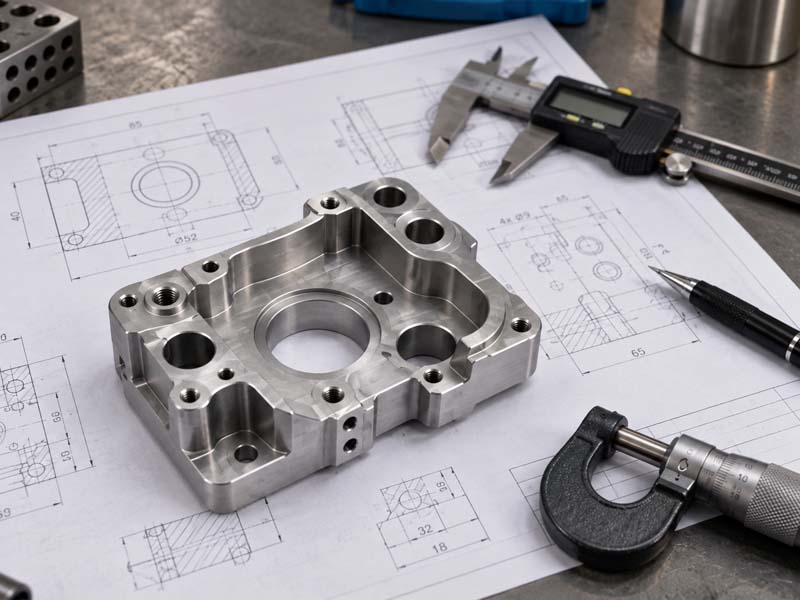
A supplier that only inspects after the part is completely finished takes a high risk. Critical features machined early in the process may already be out of tolerance by the time they are measured. A better approach involves in-process inspection: measuring key dimensions after each major operation or setup. This allows the machine operator or quality inspector to detect drift early and make adjustments before scrap occurs.
During evaluation, ask the supplier about their inspection strategy:
- Do they use machine probing to verify features during machining?
- Are there designated inspection stages between setups?
- What equipment is used for dimensional verification: calipers, micrometers, height gauges, CMM (Coordinate Measuring Machine), optical comparators?
- How do they document inspection results for traceability?
First Article Inspection (FAI) and Documentation
For custom machined parts, especially for prototypes or first production runs, a First Article Inspection report is essential. This report should include:
- Dimensional measurements for every critical feature on the drawing.
- Comparison of measured values against specified tolerances.
- Inspection method used for each dimension.
- Any non-conformances and the supplier's disposition (rework, accept as-is, scrap).
An FAI report demonstrates that the supplier has a controlled process and that the first part produced meets the specified requirements. It also serves as a baseline for production repeatability.
Material Certification and Traceability
Material quality directly affects machinability, part strength, and performance. A responsible CNC machining supplier should maintain material traceability from the moment raw stock enters the shop. This includes:
- Verifying material certificates against the customer's specification.
- Labelling and tracking material through the production process.
- Storing materials properly to prevent contamination or corrosion.
For applications requiring specific material grades or hardness ranges, ask the supplier to provide material test reports or certificates of conformance along with the shipment.
Understanding CNC Machining Cost: What Drives Price Differences
Price is often the most visible difference between supplier quotes. However, the lowest quote is not always the best value, and the highest quote is not always justified. Understanding what drives CNC machining cost helps buyers evaluate whether a quote is reasonable and whether the supplier truly understands the part requirements.
Machine Time and Labor
CNC machining cost is primarily driven by machine time and labor. A part that requires 30 minutes of spindle time may cost significantly less than a part requiring two hours, even if both parts are made from the same material. Factors that increase machine time include:
- Complex geometries requiring slow feed rates and multiple passes.
- Deep pockets or cavities that require long tool engagement and reduced cutting parameters.
- Hard materials that wear tools quickly and require slower speeds.
- Surface finish requirements that dictate fine finishing passes.
A supplier with modern, well-maintained machines and efficient tool paths may complete a part faster than a supplier using older equipment or conservative programming strategies. However, the supplier with faster cycle times may also have higher hourly rates, so the total cost may still be comparable.
Setup and Workholding
Every time a part is moved to a different machine or orientation, setup costs are incurred. A part that requires three separate setups will cost more than a part that can be completed in one setup, even if the total machining time is similar. This is why 5-axis machining can sometimes reduce cost despite higher machine rates: it often eliminates multiple setups and the associated labor, fixturing, and inspection steps.
When comparing quotes, ask each supplier how many setups they anticipate and how they plan to fixture the part. A supplier that proposes a clever fixturing strategy or a multi-axis setup that minimizes handling may offer a better overall value than a supplier that simply runs each operation on a separate machine.
Tooling and Consumables
If a part requires specialized tooling such as custom form tools, long-reach end mills, or very small diameter drills, the supplier may include tooling costs in the quote. Similarly, parts made from abrasive materials like high-silicon aluminum, stainless steel, or titanium will result in higher tool wear and more frequent tool changes, which adds to the cost.
A supplier with a well-stocked tool library and experience with the specified material may have lower tooling costs than a supplier that needs to order special tools for every job.
Inspection and Quality Assurance
Parts with tight tolerances or critical geometric requirements require more thorough inspection. This adds time and labor. A simple check of a few dimensions with a caliper is inexpensive, but a full CMM inspection with a detailed report can add significant cost, especially for complex parts with many features.
When reviewing quotes, check whether each supplier has included different levels of inspection effort. If one quote is substantially lower, ask whether they have reduced inspection frequency or used a less rigorous measurement method. This may explain the price difference and also reveal a risk.
Quantity and Production Volume
The quantity of parts ordered directly affects the per-unit cost. Higher quantities allow the supplier to spread the setup, programming, and inspection costs across more parts, reducing the unit cost. Low-volume production and prototype runs will always have a higher per-part price because these fixed costs are distributed over fewer pieces.
If a supplier offers a very low price for a small quantity, verify that they have not overlooked the setup and programming requirements. An unrealistically low quote for a prototype often indicates that the supplier has not fully understood the part geometry or tolerance requirements.
Communication, Experience, and Collaboration
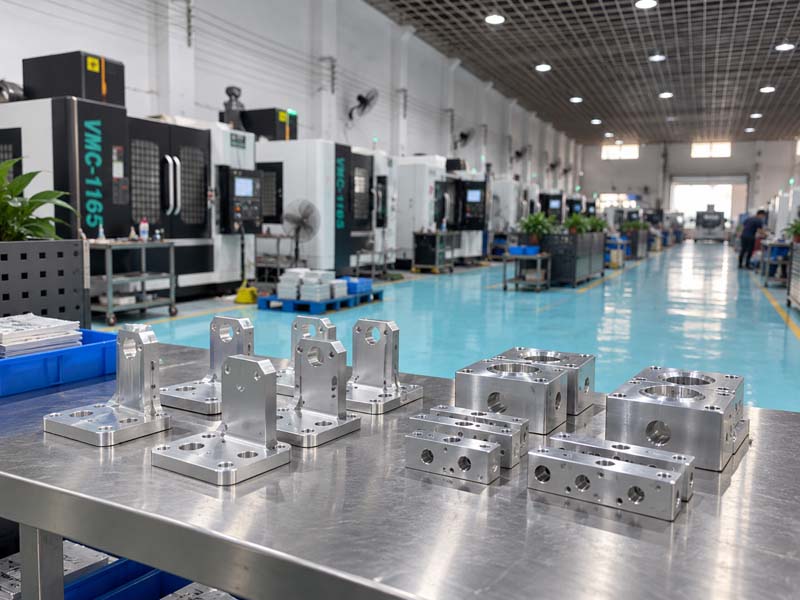
The technical capability and quality system of a supplier are only part of the evaluation. The quality of communication and collaboration during the quoting, engineering review, and production phases often determines whether a project runs smoothly or becomes a source of frustration.
Responsiveness and Clarity
How quickly does the supplier respond to RFQs? Do they ask clarifying questions about the part requirements, or do they simply submit a generic quote? A supplier that takes the time to understand the application, the critical features, and the end-use environment is more likely to deliver parts that meet expectations.
Pay attention to the clarity of their communication. Do they explain their assumptions about tolerances, material, and surface finish? Do they highlight potential risks such as difficult-to-machine features or long lead times for certain materials? A supplier that communicates clearly during the quoting stage is likely to communicate just as clearly during production.
Engineering Support and DFM Feedback
An experienced CNC machining supplier should be able to review a part drawing and provide practical suggestions. This may include recommending a different surface finish that is more compatible with the material, adjusting a tolerance that is unnecessarily tight, or suggesting a small geometry change that reduces the number of setups.
Suppliers that offer constructive DFM feedback demonstrate that they are thinking about how to manufacture the part efficiently, not just how to get the order. This type of collaboration often leads to cost savings, faster delivery, and higher quality, because potential issues are resolved before production begins.
Production Visibility and Issue Resolution
What happens if a problem is discovered during machining? Does the supplier stop and contact the customer for guidance, or do they proceed and hope the deviation is acceptable? A professional supplier will have a clear non-conformance and deviation process. If a feature is found to be out of tolerance, they will document the deviation, assess its impact on part function, and ask the customer for a disposition.
Suppliers that provide production updates, share inspection photos, and offer to resolve issues collaboratively are easier to work with over the long term. Establishing a clear communication protocol before the order is placed can prevent misunderstandings and delays.
A Practical Decision Framework for Selecting a CNC Machining Partner
After evaluating multiple suppliers across technical capability, quality systems, cost structure, and communication, it is helpful to use a structured decision framework rather than relying solely on price or intuition.
Step 1: Technical Fit
Does the supplier have the right combination of machines, tooling, and experience to produce your part? This includes verifying process capability, part size compatibility, and tolerance experience with the specified material.
Step 2: Engineering Review Quality
How thoroughly did the supplier review your drawing and model? Did they ask questions, highlight potential issues, or recommend design improvements? A supplier that demonstrates strong engineering engagement is more valuable than one that simply accepts the drawing and produces a quote.
Step 3: Quality Assurance Process
Does the supplier have an in-process inspection plan? Do they provide FAI reports and material certifications? How do they handle non-conformances? A clear and documented quality process reduces risk during production.
Step 4: Cost and Value
Compare quotes not only by total price but also by what is included. Does the supplier include setup, programming, inspection, and packaging in their price? Are there any hidden charges for material certs, special tooling, or sample reports? The lowest price is not always the best value if it comes with reduced inspection or incomplete documentation.
Step 5: Communication and Long-Term Potential
Is the supplier responsive, clear, and willing to collaborate? Do they show interest in building a long-term relationship, or are they purely transactional? Suppliers that invest time in understanding your requirements and provide consistent communication are better positioned to become a reliable partner over multiple projects.
Beyond the First Order: Building a Supplier Relationship
Selecting a CNC machining supplier is not a one-time decision. The best supplier relationships develop over time through consistent communication, shared engineering feedback, and mutual understanding of quality expectations. After the first successful order, consider providing the supplier with feedback on part performance in the final assembly. This helps them understand how their machining decisions affect the product's function.
Many experienced engineers and procurement professionals find that working with a smaller number of trusted suppliers yields better long-term results than continuously switching between vendors based on price. A supplier that understands your design preferences, tolerance philosophy, and quality standards can produce parts more efficiently and with fewer issues over time.
Ultimately, the best CNC machining supplier is not the one with the lowest price or the fastest lead time on paper. It is the supplier that combines reliable technical capability with honest communication, thorough engineering review, and a practical approach to manufacturing your specific parts. Taking the time to evaluate these aspects during the selection process will lead to fewer production surprises, better part quality, and a more productive partnership.