
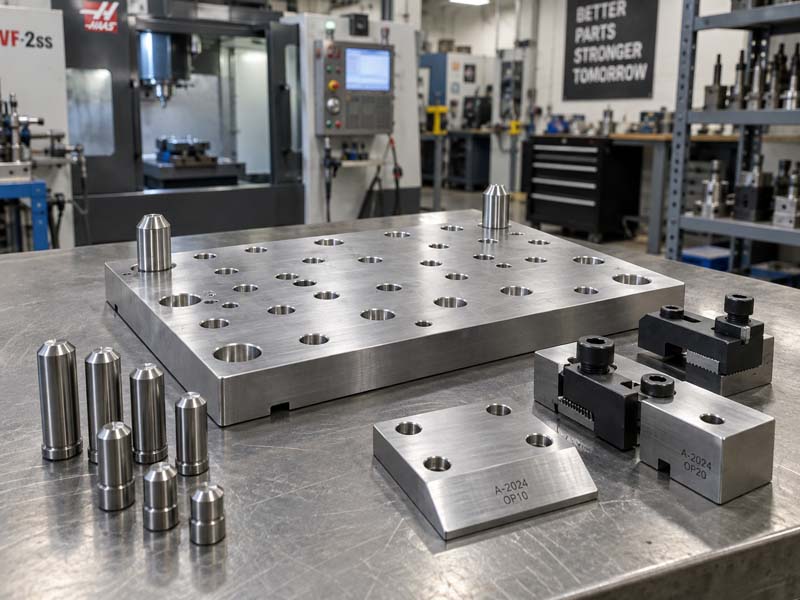
In over two decades of precision CNC machining, I’ve seen tight-tolerance drawings fail and simple parts succeed. The difference was rarely the CNC machine itself. It was almost always the workholding. A job shop can have the newest 5-axis machine, but if the part isn’t held correctly, the spindle will produce scrap at 15,000 RPM.
This guide is written for engineers designing custom machined parts and procurement professionals evaluating manufacturing risks. We will strip away the marketing fluff and look at how fixture design directly impacts cost, lead time, and dimensional accuracy.
Why Workholding Dictates Your Machining Tolerance
The fundamental rule of machining is simple: the cutting tool must be stronger than the cutting force. But the force has to go somewhere. It travels through the tool, the spindle, the machine frame, the workholding, and finally into the part. If the workholding is rigid, the force is absorbed. If it is not, the part moves. Movement equals vibration, poor surface finish, and out-of-tolerance dimensions.
For engineers, this means that specifying a tight tolerance (like ±0.005mm) on a thin-wall aluminum enclosure is risky unless the fixture is specifically designed to support that wall. Standard vise jaws will deflect the part. Our engineering team at HONGKE often recommends precision CNC machining solutions that incorporate custom soft jaws or vacuum fixtures for these specific scenarios.
Choosing the Right Workholding: Standard Vises vs. Custom Fixtures
Standard Vises
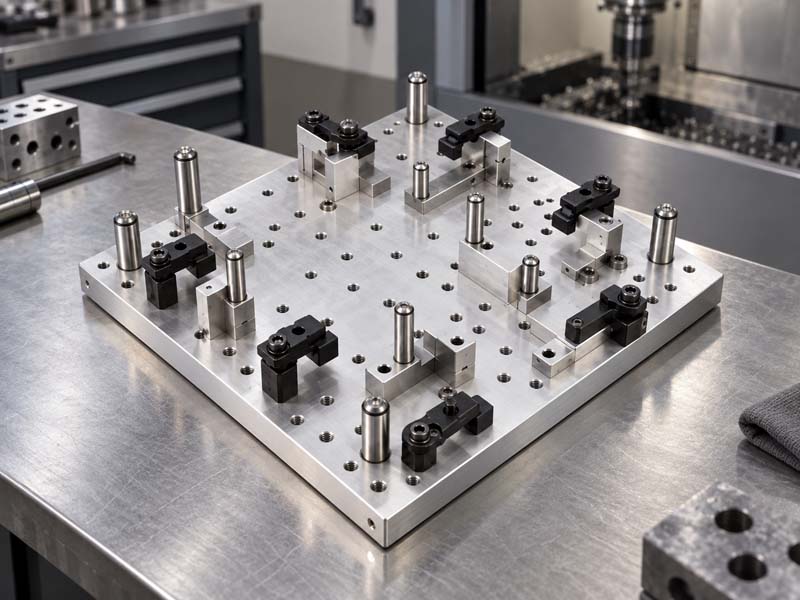
These are the workhorses of any machine shop. They provide excellent rigidity for simple, blocky parts. If your part has parallel sides and a relatively simple geometry, standard vises are the most cost-effective solution. However, they apply clamping force to the sides of the part. If the part is thin-walled, this force can distort it. When the jaws open, the part springs back into shape, but it is now out of spec.
Custom Fixtures
This is where the magic happens. Custom fixtures are designed to hold the part exactly where it needs to be. They can clamp on non-parallel surfaces, support thin sections, and allow access to multiple faces in a single setup. This drastically reduces the number of setups required. Fewer setups mean higher precision and lower cost.
When requesting a quote for custom CNC milling parts, always ask the supplier about their approach to workholding for complex geometries.
Engineering Solutions for Thin-Wall and Complex Parts
Thin-walled parts are the most challenging components to fixture. They lack the structural rigidity to resist clamping forces without deformation. Here are three common solutions:
- Vacuum Workholding: Creates a uniform holding force across the surface of the part. Ideal for very thin sheet metal or plastic parts.
- Expanding Mandrels: For cylindrical parts, these grip from the inside out, preventing distortion on the outer diameter.
- Cryogenic (Freeze) Workholding: Uses freezing temperatures to create a bond between the part and fixture. It applies zero mechanical stress.
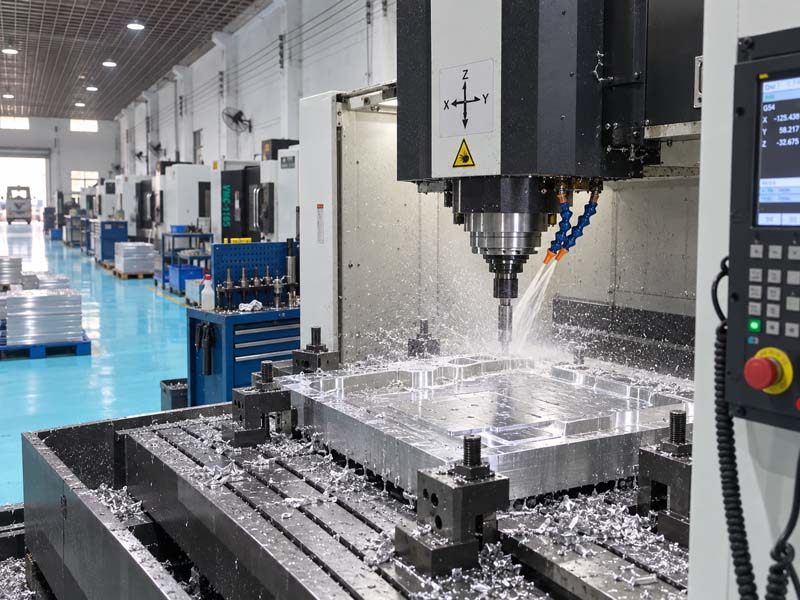
The best approach depends on the material. Aluminum distorts easily, while stainless steel creates high cutting forces. An experienced machinist will know exactly how to balance these factors.
The Hidden Cost of Poor Workholding in Your CNC Quote
Many procurement professionals underestimate the cost of workholding. A standard vise setup might cost $50 per part. A custom fixture might cost $500 to design and build. But if that fixture reduces setup time from 3 operations to 1 operation, the total cost per unit drops significantly for a batch of 100 parts.
Furthermore, poor workholding leads to scrapped parts. The cost of rework is often 2-3 times the original machining cost. When evaluating a CNC machining cost breakdown, ask if the quote includes workholding design. A higher upfront quote from a supplier with a good workholding plan is often much cheaper in the long run than a low quote from a supplier who will "figure it out later."
Workholding and Quality Inspection (CMM)
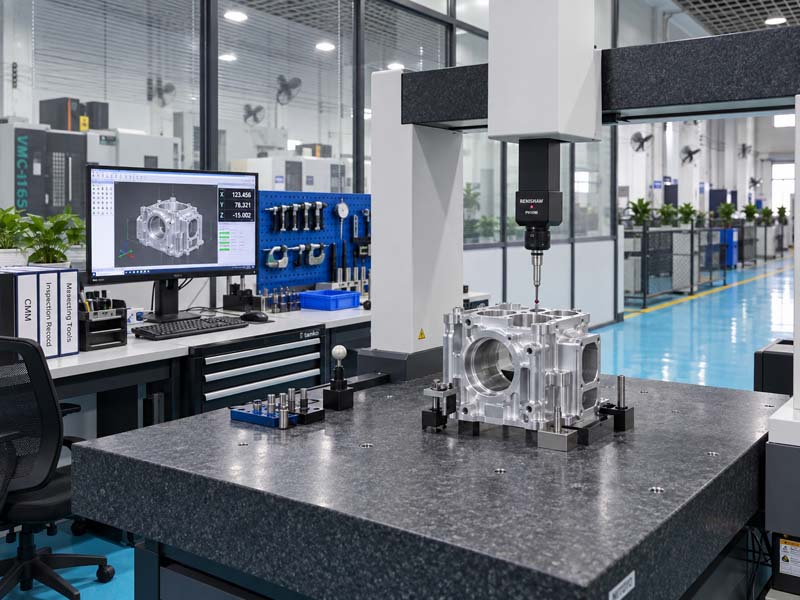
How you hold the part during machining defines your datums. If the datum used for machining is different from the one used for inspection on a CMM, you will get conflicting results. This is a common point of friction between engineering and manufacturing.
A good fixture design ensures that the part can be inspected without physically distorting it. This guarantees that the quality inspection report reflects the true geometry of the part, not the distortion caused by clamps.
Final Advice for Engineers and Buyers
Do not underestimate the physical complexity of holding your part. Send a full 3D model (STP or STEP) and a 2D drawing to your supplier. Let them design the workholding strategy. Trusting your supplier’s engineering team to solve these problems is the mark of a mature procurement strategy.
At HONGKE, our engineers review every RFQ for workholding risk before we provide a quote. We help you avoid the common pitfalls that lead to delays and cost overruns. Contact us to discuss your next precision machining project.