
Why Supplier Selection Matters in CNC Machining
When you need custom machined parts, the supplier you choose directly affects part quality, delivery reliability, communication efficiency, and overall project cost. A capable supplier can spot design issues early, suggest cost-saving alternatives, and deliver consistent results. A poor match often leads to missed tolerances, extended lead times, and unexpected expenses.
This guide is written from the perspective of both an engineer and a purchaser. We will walk through the key evaluation criteria so you can confidently select a CNC machining partner that fits your project requirements.
Step 1: Assess Machining Capabilities
Before sending an RFQ, confirm that the supplier has the right equipment and experience for your part geometry and material.
Machine Types
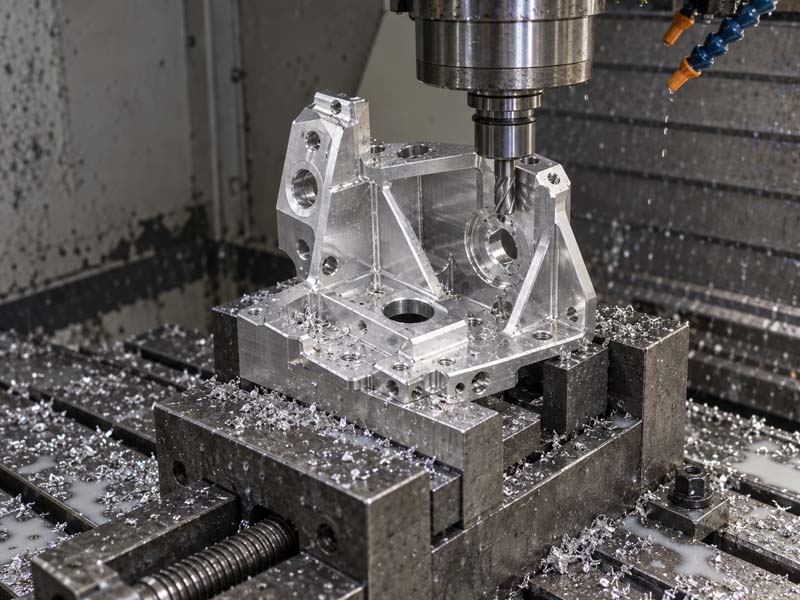
Does the supplier offer CNC milling, CNC turning, or both? For complex parts, ask about 3‑axis, 4‑axis, and 5‑axis machining capabilities. Multi-axis machines reduce setups, improve accuracy, and allow more complex geometries. If your part requires tight bore concentricity or deep pockets, verify the machine’s travel, spindle power, and tooling options.
Material Experience
Different materials behave differently during machining. A supplier experienced in aluminum CNC machining may not be equally skilled at stainless steel or titanium. Ask about their experience with your specific material grade, especially if it is difficult-to-machine (e.g., Inconel, hardened steels, engineering plastics).
Secondary Operations
Check if the supplier can provide surface finishing (anodizing, plating, powder coating), heat treatment, and assembly. Coordinating these through a single supplier simplifies logistics and responsibility.
Step 2: Evaluate Drawing Review and DFM Support
A good supplier will review your drawing and 3D model before quoting. They should identify potential manufacturability issues such as:
- Thin walls that may deform
- Deep pockets that require long tools and risk deflection
- Unnecessarily tight tolerances that increase cost
- Sharp internal corners that cannot be machined with standard tools
- Missing datum references or conflicting GD&T
The supplier should provide Design for Manufacturing (DFM) feedback. This is a strong indicator of engineering competence. A supplier that simply “accepts everything” without questioning may lack experience or overlook critical details.
Step 3: Understand Quality Systems and Inspection
Quality is not just about the final inspection report. It is embedded in the process. Ask about:
- In‑process inspection: Are critical dimensions checked during machining?
- First article inspection (FAI): Is a full dimensional report provided?
- Measurement equipment: CMM, optical comparators, gauges – and their calibration status.
- Tolerance capability: What is their typical ± tolerance range? Can they hold ±0.005 mm on critical features?
Request a sample quality report from a similar part to gauge their documentation thoroughness.
Step 4: Communication and Responsiveness
In international CNC machining projects, communication speed and clarity matter as much as technical skill. Consider:
- How quickly do they respond to RFQs and technical questions?
- Do they speak your language (English fluency)?
- Are they proactive in suggesting improvements?
- Can they provide project updates during production?
A supplier that communicates clearly reduces the risk of misunderstandings that lead to rework or delays.
Step 5: Evaluate Cost Structure and Quotation Transparency
Price is not the only factor, but understanding cost drivers helps you compare quotes fairly. A detailed quotation should break down:
- Material cost
- Machining time (setup + run time)
- Tooling costs
- Surface treatment
- Inspection fees
- Packaging and shipping
Be wary of quotes that are significantly lower than others. They may indicate shortcuts in quality, hidden extra charges, or lack of understanding of your requirements.
Step 6: Check Lead Time and Scalability
For prototype or low‑volume production, flexibility is key. Ask about typical lead times for first articles and production runs. Can they accommodate rush orders? What is their capacity for scaling up if you need higher volumes later? A supplier with multiple shifts and a stable supply chain is more reliable.
Step 7: Look for Industry Experience
While not mandatory, prior experience in your industry (automation, industrial equipment, medical devices, etc.) can reduce learning curve. An experienced supplier will already understand common challenges like thread specifications, surface finish requirements, and assembly tolerances.
Final Recommendations
Start by shortlisting 3–5 suppliers based on capability alignment. Send each a complete RFQ package including:
- 3D CAD model (STEP or IGES)
- 2D drawing with tolerances, surface finish, and notes
- Material specification and grade
- Quantity and delivery expectations
- Any critical dimension callouts
Compare not only the price but the technical feedback, communication quality, and willingness to advise. The best CNC machining partner is one that helps you make better parts, not just cheaper ones.
If you are evaluating a potential supplier, remember: a thorough drawing review and honest DFM feedback are worth more than a low quote. Invest time upfront to build a relationship with a supplier that demonstrates engineering depth and process control.