
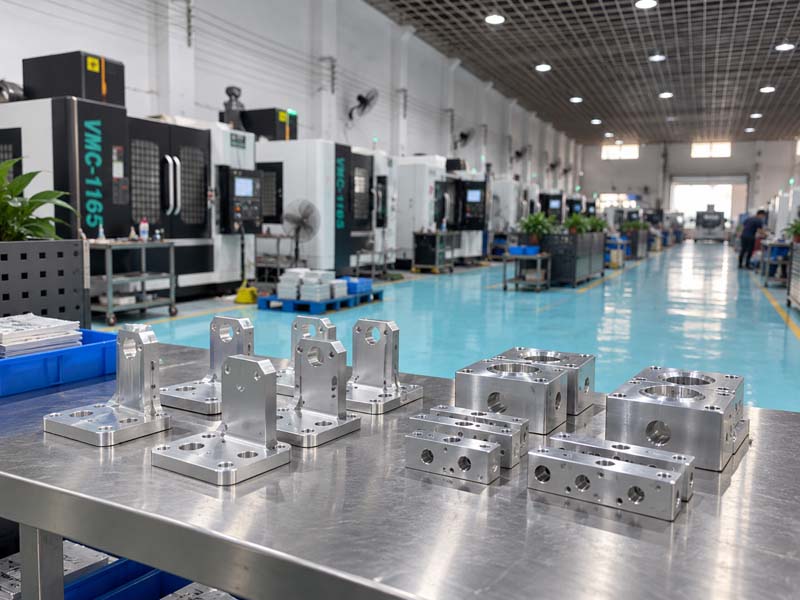
CNC machining is one of the most versatile manufacturing processes for producing high-quality custom parts. But it is not uncommon for engineers and buyers to receive quotes that vary significantly, or to discover after production that costs have exceeded expectations. The truth is, most CNC machining cost increases are driven by design decisions and specification choices that could have been adjusted early. Understanding what drives cost, and how to systematically reduce it while maintaining part function, is essential for anyone involved in product development or sourcing.
This guide is written from the perspective of a precision machining engineer and a buyer. We will walk through the practical factors that determine CNC machining cost, and provide actionable recommendations to help you get better value without sacrificing quality.
What Are the Biggest Drivers of CNC Machining Cost?
Before discussing reduction strategies, it helps to understand where the money goes. The total cost of a machined part is typically composed of:
- Material cost – raw stock, including waste from machining.
- Machine time – the time the CNC machine spends cutting the part.
- Setup cost – time to fixture the part, program the machine, and run first-article inspection.
- Tooling cost – cutting tools, fixtures, and inserts, especially for complex geometries.
- Quality and inspection cost – especially when tight tolerances or multiple critical dimensions are specified.
- Secondary operations – deburring, surface finishing, heat treatment, assembly.
For most parts, machine time and setup are the largest components. Reducing cycle time and the number of setups directly lowers the final price. However, design features that slow down machining or require extra setups are often overlooked. Our CNC machining services team regularly reviews customer drawings to identify such opportunities.
1. Simplify Geometry to Reduce Cycle Time
Deep Pockets and Thin Walls
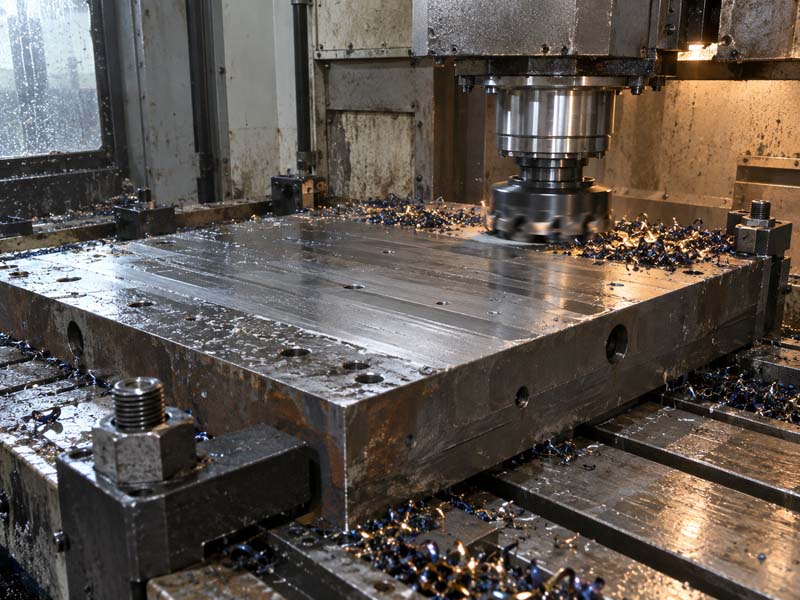
Deep pockets force the use of longer tools, which are less rigid and must run at lower feed rates to avoid deflection and chatter. If the pocket depth exceeds 4 times the tool diameter, the reduction in material removal rate can be significant. Similarly, thin walls (below 0.5 mm for aluminum, for example) require conservative cutting parameters to prevent distortion and vibration.
How to reduce cost: Design pockets with depths no greater than 3–4 times the intended tool diameter. Increase wall thickness where structurally acceptable. Add ribs to break up large thin-walled areas. Our engineering team can evaluate your part and suggest modifications that preserve function while lowering cycle time.
Internal Sharp Corners
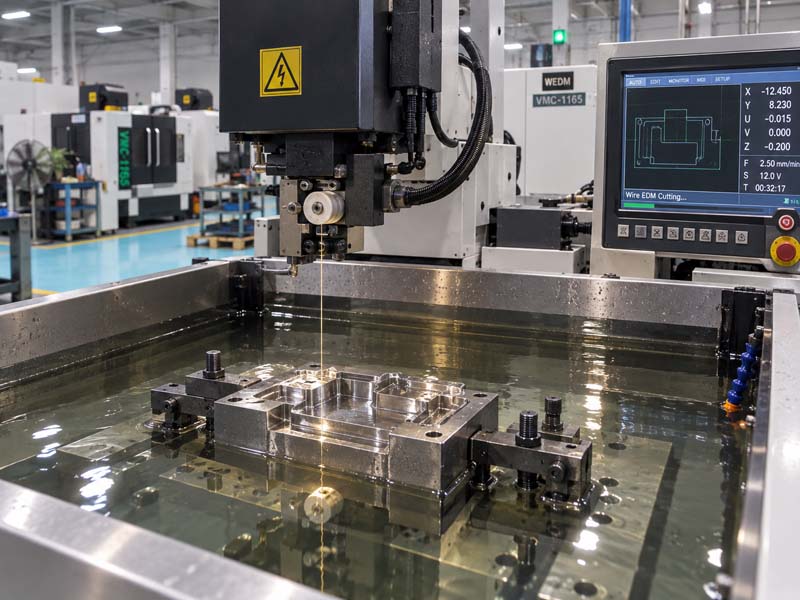
A square internal corner must be machined with a radius equal to the tool radius. If you specify a sharp inside corner (R0), the machinist has to use electrical discharge machining (EDM) or a manual operation, adding time and cost. A small fillet of R0.5–R1.0 allows a standard end mill to cut the entire feature in one pass.
How to reduce cost: Always specify an internal corner radius whenever possible. For non-functional corners, use larger radii to allow larger tools and faster material removal. This is one of the easiest CNC machining design guidelines to implement.
2. Specify Tolerances Only Where Needed
One of the most common cost drivers is over-tolerancing. A standard CNC machining tolerance of ±0.1 mm (ISO 2768-m) is adequate for the vast majority of dimensions. When you specify ±0.05 mm or tighter, every cutoff tool path, tool change, and measurement becomes more critical. The machine must be warmed up, conditions controlled, and each part often measured individually.
For example, a hole tolerance of H7 (+0.021 mm for a 10 mm hole) may require reaming or boring with a dedicated tool and multiple passes. If the same hole is only a clearance for a bolt, a standard drill tolerance is enough.
How to reduce cost: Review your drawing and identify which dimensions are functionally critical (e.g., shaft fits, bearing pockets). Apply tight tolerances only to those, and leave all others at the general tolerance block. Communicate with your custom CNC machining supplier about which tolerances are important. Often we can suggest relaxing a few that are not needed, saving both time and scrap risk.
3. Choose the Right Material and Surface Finish
Material Machinability
Not all materials machine the same. Aluminum alloys (6061, 7075) are extremely cost-effective because they cut fast, produce good surface finish, and cause little tool wear. Stainless steel (304, 316) machines slower and requires tougher tools, increasing cycle time by a factor of 3–5 for the same geometry. Titanium and high-temperature alloys are even more demanding.
How to reduce cost: If your part does not require the high strength or corrosion resistance of stainless steel, consider aluminum. If plastic is acceptable for the application, materials like Delrin or Nylon machine very quickly and often come at lower raw material cost. Our CNC machining materials guide can help you compare.
Surface Finish Specifications
A surface finish of Ra 1.6 µm (63 µin) is achievable with standard end milling. Specifying Ra 0.8 µm (32 µin) or better usually requires a slower finishing pass, polishing, or even grinding. If the surface is not a sealing face or aesthetic requirement, leaving a standard finish reduces cost.
How to reduce cost: Only specify tight surface finish on functional surfaces. For the rest, remove the callout or use an unprocessed finish (as-machined, Ra 3.2 µm). For cosmetic parts, a simple anodize or bead blast can hide tool marks without expensive machining.
4. Reduce the Number of Setups
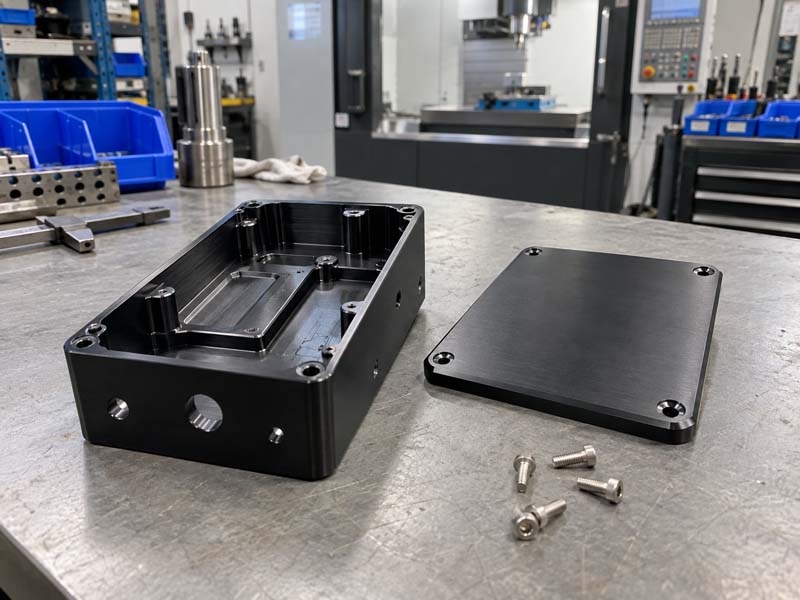
Every time a part needs to be repositioned in the machine, time is added for re-fixturing, re-probing, and re-cutting datums. A part that can be completed in one setup (with 5-axis machining, for example) can be dramatically cheaper than one requiring three setups on a 3-axis mill.
How to reduce cost: Design features that can be accessed from a single orientation. If you need holes on multiple faces, consider whether they can be oriented to the same side. For complex parts, consider using 5-axis CNC machining to access multiple sides in one setup. Even on 3-axis machines, adding a simple fixture with angled holes can reduce setups.
Our team often recommends design changes that allow us to machine a part in two setups where the customer had designed for four. The savings are usually 20–40%.
5. Avoid Unnecessary Secondary Operations
Deburring, polishing, and applying tight edge breaks can add hours to a part if specified without thinking. Similarly, specifying a surface treatment like electroless nickel plating may require masking or special handling.
How to reduce cost: Accept a standard edge break of 0.2–0.5 mm (unless sharp edges are a safety issue). Use chemical deburring for internal features where possible. Select common finishes like clear anodize or black oxide that are low-cost and fast. If you plan to anodize, note that aluminum with a machined surface finish of Ra 0.8 µm will still show some texture after anodizing — specifying a finer finish may not improve appearance.
6. Optimize for Batch Quantity
The cost per part is highly dependent on quantity. For prototype runs of 1–10 parts, setup cost dominates. For production runs of 100–1000 parts, per-part machine time matters more.
How to reduce cost: For low volumes, accept that the per-part price will be higher and focus on reducing setup complexity. For higher volumes, consider multi-part fixturing (machining several parts simultaneously) to spread setup cost. Also, a higher quantity allows us to use custom carbide tooling that cuts faster, further reducing cycle time.
We recommend discussing your annual volume with your CNC machining manufacturer so they can propose the most economical approach.
7. Provide a Complete and Clear RFQ
Uncertainty in the request for quotation often leads to higher quotes because the supplier adds a margin for unknown complications. A fully defined 2D drawing with tolerances, surface finish requirements, material grade, and thread specifications eliminates that risk.
How to reduce cost: Always include a PDF drawing with critical dimensions highlighted. Provide a 3D CAD file (STEP or IGES) so we can assess tool accessibility. Indicate the quantity and any special packaging or inspection needs. Our CNC machining quotation page explains exactly what information we need.
Final Advice: Partner with an Experienced Machining Team
Reducing CNC machining cost is not about cutting corners — it is about smart design and clear communication. An experienced precision machining partner can review your part early and identify cost drivers before you finalize the design. Many of the suggestions above come from decades of engineering review we perform for clients every week.
We encourage engineers and buyers to share drawings during the design phase, not just at the quoting stage. A small change, like increasing an internal radius from 0.5 mm to 1.0 mm, can reduce cycle time by 15% without affecting function. Over time, these optimizations accumulate into significant savings across your product line.
If you are ready to evaluate your current parts or start a new project, our team at HONGKE is available to provide engineering feedback and a competitive quote. Contact us through our website with your drawings, and we will help you find the most cost-effective way to manufacture your custom machined parts.