
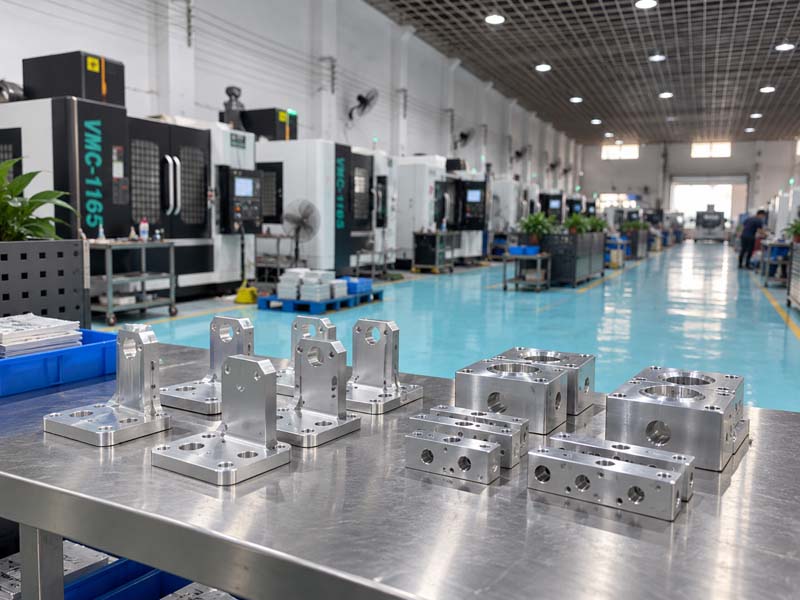
CNC machining is one of the most reliable manufacturing processes for producing precision metal and plastic parts. But many buyers and engineers are surprised when the quotation exceeds their expectations. The truth is, CNC machining cost is not arbitrary. Every dollar is tied to a specific manufacturing decision — tool selection, setup time, material removal rate, tolerance requirements, and part geometry. Understanding these cost drivers allows you to make informed trade-offs that save money without sacrificing quality.
In this guide, we will break down the major factors that influence CNC machining cost and provide practical, engineering-level strategies to reduce them. Whether you are designing a prototype, a low-volume production run, or a repeat order, these principles apply directly to your next project.
1. Understanding the Cost Structure of CNC Machining
Before you can reduce cost, you need to understand where the money goes. A typical CNC machining quotation consists of several components:
- Programming and CAM time – Time spent converting your 3D model into toolpaths.
- Setup time – Time to fixture the workpiece, indicate datums, and set tools.
- Machining time – Actual spindle-on time for material removal.
- Tooling cost – Cutting tools, holders, and any special tooling.
- Material cost – Raw material, usually with a markup for stock size and waste.
- Inspection cost – Dimensional verification, especially for tight tolerances.
- Secondary operations – Deburring, surface finishing, heat treatment, etc.
- Overhead and margin – Machine depreciation, facility costs, and profit.
Each of these elements is influenced by your part design and specification. By optimizing the most sensitive factors, you can achieve significant savings.
2. Design Choices That Directly Affect Cost
The single most effective way to reduce CNC machining cost is to apply Design for Manufacturability (DFM) principles at the beginning of the design phase. Some design features can double or triple machining time. Here are the most impactful considerations:
Internal Corner Radii
Sharp internal corners (90°) cannot be machined with a standard end mill because the tool is round. To create a sharp corner, the programmer must use a smaller tool or a different operation, increasing tool changes and cycle time. As a general rule, specify an internal corner radius at least 1/3 of the pocket depth. If you need a sharp corner, consider adding a relief or using EDM for that feature, but be prepared for higher cost.
Deep Pockets and Slot Depth-to-Width Ratio
Deep pockets require long tools, which deflect and chatter. The deeper the pocket, the slower the feed rate and the more passes needed. A good guideline is to keep pocket depth less than 4 times the tool diameter. For example, a 10 mm wide pocket deeper than 40 mm will require special tooling or multiple operations. If possible, redesign to reduce depth or step the pocket.
Thin Walls
Thin walls (below 0.5 mm for metal, 1.5 mm for plastics) are prone to vibration and deformation during machining. To avoid scrap, the machinist must reduce cutting parameters and use special workholding. For cost-effective machining, keep wall thickness above 1 mm for aluminum and above 2 mm for steel. If thin walls are unavoidable, discuss with your supplier early — they may recommend leaving a support structure and removing it later.
Undercuts and Hard-to-Reach Features
Undercuts often require special tools (lollipop cutters, T-slot cutters) or multiple setups. Each additional setup adds cost. Whenever possible, orient features so they can be machined from the top or bottom using standard tools. If undercuts are necessary, group them on one face to minimize repositioning.
Hole Specifications
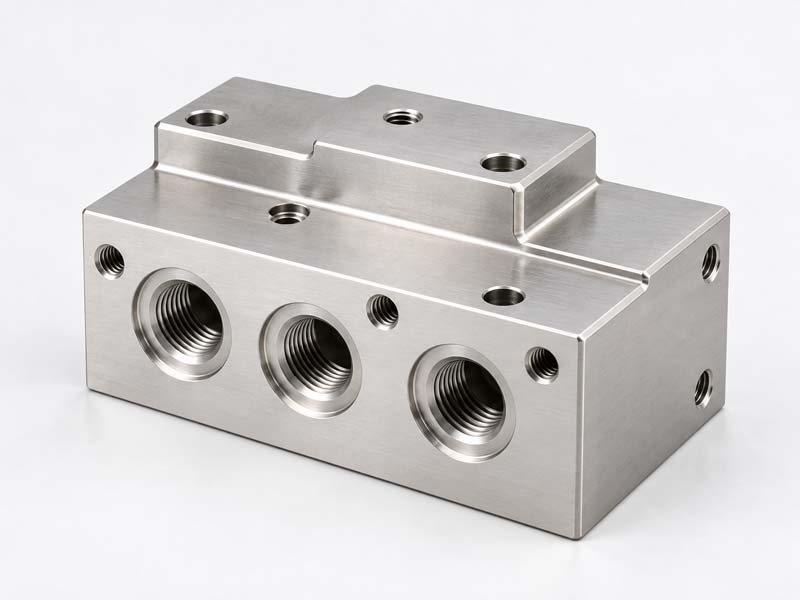
Standard drilled holes are very fast and cheap. Adding a tight tolerance (e.g., H7) or requiring reaming increases cost. Threaded holes with deep blind threads increase tap breakage risk and cycle time. Use standard drill sizes and avoid unnecessary tight tolerances on holes. For tapped holes, specify the thread depth and use a bottom tap only when necessary.
3. Material Selection and Its Impact on Cost
Material cost is not just the price per kg. Machinability, hardness, and availability also affect total cost. For example, aluminum 6061 is among the cheapest materials to machine because it cuts easily, allows high speeds, and generates minimal tool wear. Stainless steel 304, on the other hand, is more expensive, work-hardens, and wears tools faster, increasing both tool cost and machining time.
When selecting material for a custom machined part, consider:
- Machinability rating: Materials like free-machining brass (C360) or 1215 steel are optimized for speed.
- Stock availability: Non-standard sizes (e.g., large diameter round bars) often require special order and minimum purchase.
- Heat treatment: Pre-hardened materials (e.g., 4140 pre-hard) are harder to machine but avoid post-machining heat treatment costs.
- Surface finish required: Some materials, like pure copper, can be gummy and require slower speeds.
In many cases, substituting a more machinable grade (e.g., 303 stainless instead of 316) can reduce machining cost by 20-30% while still meeting performance requirements. Always consult your CNC machining supplier for cost-effective material alternatives.
4. Tolerance and Surface Finish: When Tight Is Too Tight
One of the most common mistakes in engineering drawings is over-tolerancing. Specifying ±0.025 mm on every dimension when ±0.1 mm would work adds significant cost without benefit. Tight tolerances require:
- More precise (and expensive) tooling
- Slower feeds and speeds
- Additional finishing passes
- More frequent tool changes
- Increased inspection (CMM or dedicated gauges)
- Higher scrap rates
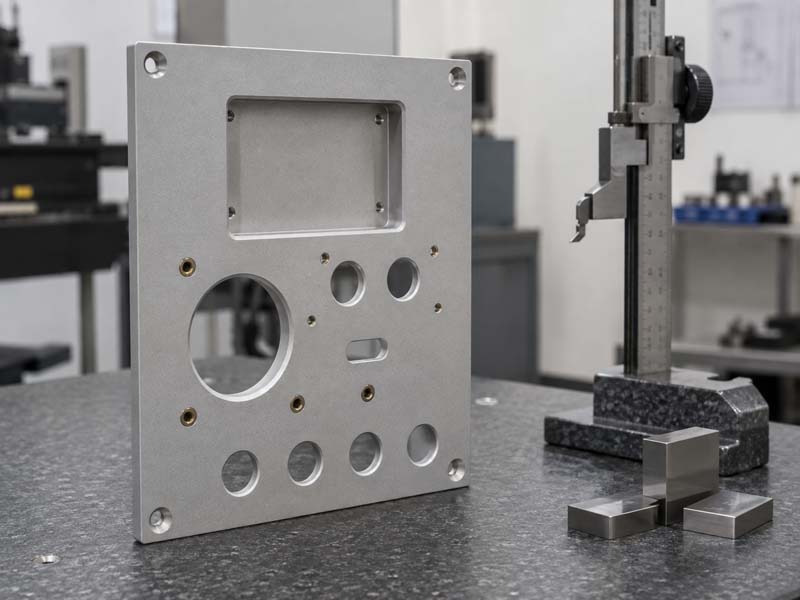
As a general engineering reference, for most CNC machining applications, the standard commercial tolerance is ±0.125 mm (±0.005 in) for metal parts. If you require ±0.025 mm or tighter, apply it only to critical functional surfaces and leave the rest with open tolerances. Use GD&T to clearly indicate which features are critical and which are not.
Similarly, surface finish Ra is often over-specified. For parts that do not seal, slide, or require a specific appearance, Ra 3.2 µm (125 µin) is achievable with standard milling. Specifying Ra 0.8 µm (32 µin) may require an additional finishing pass or grinding. Review your surface finish requirements and relax them where possible.
5. Quantity and Setup Optimization
Setups are a fixed cost per order. For low-volume production (1-100 parts), setup time often dominates the quotation. To reduce relative cost per part, consider:
- Increase order quantity: Even doubling from 50 to 100 parts can halve the setup cost per part.
- Use standard stock sizes: Avoid custom-sized raw material that requires additional cutting.
- Group multiple parts in one fixture: If you have a family of parts, ask your supplier if they can machine multiple cavities in one setup.
- Combine operations: For parts with both turned and milled features, using a mill-turn machine eliminates the need for a second setup.
In CNC milling, the number of setups is a key cost driver. Each time the part must be flipped or repositioned, there is a risk of datum shift and additional labor. Where possible, design the part to be machined in one or two setups. For example, machining a bracket with all features accessible from the top side reduces cost. If back side features are required, consider adding them as secondary operations only if necessary.
Fixture Design
Custom fixturing, such as soft jaws or vacuum plates, adds initial cost but can reduce cycle time for repeat orders. For prototype runs, standard vises and modular fixturing are more economical. Be upfront with your supplier about your expected volume so they can recommend the optimal workholding strategy.
6. How to Work with Your CNC Machining Supplier to Reduce Costs
Your supplier's engineering team can be your biggest ally in cost reduction. A good CNC machining manufacturer will review your drawing before quoting and suggest modifications that lower cost without affecting function. To get the most value:
- Provide a complete RFQ package: Include 3D model (STEP or IGES), 2D drawing with clear tolerances, material grade, quantity, and surface finish requirements. Missing information forces the supplier to assume worst-case, leading to higher quotes.
- Ask for DFM feedback: Request a manufacturability review. Experienced machinists can often spot issues you might have missed.
- Be flexible on material: If the supplier suggests a different grade that is easier to machine, evaluate it for your application.
- Combine multiple parts in one order: Even if they are different designs, sharing a setup or raw material batch can reduce cost.
- Plan for lead time: Rush orders add premiums. Planning ahead and giving the supplier time to optimize their schedule can save 10-20%.
At Hongke Precision CNC Machining, our engineering team routinely assists customers in optimizing part designs for cost-efficiency. We believe that a transparent conversation about cost drivers leads to better parts and stronger partnerships.
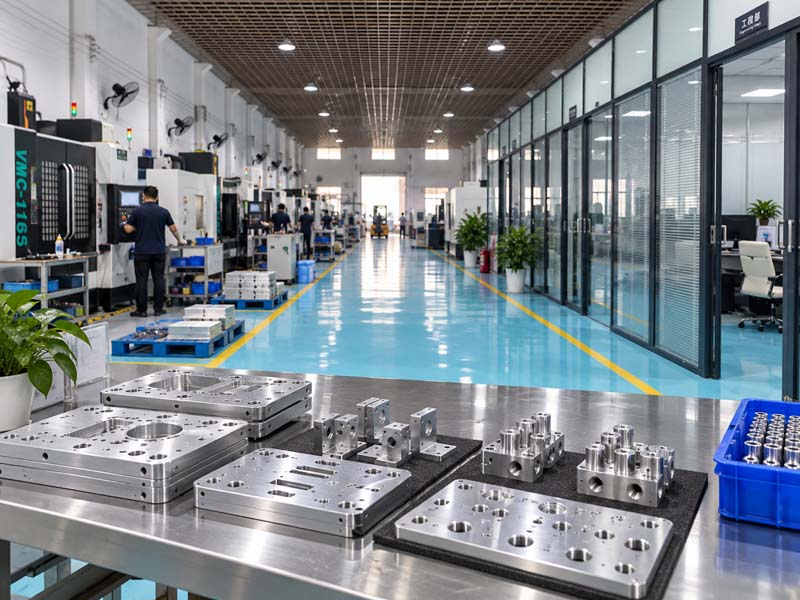
Reducing CNC machining cost is not about demanding a lower price. It is about making smarter design decisions, choosing the right material, specifying only what you truly need, and establishing a collaborative relationship with your manufacturing partner. By applying the guidelines in this article, you will be able to approach your next CNC machining project with a clearer understanding of value — and a realistic path to cost savings.