
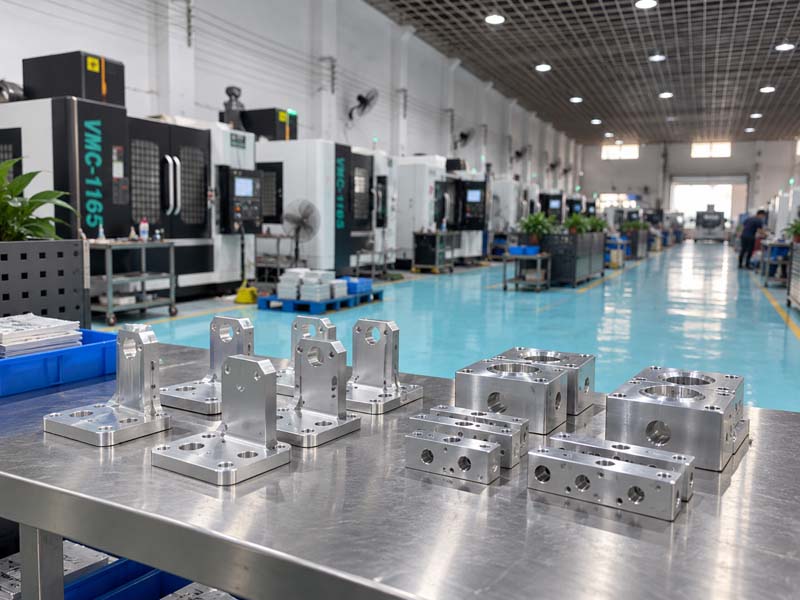
CNC machining cost is often one of the first questions engineers and procurement professionals ask when evaluating a new part. Yet the answer is rarely straightforward. Two parts with similar dimensions can have significantly different machining costs depending on material, geometry, tolerance requirements, surface finish specifications, and production quantity.
Understanding what drives cost in CNC machining allows you to make informed design decisions, prepare realistic budgets, and evaluate supplier quotations more effectively. This guide explains the main cost factors and provides practical steps to reduce machining costs without compromising part function.
Key Cost Drivers in CNC Machining
CNC machining cost is determined by a combination of factors related to the part design, material selection, production requirements, and process planning. Below are the primary cost drivers you should consider.
Material Cost
The material itself accounts for a significant portion of the total cost. Material cost is influenced by raw material type, grade, availability, and size of the stock required. Common materials like aluminum 6061 are generally less expensive than stainless steel 316 or titanium. Material cost also depends on the quantity needed and market fluctuations. Choosing a less expensive material grade that still meets functional requirements can significantly reduce part cost.
Machining Time
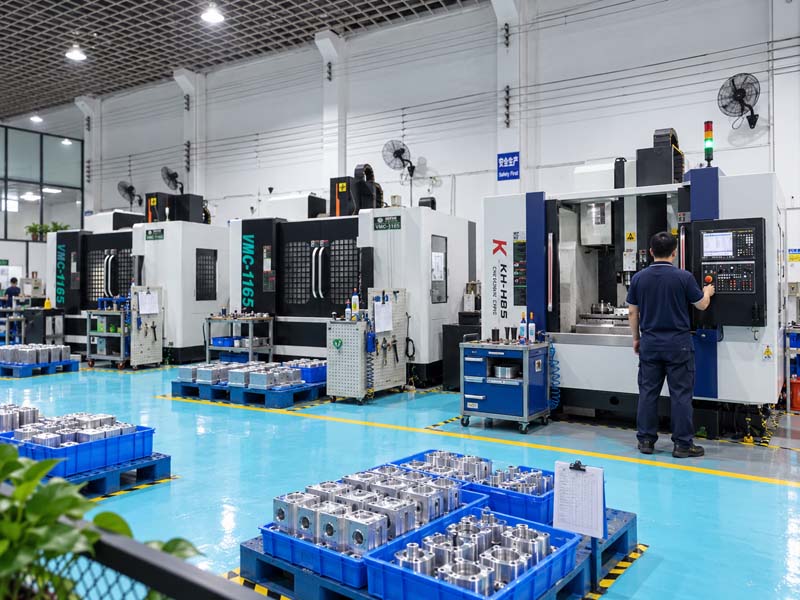
Machining time is the largest variable cost in CNC machining. It includes the actual cutting time, tool change time, and any non-cutting movements. The more complex the geometry, the more machining time is required. Features such as deep pockets, tight internal corners, thin walls, and multiple undercuts increase machining time. Minimizing these features where possible reduces cycle time and cost.
Number of Setups
Each setup represents time spent on fixturing, probing, and alignment. Parts requiring multiple setups (e.g., flipping the part to machine the opposite side) increase cost. Using multi-axis machining, such as 4-axis or 5-axis, can reduce the number of setups by allowing the machine to access multiple sides in one setup. However, multi-axis machining itself has a higher hourly rate, so the trade-off must be evaluated.
Tooling and Workholding
Special fixturing, custom jaws, or specialized cutting tools add to the initial cost. Standard tools and simple fixturing are more cost-effective. Complex parts may require custom form tools or long-reach end mills, which are more expensive and may have shorter tool life. Workholding complexity also affects setup time and the risk of part deformation.
Tolerance and Surface Finish
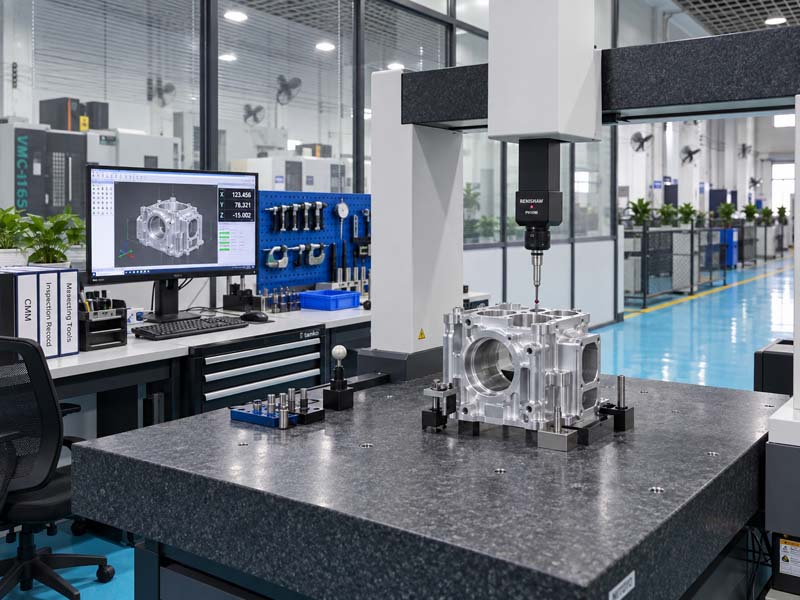
Tighter tolerances and finer surface finishes require more careful machining, slower feed rates, additional finishing passes, and more frequent inspection. Every reduction in tolerance adds cost. It is crucial to specify only the tolerances and surface finishes that are functionally necessary. Using general tolerances (e.g., ±0.1 mm) for non-critical dimensions can significantly reduce machining time and cost.
How to Reduce CNC Machining Cost Through Design
Design for Manufacturability (DFM) is the most effective way to control CNC machining cost. By making small adjustments to the design, you can simplify machining, reduce cycle time, and minimize special tooling requirements.
Simplify Geometry
Avoid unnecessary complexity. Simple geometries can be machined with standard tools and fewer setups. For example, replacing a complex curved surface with a series of flat faces or simple radii can reduce machining time significantly. Similarly, eliminating deep pockets or blind holes that require long-reach tools can lower tool wear and machining time.
Use Standard Tolerances
Only apply tight tolerances to features that absolutely require them. For example, critical mating surfaces or bearing bores may need ±0.01 mm, but most other dimensions can be left at ±0.1 mm or ±0.2 mm. Every dimension with a tight tolerance adds to machining and inspection time. Clearly indicate critical dimensions on the drawing and leave the rest open.
Design for Standard Tool Access
Ensure that internal corners have radii larger than the tool radius. If possible, design internal radii to match standard end mill sizes (e.g., R3, R4, R5). Avoid sharp internal corners that require small-diameter tools, which are weaker and require slower cutting speeds. Larger radii allow the use of larger, more rigid tools that can remove material faster.
Avoid Thin Walls and Deep Pockets
Thin walls are prone to vibration and deformation during machining, often requiring special fixturing, slower feeds, or multiple finishing passes. Similarly, deep pockets require long-reach tools that are less rigid and more prone to deflection. Where possible, increase wall thickness to at least 1–2 mm for aluminum and 2–3 mm for steel. For deep pockets, consider a design that reduces depth or allows the use of standard-length tools.
Reduce Number of Setups
Design the part so that all critical features can be machined in as few setups as possible. For example, if possible, position all features on one face or on parallel faces. If the part must be machined on multiple sides, consider adding a datum feature or a flat surface that simplifies fixturing. Multi-axis machining can be beneficial here, but only if the cost per hour justifies the setup reduction.
Minimize Threaded Holes
Threaded holes add machining time, especially if they require tapping. Standard threads are faster to produce than non-standard threads. For non-critical applications, consider using thread inserts or simply drilling and tapping into standard sizes. Avoid threads in deep holes or in thin walls, which can cause tap breakage.
How Material Choice Affects CNC Machining Cost
Material selection has a direct impact on machining cost, not just through raw material price but also through machinability, tool wear, and cycle time.
Aluminum
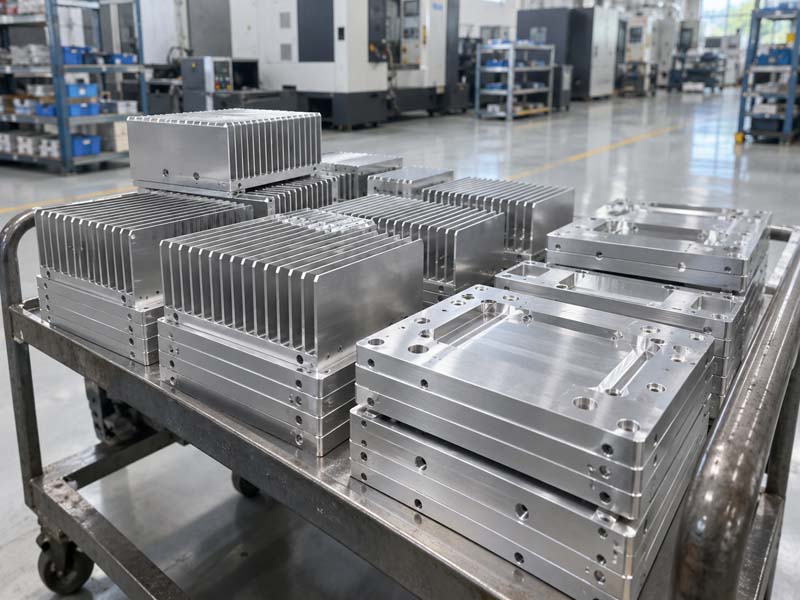
Aluminum is one of the most cost-effective materials for CNC machining. It is easy to machine, has excellent machinability, and generates low tool wear. Common grades like 6061 and 7075 are widely available and offer good strength-to-weight ratios. Aluminum also allows higher cutting speeds, reducing machining time. For many applications, aluminum is the most economical choice.
Stainless Steel
Stainless steel is more difficult to machine than aluminum. It has higher hardness, lower thermal conductivity, and a tendency to work-harden. This results in slower cutting speeds, higher tool wear, and longer cycle times. Grades like 303 and 304 are more machinable than 316. When stainless steel is necessary, consider using free-machining grades to reduce cost. Expect higher tooling costs and longer lead times.
Carbon and Alloy Steels
Low-carbon steels like 1018 and 12L14 are relatively easy to machine and are cost-effective. Alloy steels like 4140 or 4340 offer higher strength but require slower speeds and more robust tooling. Heat treatment after machining can add both cost and lead time. Annealed steels are easier to machine than hardened ones. If tight tolerances are required, consider machining before heat treatment and leaving a small allowance for post-heat treatment finish machining (if needed).
Plastics
Engineering plastics like Delrin (acetal), Nylon, and PEEK are machinable, but their behavior is different from metals. Plastics are prone to melting, burr formation, and dimensional changes due to temperature and moisture. Machining plastics requires sharp tools, proper coolant, and careful feed control. While raw material costs may be lower, the machining process may require slower speeds and more attention, which can offset the savings. For large quantities, injection molding may be more cost-effective than CNC machining.
How Production Quantity Affects CNC Machining Cost
The per-part cost decreases as the production quantity increases, primarily because the fixed costs (setup, programming, fixturing, tooling) are spread over more parts.
Prototype and Low-Volume Production
For one-off prototypes or low-volume runs (1–100 parts), the setup cost dominates. Each part may require manual programming, custom fixturing, and operator attention. The hourly rate for a CNC machine is the same whether you machine one part or a hundred, but the setup time is fixed. To reduce cost for small batches, consider using simpler designs, standard materials, and relaxed tolerances. If possible, group multiple parts on a single fixture plate to reduce setup time per part.
Medium to High-Volume Production
As volume increases, the setup cost becomes a smaller fraction of the total cost. For 100–1000 parts, the per-part cost drops significantly. At higher volumes (1000+ parts), it may become economical to invest in custom tooling, automated fixturing, or even dedicated multi-spindle machines. The key is to find the volume where automation and process optimization pay off. For very high volumes, other processes like die casting or injection molding may become more cost-effective than CNC machining.
Batch Size and Cost Per Part Example
As a general rule, the cost per part for a simple aluminum bracket might be:
- 1 part: $50–$100
- 10 parts: $15–$30 per part
- 100 parts: $5–$10 per part
- 1000 parts: $2–$5 per part
These numbers are indicative and vary widely based on complexity, material, and tolerance. The key takeaway is that design simplification has a multiplicative effect: a design change that saves 10 minutes per part saves 1000 minutes for a 100-part order.
How to Evaluate CNC Machining Quotes
When comparing quotes from different CNC machining suppliers, it is important to understand what is included. A lower price may reflect a different interpretation of the tolerance, a simpler fixturing approach, or a different material sourcing strategy.
What Information Should Be Included in an RFQ?
To get accurate and comparable quotes, provide the following information in your RFQ:
- Complete 3D CAD model (STEP or IGES format)
- 2D drawing with all critical dimensions, tolerances, and surface finish requirements
- Material grade and any specific material certification requirements
- Quantity required (for prototype, low-volume, or production)
- Expected delivery timeframe
- Any surface treatment or secondary operations required (e.g., anodizing, passivation, assembly)
- Inspection requirements and any third-party certification needs
How to Compare Quotes
When reviewing quotes, look beyond the total price. Ask each supplier for a breakdown, if possible, showing material cost, machining time, setup, and any special tooling. A supplier with a slightly higher hourly rate might produce parts faster or with fewer rejects, leading to a lower effective cost. Also, consider the supplier’s experience with your material and geometry. A supplier familiar with complex aluminum parts will likely provide a more accurate quote and faster delivery than one who primarily works with steel.
Common Misconceptions About Reducing CNC Machining Cost
There are several common misconceptions that can lead to unnecessary cost or poor part quality. Understanding these can help you avoid costly mistakes.
“Tight Tolerances Always Indicate Higher Quality”
Many design engineers specify tight tolerances on all dimensions, thinking it ensures higher quality. In reality, unnecessary tight tolerances increase cost without adding value. Only critical mating surfaces and functional dimensions need tight tolerances. Use general tolerances (+/-0.1mm or +/-0.2mm) for the rest. If you are unsure, consult with the machining supplier during the design review stage.
“Complex Geometry Is Always Better”
Complex geometry may look impressive, but it often adds significant machining time and cost. Simple geometry works better for CNC machining. If a flat surface can replace a curved one, do it. If a standard hole pattern can replace a custom profile, use it. Simplicity reduces machining time, tool changes, and inspection effort.
“Oversizing the Part Reduces Cost”
Some designers think making a part larger uses more material but reduces machining time. This is rarely true. Larger parts require larger stock sizes, more material removal, and often longer cycle times. Staying as close to the minimum required dimensions as possible is usually more cost-effective, unless the part becomes too thin to machine without deformation.
“Secondary Operations Are Always Avoidable”
Some secondary operations like anodizing, passivation, or assembly are necessary for the part’s function. Trying to avoid them often leads to more complex machining or higher cost. For example, instead of machining a corrosion-resistant finish, it may be more cost-effective to machine in aluminum and then anodize the part. Proper specification of secondary operations in the RFQ helps the supplier optimize overall cost.
Collaboration Between Engineer and Supplier
The most effective way to reduce CNC machining cost is to involve the machining supplier early in the design process. A good supplier can provide valuable DFM feedback, suggest alternative materials, and recommend design changes that simplify machining without compromising function.
At Hongke CNC, we review every design before production to identify opportunities for cost reduction. Our engineering team works with customers to optimize tolerances, simplify geometry, and select the most efficient machining strategy. This collaborative approach ensures you get high-quality parts at the lowest possible cost.
Providing a complete CNC machining services package, we handle everything from prototype to low-volume production. Our expertise in multi-axis machining and various materials allows us to recommend the most cost-effective solution for your part.
If you are looking for a reliable precision CNC machining manufacturer, contact us today with your design files. We will provide a detailed quotation and DFM analysis to help you achieve the lowest possible cost without sacrificing quality.