
Selecting the right planetary ball mill manufacturer is critical for achieving consistent grinding results in materials research, powder metallurgy, battery development, and chemical processing. With dozens of suppliers claiming high energy density, low noise, and long service life, engineers often face difficulty comparing actual performance. This guide breaks down the key criteria for ranking manufacturers, provides an objective evaluation framework, and helps you match supplier capabilities with your specific application.
Whether you need a compact tabletop mill for nanomaterial synthesis or a high-capacity unit for industrial-scale grinding, understanding the trade-offs between rotational speed, jar material, control accuracy, and build quality will prevent costly procurement mistakes.
1. Understanding Planetary Ball Mill Applications
Planetary ball mills are used for fine grinding, mixing, homogenizing, and mechanical alloying. The grinding jars rotate around their own axis while the entire platform rotates in the opposite direction, creating high centrifugal forces that accelerate the grinding balls. Typical applications include:
- Nanomaterial synthesis (e.g., carbon nanotubes, graphene, metal oxides)
- Battery electrode material preparation (LiCoO₂, graphite, silicon)
- Ceramic and mineral powder processing
- Pharmaceutical and chemical milling
- Mechanical alloying of metallic powders
The choice of manufacturer directly affects achievable particle size, contamination risk, reproducibility, and operational safety. Therefore, a structured ranking approach is essential.
2. Key Criteria for Manufacturer Ranking
When evaluating planetary ball mill suppliers, consider the following weighted factors:
2.1 Grinding Performance & Speed Range
Maximum rotational speed (rpm) and the ratio between platform and jar speed determine the energy input. High-end mills offer sun wheel speeds up to 800–1000 rpm, enabling submicron grinding. However, excessive speed without proper cooling can cause material degradation or jar damage. Check the manufacturer's documented performance curves for different jar sizes.
2.2 Jar Material & Volume Options
Common jar materials include stainless steel, agate, zirconia, tungsten carbide, nylon, and polyurethane. A good manufacturer provides at least four material choices and a range of volumes from 12 ml to 500 ml or larger. Compatibility with your sample (hardness, abrasiveness, contamination sensitivity) must be verified.
2.3 Build Quality & Durability
Planetary mills experience high vibration and torque. Key indicators of quality are cast aluminum housing, precision bearings, sealed drive mechanisms, and overload protection. Check user reports on long-term reliability—common failure points include belt drive wear, bearing noise after 500 hours, and control board failures.
2.4 Control System & Reproducibility
Advanced mills feature programmable speed, time cycles, pause intervals, and direction reversal. Digital display and data logging capabilities help in process validation. Reproducibility across batches depends on closed-loop speed control (within ±1% deviation).
2.5 Safety & Noise Level
Look for emergency stop, interlocking lid sensor, automatic shutoff in case of imbalance, and noise levels below 70 dB at maximum speed. Some manufacturers offer soundproof enclosures as an option.
2.6 After-Sales Support & Warranty
Manufacturers with local distributors or service centers are preferable. Standard warranty is usually 1–2 years; extended warranties are negotiable. Access to spare parts (belts, bearings, control boards) for at least 5 years is important for long-term operation.
3. Overview of Leading Planetary Ball Mill Manufacturers
The following table summarizes several well-known brands ranked by overall performance, reliability, and global support. Keep in mind that ranking depends on your specific requirements.
| Manufacturer | Country | Key Strengths | Typical Price Range (USD) |
|---|---|---|---|
| Retsch (PM 100, PM 200, PM 400) | Germany | Excellent build quality, wide jar selection, reproducible results, intuitive touchscreen control | $8,000 - $25,000 |
| Fritsch (Pulverisette 5, 6, 7) | Germany | High energy density, robust design, good for hard materials, optional gas-tight jars | $7,000 - $22,000 |
| Across International (PQ-N series, PQ-V series) | USA/China | Affordable, decent performance, good for low-to-medium hardness materials, compact size | $2,500 - $6,000 |
| DECO (DECO-PBM-V series) | China | Very cost-effective, multiple jar materials, suitable for lab R&D, shorter lead time | $1,200 - $3,500 |
| TOB New Energy (TOB-PBM series) | China | Specialized for battery materials, vacuum/argon atmosphere options, competitive pricing | $1,500 - $4,000 |
| Xiamen TMAX (TMAX-PBM series) | China | Wide selection of jar sizes, good after-sales communication, customizable programs | $1,000 - $3,000 |
For extremely demanding applications (e.g., grinding diamond, high-purity nanomaterials), German manufacturers like Retsch and Fritsch remain the top choice. For general laboratory use with moderate budget, Chinese manufacturers offer excellent value, provided you verify quality control and obtain references.
4. Evaluating Grinding Performance and Durability
Do not rely solely on brochure speed values. Request test reports or certified results for reference materials (e.g., grinding silica from 1 mm to <10 μm within a given time). Look for:
- Final particle size distribution (D50, D90)
- Grinding time vs. energy consumption
- Wear rate of jars and balls (commonly measured by weight loss per 100 hours)
- Temperature rise inside the jar under continuous operation
Durability can be assessed through user reviews on platforms like Labcompare, ResearchGate, or industry forums. Pay attention to complaints about motor burnouts, gearbox failures, or jar sealing issues.
5. Quality Control and After-Sales Support
A reliable manufacturer should provide:
- ISO 9001 certification for manufacturing facility
- CE marking for electrical safety (if used in EU)
- Factory test certificate for each unit
- User manual in English and local language
- Remote troubleshooting via video call
- Availability of spare parts online or through local agents
Also check the return policy and replacement warranty for defective units. Some Chinese manufacturers offer free replacement of major components within the first year.
6. Cost Considerations and Customization
Price is not the only factor; total cost of ownership includes consumables (grinding balls, jars), maintenance, and potential downtime. High-end mills often have longer service intervals (e.g., 5000 hours before bearing replacement) and lower contamination risk.
Customization options: vacuum/argon purging, cryogenic milling capability, multi-jar simultaneous operation, automatic jar clamping, and integrated temperature measurement. If your process requires special conditions, verify that the manufacturer can tailor the design without sacrificing safety.
For budgetary guidance, entry-level planetary ball mills from DECO or TMAX start around $1,000–$2,000, while top-tier Retsch PM 400 can exceed $25,000. A mid-range option like Across International PQ-N2 series ($3,000–$4,000) often satisfies most R&D needs.
7. How to Match Manufacturer with Your Requirements
Follow this step-by-step approach:
- Define your target material: hardness, abrasiveness, required final fineness, and acceptable contamination level.
- Select jar material and size: avoid stainless steel if iron contamination is critical; use zirconia or agate instead.
- Determine needed speed and time: for nanomaterials, high energy (≥500 rpm) is often required, which demands a robust mill.
- Check budget and justify ROI: if the mill will be used daily for high-value materials, invest in reliability and support.
- Request quotes from 3–5 manufacturers and compare technical specifications side by side.
- Ask for demonstration videos or visit a local user if possible.
- Negotiate warranty, training, and spare parts package.
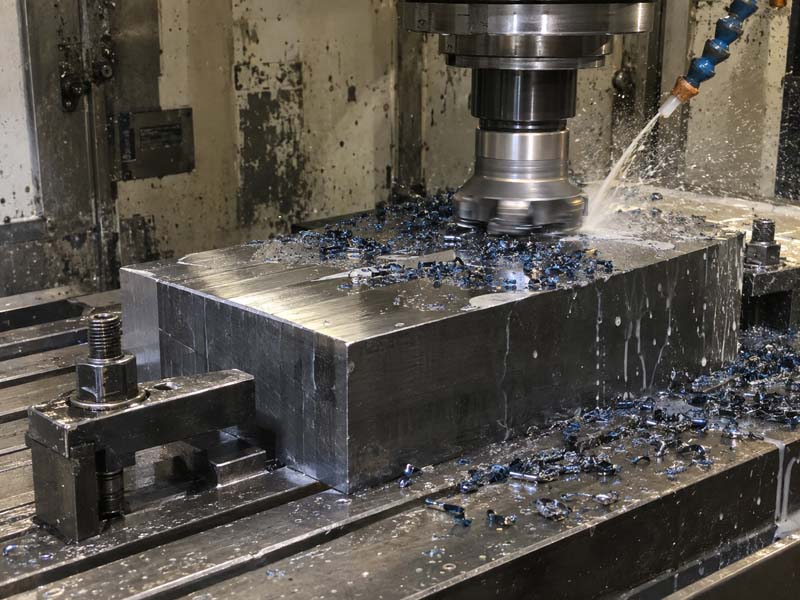
For manufacturers who require custom parts for their planetary ball mill systems (e.g., specialized jars, adapters, or structural components), collaborating with a precision CNC machining supplier ensures tight tolerances and material integrity. Hongke's CNC machining services deliver high-quality components for laboratory equipment, meeting stringent dimensional and cleanliness standards. Learn more about precision CNC machining for industrial applications.
8. Making the Final Decision
After gathering data, rank manufacturers using a weighted scorecard. For example, weight grinding performance at 30%, durability at 20%, support at 15%, cost at 15%, customization at 10%, safety at 10%. Calculate scores and compare. Don't hesitate to ask for references from similar industries.
Remember that the cheapest option may lead to higher rejection rates or shorter service life. Conversely, the most expensive brand may include features you never use. Balance is key.
Every planetary ball mill purchase is an investment in your research or production capability. By systematically evaluating manufacturers against the criteria outlined here, you can select a reliable partner that delivers consistent results for years.