
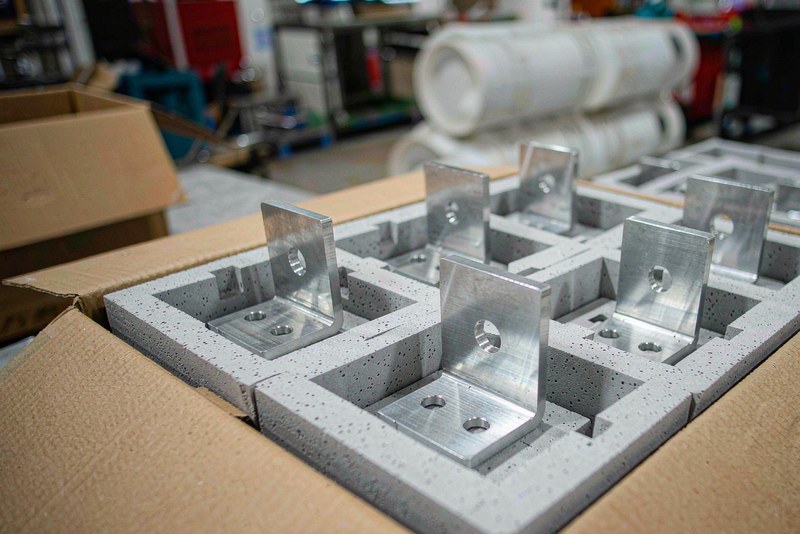
Packaging for machined parts is usually treated as an afterthought, and the cost shows up weeks later at the receiving dock. A part that measures correctly at the bench can still arrive unusable. Cosmetic damage, fretting between parts and condensation inside a sealed carton leave marks no dimensional report captures, and most of those decisions are made after inspection.
Where Machined Parts Get Damaged Between Bench and Dock
Dimensional loss in transit is rarer than buyers expect; surface, edge and finish damage is far more common.
- Impact. A carton dropped from waist height transfers load through whatever touches the part, so one corner hit can roll over a sealing face or crack a wall.
- Abrasion. Loose parts rubbing against each other polish edges, and on brass or soft aluminum they remove material.
- Corrosion. Bare steel flash-rusts in humid air and brass tarnishes. A sealed carton crossing a climate zone becomes a small humidity chamber.
- Stack load. Cartons stacked four high load whatever sits at the bottom. Thin-walled housings and long shafts are the usual casualties.
- Contamination. Foam dust and cardboard fiber must be removed before assembly, at your cost.
What Packaging for Machined Parts Should Specify
Protection level follows from the feature you cannot afford to lose, not from part price. Classify each part by its fragile characteristic and write that class into the order.
| Part characteristic | Protection that addresses it |
|---|---|
| Sealing face or datum | Cut foam cavity; no part-to-part contact |
| Thin wall or long shaft | Support along the length; stated stack limit |
| Bare steel or cast iron | VCI film with desiccant, or a named oil film |
| Cosmetic surface | Peelable film under a rigid shell; no tape on the finish |
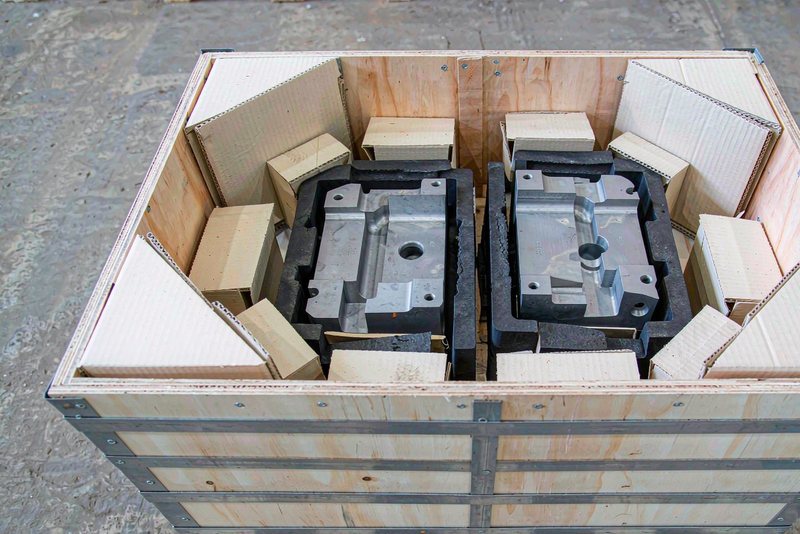
Four lines on the order carry most of the value: parts per bag, maximum stack height, whether mixed part numbers may share a carton, and a photo of the packed carton before sealing. That photo settles most arguments about how a crate left the shop.
Corrosion Protection: Match the Method to the Material
Corrosion protection is where generic instructions fail. "Oil the parts" means something different for a ground steel shaft than for an anodized aluminum housing, and an oil film correct for one may stain the other.
For bare steel and cast iron, VCI film plus desiccant is the usual route for sea freight, with a humidity indicator card inside. Where parts go straight to paint without a wash step, a named oil film is often preferable, provided it is compatible with the next process.
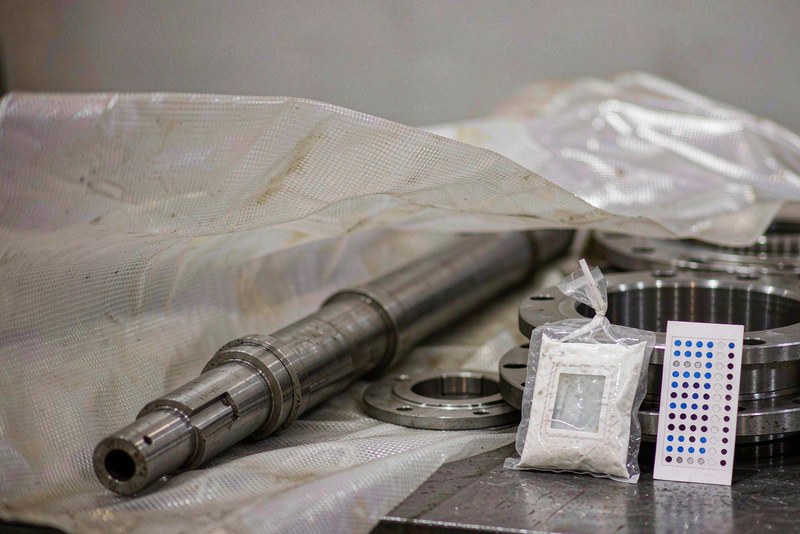
Aluminum and brass need less, but not nothing: unsealed aluminum stains and brass tarnishes, so interleaving paper and a barrier bag do real work on visible surfaces. Plated or anodized parts sit in between, since the coating protects the substrate but scratches itself. Where a finish exists for corrosion resistance rather than appearance, the black oxide process guide explains the difference.
Cushioning, Crating and the Stack Load Nobody Calculates
Foam cushioning earns its cost when machined faces cannot be refinished, or when the same carton is handled repeatedly rather than moved once. A cut cavity holds each part in a fixed orientation; a bag of loose parts does not.
Carton versus crate turns on weight and handling, not value. A crate makes sense when one unit is too heavy to lift safely, needs forklift access, or cannot tolerate flex. Below that, a double-wall carton with edge protectors on a pallet is often enough, provided the pallet is not smaller than the carton.
Stack load deserves an explicit number. Ask what the carton is rated for, then check it against how the forwarder loads the container. In consolidated shipments the answer changes with every consolidation, and your carton is at the bottom as often as the top.
What Protective Packaging Costs, and When It Pays
Protective packaging is typically a small single-digit percentage of part value, which is why it gets cut first when a quote is tight. The comparison that matters is not packaging cost against zero, but against a rejected lot: remachining, re-inspection, a second freight leg, and the schedule slip while all three happen.
The arithmetic favors better packaging in three situations: parts with a long process route behind them, parts where one cosmetic defect triggers rejection, and parts shipped by sea. A plain carton is right when the part is a non-cosmetic bracket, the journey is short, and a scratch would be irrelevant. Blanket upgrades waste money as reliably as blanket downgrades do.
When suppliers are compared on delivered cost, packaging sits inside the same comparison as freight and duty, which the landed cost breakdown covers line by line.
Receiving: Making a Transit Damage Claim Survive
A transit damage claim dies from silence. Most carriers require notice within a short window and evidence that the condition was not caused after delivery, so the first hour at your dock decides whether it survives.
Photograph the carton before opening it, all six sides if there is visible crush or water staining. Open in a controlled area, keep the packaging until the claim closes, and note any exception on the delivery receipt rather than signing clean. Then inspect the parts against the drawing, the discipline set out in this guide to incoming inspection for machined parts.
Mistakes That Cost the Most
- Specifying packaging only after the first damaged shipment, when the process is fixed and lead time is short.
- Letting mixed part numbers share a carton, so the fastest way to count the shipment is also the fastest way to scratch it.
- Accepting "export packing" as a specification. It has no defined meaning and no measurable requirement behind it.
- Signing the receipt clean, then finding the damage two days later with no evidence trail.
Closing
Packaging for machined parts is cheap to specify and expensive to improvise. Classify the part by its most fragile feature, put the protection level and stack limit on the order, and photograph the carton before it is sealed. That short list removes most of the ways a good part becomes a bad delivery, and it carries into volume pricing, where the cost-per-quantity structure shows where packaging for machined parts sits.