
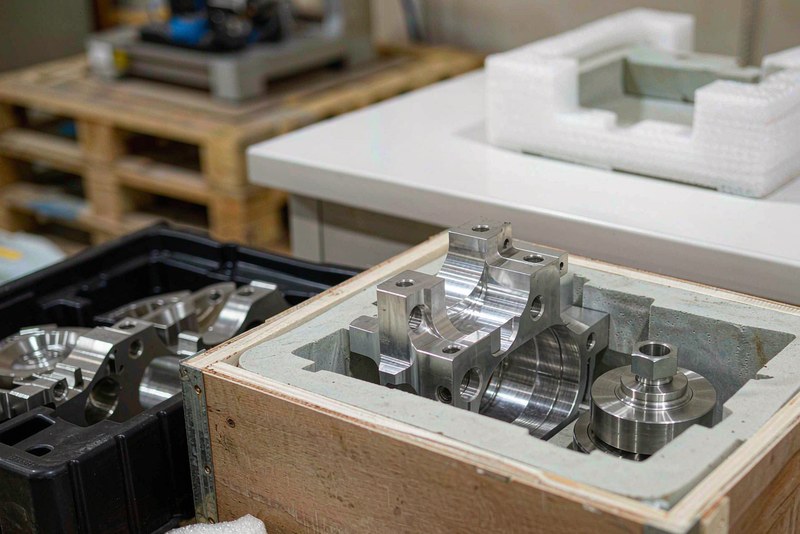
Landed cost is what a machined part actually costs once packaging, freight, duty, brokerage and the risk of a bad delivery are counted. Two suppliers can quote the same piece price and land fifteen percent apart. That gap rarely comes from machining hours.
What Landed Cost Actually Includes
A piece price answers one question: what does the supplier want for the part, and at which handoff point. Everything after that handoff is still your money.
The usual components:
- Packaging rated for the route, not just for the shelf
- Inland transport from the machine shop to the forwarder
- Export documentation and customs brokerage
- Main-carriage freight, by air or by sea
- Import duty, taxes and any applicable trade measures
- Inland delivery, receiving and incoming inspection labor
- Working capital tied up while parts wait for the next build
Stack those up and you get a delivered cost per part. That figure, not the quote, is what your cost roll should carry.
The Line Items That Hide Behind a Fast Quote
Suppliers quote what they control. Freight sits outside that boundary when the buyer names a forwarder or collects from the dock, which is why a low piece price and a high landed cost can describe the same order.
The comparison error is mixing handoff points. A quote delivered to your dock and a quote collected from the supplier's yard are not the same offer, and the delivery term written on the purchase order, the Incoterms term, decides which costs you have taken on. Read that term before you read the number.
Volume shifts the arithmetic more than most buyers expect. A fifty-piece order and a five-thousand-piece order may occupy similar container footprint but not the same freight cost per part, and the minimum order quantity discussion usually decides which side of that line you land on.
Packaging and Freight Choices You Can Still Influence
Packaging is where buyers hold the most leverage and pay the least attention. A shop will pack to a specification if one is written down. Left unspecified, packing follows habit.
Three decisions are worth making explicitly:
- Parts per carton, so receiving can verify quantity without repacking
- Cushioning and separation for machined surfaces, threads and bores
- Moisture protection, which matters for steel and for long ocean transits
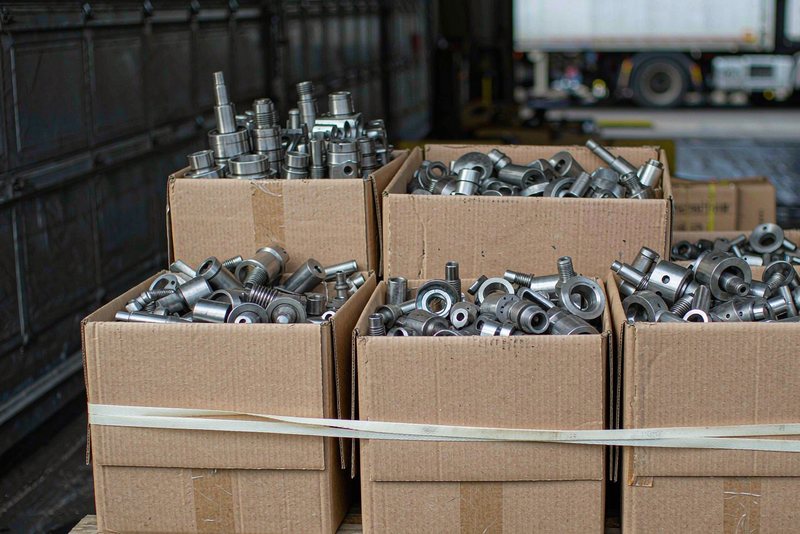
Air versus sea freight is a schedule decision paid for in cash. Air compresses transit time and multiplies cost per kilogram; sea freight does the reverse and adds variability at both ends. Neither is automatically right. What matters is that the same mode is assumed on every offer you compare, because a supplier quoting ten-day air and a supplier quoting thirty-day sea are not competing on the same product.
Duty, Origin and Documentation: The Paperwork Side
Import charges follow the goods and their origin, not the wording on the invoice. Classification depends on what the part is, and origin depends on where it was substantially transformed rather than where it was loaded. Depending on the importing country's valuation rules, freight and insurance may be part of the value on which duty is calculated.
Two practical points. First, the documents travelling with the shipment should match what you declared: a packing list, a commercial invoice, and material documentation such as a mill test certificate where the material is specified. When paper and box disagree, the shipment waits, and waiting is a cost line. Second, confirm in advance whether charges are assessed on the finished part or on the material, since the two treatments produce different numbers on the same order.
Confirm classification before the order rather than after it. Ask the supplier which code they intend to declare and check it against what you will enter on import; a mismatch between the two ends of the same shipment is a common cause of a hold at the border.
The Cost of Parts That Arrive Wrong
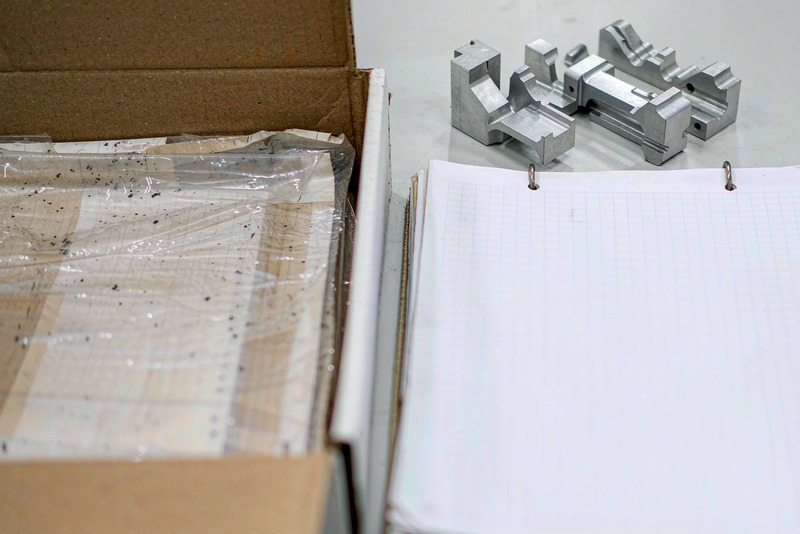
Any landed cost model needs a line for non-conforming parts, even when it sits at zero on most orders. A dimensional miss found at receiving is not a remake alone; it is the remake plus return freight, an expedited replacement, inspection labor and a schedule slip.
How much it costs depends on where you catch it. Finding a bad lot at receiving is cheap. Finding it on your assembly line is not. A non-conformance report that records the part, the feature, the quantity and the disposition gives the supplier something specific to answer and gives you a defensible basis for a claim.
Two habits shrink this line more than any negotiation: agreeing on acceptance criteria before the first order, and inspecting to the risk of a feature rather than to a flat sampling routine.
Building a Landed Cost Per Part You Can Compare
Build the model once and reuse it. A workable version:
| Line | Basis |
|---|---|
| Piece price | Per part, from the quote |
| Packaging | Per carton, amortized over parts per carton |
| Origin inland freight | Per shipment, amortized by shipped quantity |
| Main carriage | Per shipment, weight or volume based |
| Duty and brokerage | Declared value plus fixed entry fees |
| Destination delivery | Per shipment |
| Receiving and inspection | Labor hours per shipment |
| Non-conformance allowance | Historical scrap and rework rate |
Then divide shipment-level costs by the quantity that actually ships. Two traps catch people. Fixed documentation and brokerage fees do not shrink with a small order, so they distort low-volume comparisons. And the quantity shipped is not the quantity quoted, which matters when a supplier ships slightly over or under.
Compare offers on this total rather than on piece price alone. The supplier comparison framework is less important than applying identical lines to every quote.
Where the Number Usually Moves
Freight mode and packaging specification are the two lines a buyer can change without touching the part. Duty is largely fixed once classification and origin are settled. Piece price is the line suppliers compete on, which is why it gets the most scrutiny and explains the least.
Bring a landed cost estimate to the next quote review. If a cheaper offer loses after the model is filled in, you have learned something more useful than a discount.