Quick Answer
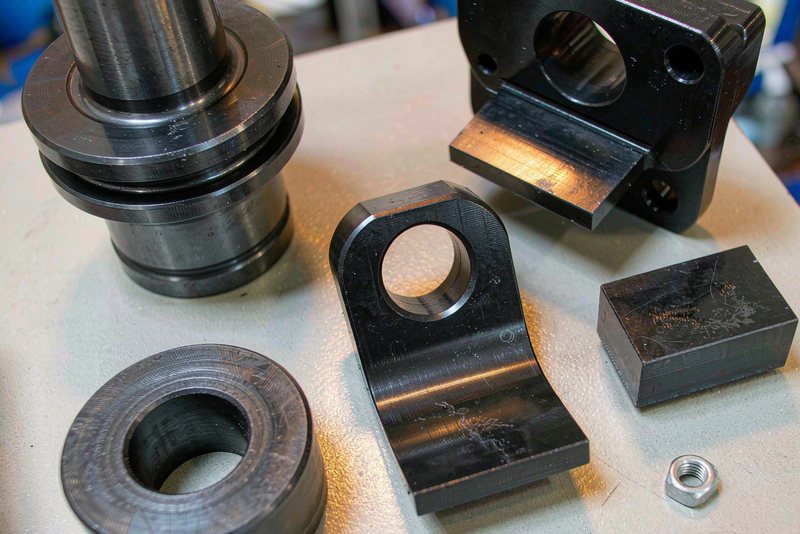
A black oxide finish is a conversion coating, not a deposited layer. The bath reacts with the steel surface and converts it into magnetite, so the black colour belongs to the metal rather than sitting on top of it. Part of the reaction grows outward and part penetrates, so the size change stays small — typically a micrometre or two per surface. Oiled or waxed, it gives good anti-galling behaviour and mild indoor corrosion protection.
Key Takeaways
- A black oxide finish converts ferrous metal at the surface into magnetite; nothing is plated onto the part.
- Size change is small but real — typically a micrometre or two per surface — so features at a limit deserve a review before finishing.
- Corrosion performance follows the post-treatment: oiled or waxed parts tolerate indoor handling better than dry ones.
- Hot, mid-temperature, and room-temperature routes differ in colour depth and setup cost, not in the basic chemistry.
What a Black Oxide Finish Actually Does
Black oxide, also called blackening, is a chemical conversion treatment for ferrous metals. Parts pass through a cleaning sequence and then into a near-boiling alkaline bath containing an oxidising salt, which converts surface iron into magnetite.
Because magnetite forms out of the metal underneath, there is no separate interface to delaminate, unlike a plated finish such as zinc where a layer of another metal carries the protection.
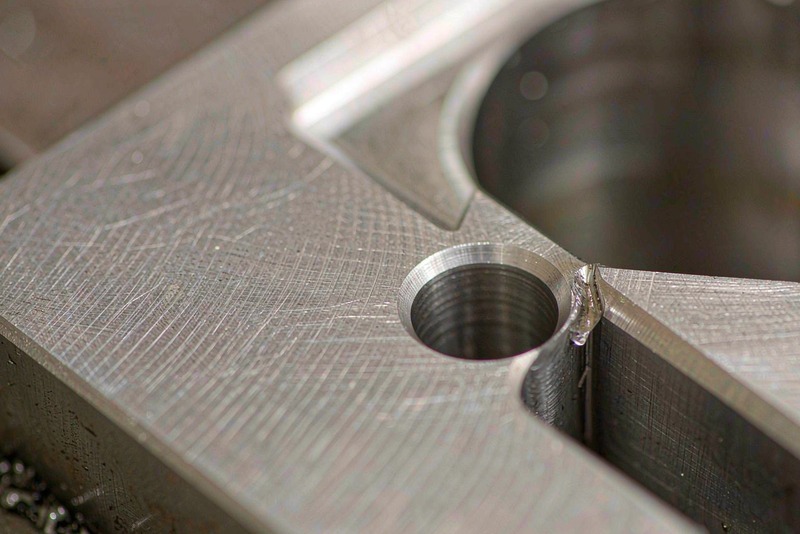
The finish fills nothing either: tool marks, grinding patterns, pits, and weld scale stay visible afterwards, which is why edge condition and texture are settled on the drawing first — see the deburring methods guide. Hardened steels blacken deeper than free-machining grades, so a retained visual sample works better than a colour number.
Does Black Oxide Change Dimensions and Thread Fit?
Growth sits on both sides of the original surface. Finishing data commonly quotes roughly 1 to 2.5 micrometres of outward growth per surface for hot blackening — negligible on most milled and turned features, meaningful on a ground bore already held at its limit. Where a feature sits at the edge of its band, the allowance belongs in the process plan.
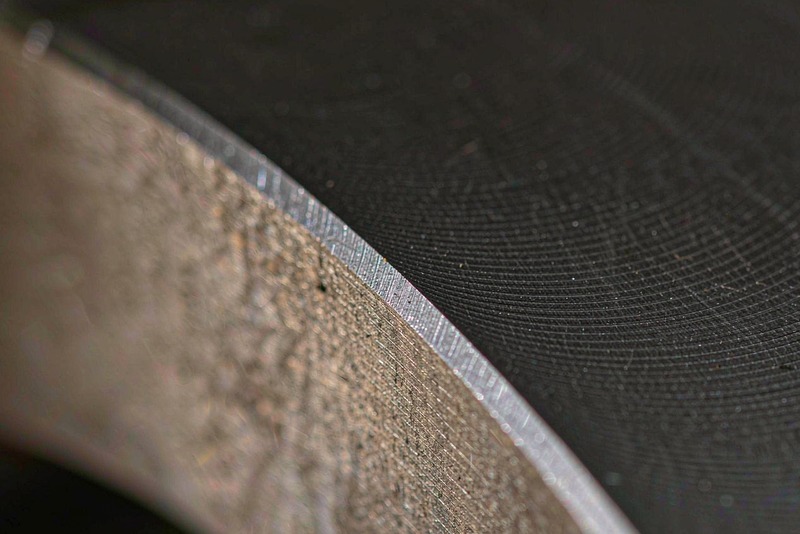
Threads are less of a problem than they first appear: growth sits well below the allowance built into common classes of thread fit, and the oil film left by the post-treatment acts as a light lubricant that reduces galling.
Masking is usually about the post-treatment rather than thickness: oil or wax on a surface that will later be bonded or welded causes real problems, so those areas are commonly taped off and left dry.
Process Routes: Hot, Mid-Temperature, and Room-Temperature
The hot route uses a near-boiling alkaline bath and gives the deepest, most uniform black with the strongest abrasion resistance.
Mid-temperature blackening uses related chemistry at a lower temperature, so cycles run longer and the colour is slightly less deep. Room-temperature products use different chemistry and are applied by immersion or brush: thinner, less abrasion resistant, and often reading brown beside a hot-processed part.
Across all three, cleaning is the shared bottleneck: cutting-fluid residue, fingerprints, and light rust cause most patchy results. Where finishing is not run on site it is handled as supplier-coordinated finishing, and naming the route on the drawing lets it be quoted separately.
Where Black Oxide Earns Its Place, and Where It Does Not
The finish suits machine tooling, jigs and fixtures, shafts, fittings, and fasteners. Because the hot route is a chemical conversion rather than an electroplated deposit, its hydrogen-embrittlement exposure on hardened parts is generally regarded as lower than that of plating — worth confirming with the finishing supplier.
It is the wrong answer for outdoor and marine exposure, wash-down equipment, and any environment where salt or repeated wetting is normal. Zinc or zinc-nickel plating, a passivated stainless part, or a polymer coating are the established routes there; for aluminum, the equivalent discussion is anodizing. The complete surface finishes guide compares those families when a choice is still open.
How to Specify Black Oxide on a Drawing
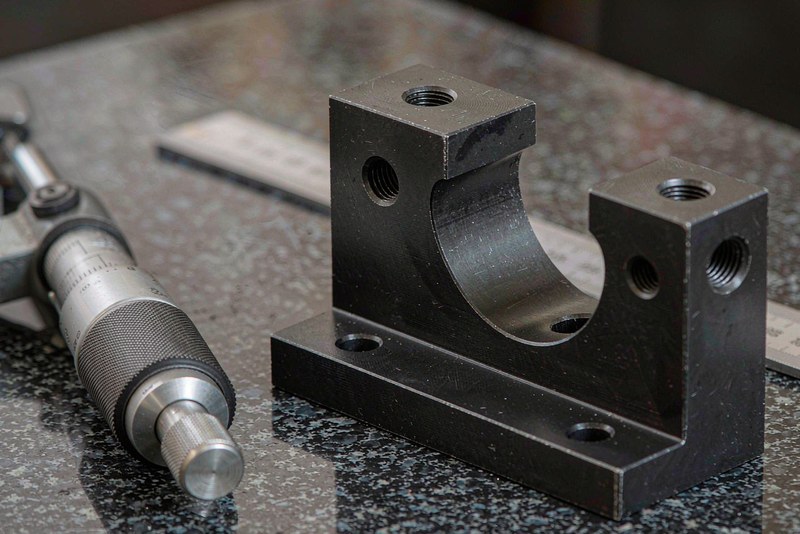
A workable callout carries four things: the process route, hot or room-temperature, with a reference to the governing specification; the post-treatment, oiled, waxed, or dry; an appearance acceptance method such as a retained visual sample; and any masked areas, including bonding surfaces and sealing lands that must stay film-free. Final dimensions are verified after finishing, on parts that arrive clean and free of rust.
Mistakes That Appear After Finishing
- Treating black oxide as corrosion protection on parts that see rain, wash-down, or salt air.
- Sending parts with light rust, heat-treat scale, or cutting-fluid residue; the finish locks the patchy appearance in.
- Assuming stainless steel and aluminum blacken with the same process and give the same result.
The tolerances and surface finishes guide covers how much of that interaction can be settled before quoting.
FAQ
Does black oxide finish add thickness?
Usually, yes, but inside the band a drawing already absorbs. Outward growth on a hot process runs about a micrometre per surface, with part of the reaction penetrating the metal. On a milled feature that is negligible; on a ground bore or a press fit, confirm the allowance with the supplier.
Will black oxide finish prevent rust?
On its own, no. A dry coating of this type is thin and slightly porous, so it offers modest protection against humidity. Oiled and waxed versions perform better indoors, though their salt-spray figures depend on the oil film rather than on the blackening chemistry.
Can stainless steel or aluminum use the same process?
Not the same bath. Stainless blackening runs different chemistry at a higher temperature and is chosen more for appearance than for corrosion protection. Aluminum does not respond to ferrous blackening at all; anodizing with a dye is the equivalent route.