Quick Answer
Prototype and production should share the same functional intent, but the process should change as quantity stabilizes. Use early runs to prove fit and performance, then standardize stock, setups, inspection and fixtures for repeat orders.
Key Takeaways
- Protect the dimensions that prove the design during prototype work.
- Remove one-off operations and uncertain requirements before committing to repeat production.
- Discuss expected volumes early so the supplier can recommend the right process investment.
- Agree on revision control, inspection evidence and approval of process changes before repeat orders.
A prototype can fit perfectly because a machinist adjusted the setup for that one part. Repeating the result requires those adjustments to become clear instructions, suitable fixtures and agreed checks. As quantity increases, decide which steps need to be standardized and which design changes are still allowed.
Use prototypes to resolve design uncertainty
Early parts may prioritize learning over cycle efficiency. Flexible workholding and additional setup attention can be sensible when the geometry is still changing. Record the actual revision, material, process exceptions and inspection scope so that a successful fit test is not mistaken for approval of an undocumented production route.
Distinguish a dimensional prototype from a fully representative production part. A substitute material or omitted finish can be useful for a specific test, but the limitation should remain visible in the decision record. Do not carry that exception into repeat orders without approval.
Bridge quantities justify a deliberate handoff
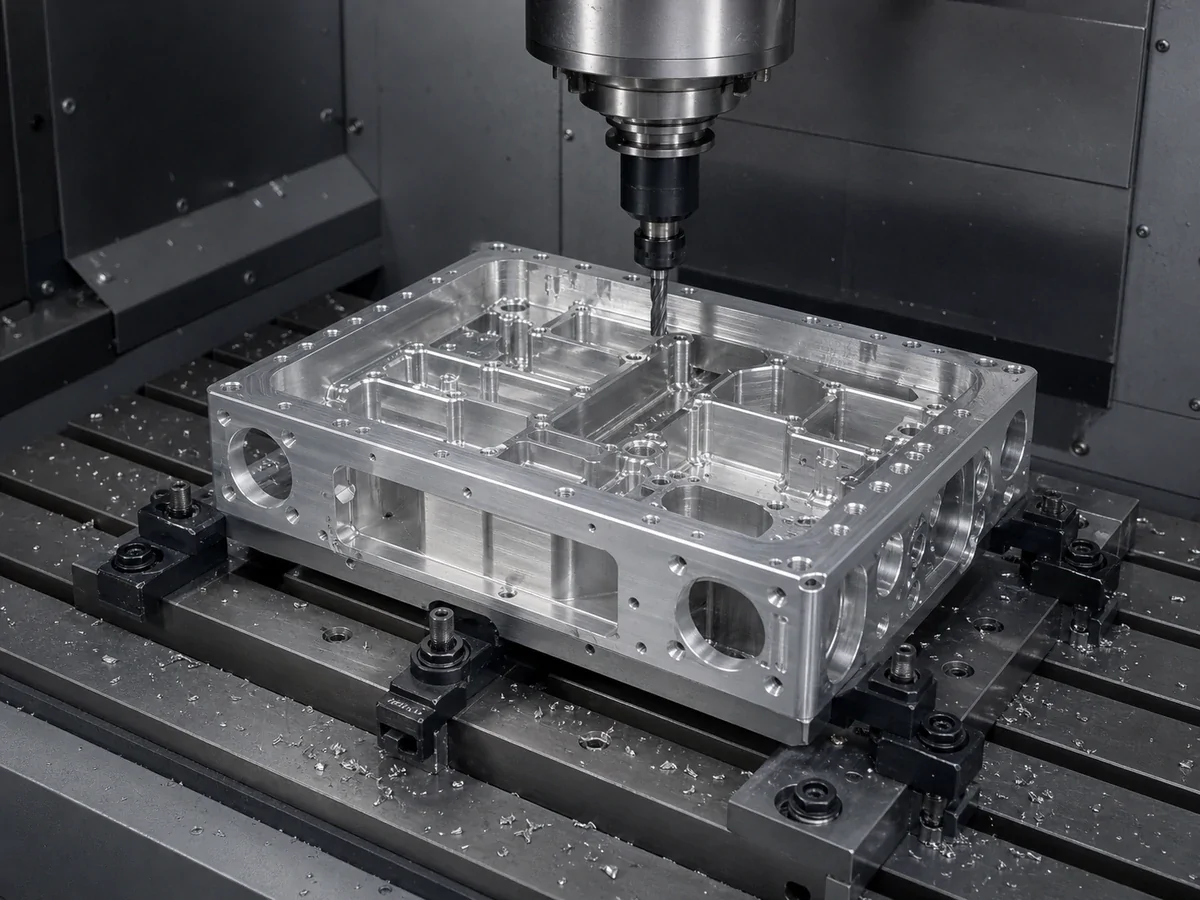
As quantity increases, fixture preparation, tool access and loading become more important. A dedicated fixture can reduce repeated alignment work, but only if the geometry is stable enough to justify the investment. Review how it locates the part, protects functional surfaces and allows practical inspection.
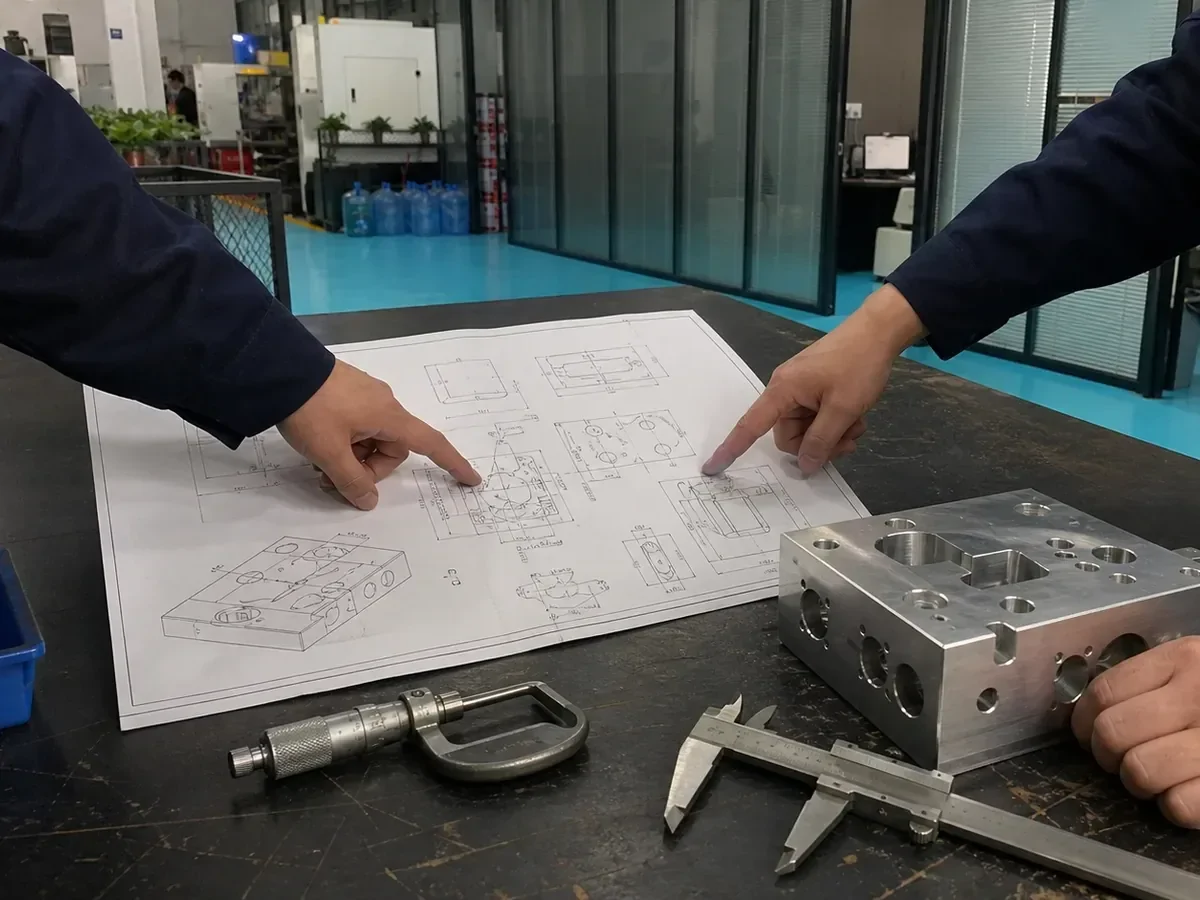
The handoff should identify which prototype lessons changed the drawing or process. A machinist's useful workaround must either become a controlled instruction or remain an exception requiring approval. Use manufacturing drawing review to resolve discrepancies before they are multiplied across a batch.
| Planning factor | Prototype | Low Volume / Bridge | Repeat Production |
|---|---|---|---|
| Fixture | Flexible support while geometry changes | Review a dedicated fixture if repeat loading justifies it | Use an agreed, repeatable locating and loading method |
| Setup | Allow adjustments and record what worked | Carry lessons into setup instructions | Control datum transfer and repeat setup checks |
| Cycle time | Prioritize the test objective | Improve recurring operations on stable features | Reduce recurring cutting and handling effort without losing control |
| Inspection | Record the features tested and any exceptions | Confirm critical checks before the next release | Follow the agreed sampling, records and approval plan |
| Documentation | Record revision, substitutions and test limits | Resolve open decisions and release the next package | Maintain current drawing and process instructions |
| Process stability | Identify sensitive features | Check repeatability across the initial batch | Monitor agreed controls as tools and material lots change |
| Change flexibility | Allow documented design trials | Review changes before committing stock or fixtures | Define notification, verification and approval for changes |
| Cost focus | Cost of learning from the part | Balance preparation investment with expected repeats | Compare recurring unit cost and the cost of rejected parts |
Separate one-time and recurring cost
| Cost element | How quantity can change its role |
|---|---|
| Programming and setup | Spread across more accepted parts if the revision stays stable |
| Fixture preparation | May be justified by repeated loading and alignment needs |
| Cutting and handling | Recur with each part and depend on the chosen route |
| Inspection and records | Depend on characteristic risk, sampling and contract |
| Change or rework | Can affect more parts if a problem is discovered late |
Do not assume that doubling quantity halves unit cost. Material, cutting, finishing and inspection still recur. Conversely, repeatedly ordering small batches can repeat preparation that might have been shared. Ask for a transparent comparison based on realistic release quantities and revision stability.
Build process control around failure consequences
Identify critical features, material changes, tool wear concerns and stages where defects become expensive to recover. Define what must be checked before continuing and what evidence authorizes release. Inspection plans should be tied to risk and agreed scope rather than copied from a generic production checklist.
The quality and inspection page describes current methods and project-specific records. Agree on first-article scope, sampling, reporting and any approval hold points for the order. Do not assume statistical capability, complete traceability or a particular report format without an explicit agreement.
Define what happens when something changes
Replacement tooling, a new material lot, revised finishing or another fixture can affect a sensitive feature. Decide which changes require notification, renewed verification or customer approval. Keep the product revision and manufacturing instructions aligned so that the next order does not depend on a person's memory of the last one.
Packaging and labeling also become part of repeatability when they protect surface condition, identification or assembly sequence. Specify these requirements before pricing production. A part that was accepted before finishing or damaged in transport is not an accepted delivered component.
What This Means for Your Part
Provide expected order quantities, likely repeat demand, revision status and the lessons learned from prototypes. Ask the supplier to propose what changes in workholding, sequencing and inspection as volume increases. Review the applicable machining capabilities and materials requirements together.
Include the controlled drawing, approved exceptions and release expectations in the RFQ. Before the first repeat batch, agree on who approves the initial evidence and whether production may proceed while that review is pending. That decision protects schedule and prevents an unresolved issue from spreading across the order.
- Separate dimensions needed for functional learning from appearance-only refinements.
- Estimate the likely repeat volume and delivery pattern for the next release.
- Identify whether a fixture, inspection gauge or stock commitment becomes worthwhile at that volume.