Quick Answer
A first article inspection is a documented, full check of one part from a new or changed process against every requirement on the drawing. It qualifies the process, not only the part, so it is not sample inspection and not a replacement for in-process control. A usable submission contains a ballooned drawing, a dimensional report with values and instruments, material and process evidence, and setup notes. Approve it only when the results trace to the revision that was machined.
Key Takeaways
- An FAI qualifies a process: run it after a new setup, program, fixture, material source, or a long gap in production.
- Every drawing characteristic should be numbered, and every number should carry a measured value, a tolerance and an instrument.
- Sitting inside tolerance is not the same as having margin; a feature running near the edge of its band is a warning.
- A partial FAI is legitimate when it is labelled partial and the remaining characteristics are tied to a defined milestone.
What an FAI Actually Approves
The name is slightly misleading. What gets approved is a combination of material lot, program revision, workholding, tooling and inspection method; the part is only the sample.
Move the job to another machine, reprogram a pocket, or switch the material source, and the previous FAI no longer describes the process in front of you. Typical practice is to trigger a new FAI on those changes; the definition of a significant change sits in the purchase order rather than the drawing.
An FAI is also not a first-off check: that confirms the setup is safe to run, happens at the machine, and rarely becomes a document. An FAI is a formal deliverable the customer signs. For how inspection fits into running production, see in-process inspection in CNC machining.
When a Full FAI Is Worth the Money
A full dimensional buy-off on every repeat order adds cost that surfaces in the piece price without reducing risk. Common triggers:
- A new part number, or an existing part moving to a different supplier
- A drawing revision that changes a functional characteristic
- A change of machine, program, fixture, or cutting strategy
- A change in material or finish source
- Production idle long enough for tooling to be broken down and rebuilt
- Follow-up after a nonconformance or a customer escape
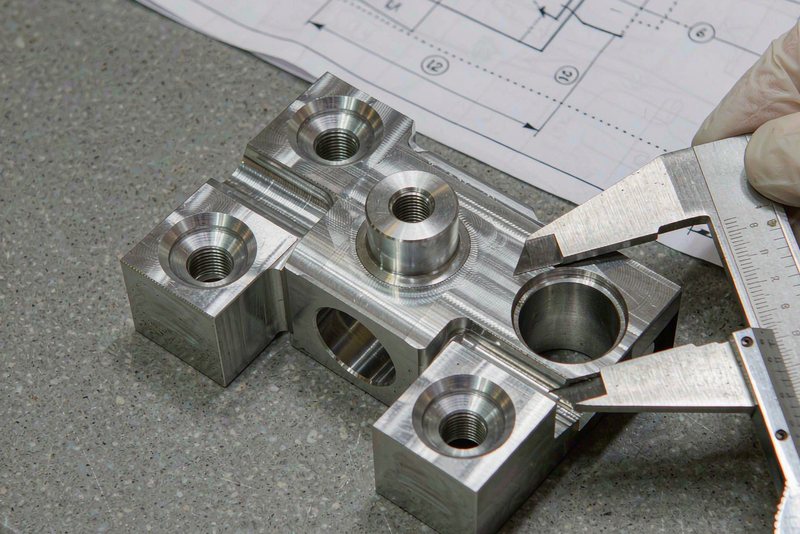
A partial FAI is usually enough for repeat orders with a stable history, prototypes made for fit studies, and non-critical cosmetic features on parts whose tolerances are already generous. Treat the decision as a risk trade and put it in the purchase order.
What a First Article Inspection Package Contains
Four items do the work.
Ballooned drawing
Every characteristic gets a number: dimensions, tolerances, thread callouts, finish notes, hardness requirements. The ballooned drawing also fixes the revision, which is where most disputes start. If you are cleaning up drawings before sending them out, how to prepare a 2D drawing for CNC machining covers what a shop needs to see.
Dimensional results
Each balloon gets a nominal, a tolerance, a measured value and the instrument. "OK" without a number removes the reader's ability to judge margin. Where a characteristic depends on datums, name the scheme used; a report built on the wrong datum can look clean and still be wrong. Datum selection for CNC machining explains how that scheme is chosen.
Material and process evidence
Mill certificates with heat or lot numbers, finish specifications, and any customer-specified process evidence. On machined parts the certificate is often the single record linking delivered parts to a melt. Where a finish is specified, state it and note that finishing is supplier-coordinated.
Setup and instrument notes
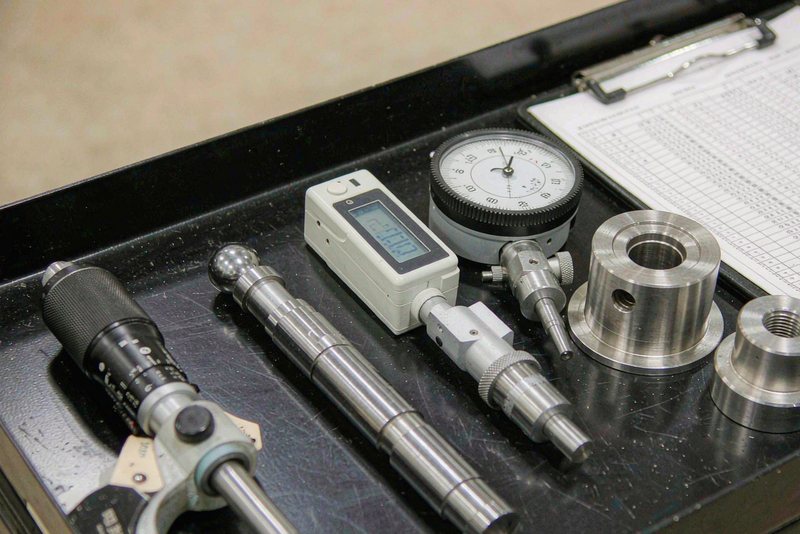
Which machine, program revision, fixture, and measuring equipment at what calibration status. This is usually the thinnest section, and the one that makes a report repeatable instead of merely reassuring.
How to Read the Dimensional Report Without Getting Fooled
Numbers in a table look objective. A few habits keep them that way.
| What the report shows | What it can also mean |
|---|---|
| All values inside tolerance | Features may be running near the edge of the band, with no margin left for tool wear |
| A tight CMM result on a thin part | The part may have been measured in a free state that differs from its clamped state |
| "Conforms", with no value | A claim, not evidence |
| A full report on a complex part | Some characteristics may have been sampled unless the report says otherwise |
Ask for values rather than verdicts, then look at margin: a position callout fully consumed on every hole describes a process that will not hold. Where hole patterns carry position tolerance, how to specify position tolerance for hole patterns explains how material condition modifiers change what the report should contain.
Mistakes That Delay FAI Approval
Most late approvals come from a short list:
- Results reported against an obsolete drawing revision
- Balloon numbers that do not match the revision the customer holds
- Missing instrument identification or calibration status
- Hand-tool values presented where the tolerance is finer than the instrument
- Material certificates without heat or lot numbers
Clearing those before submission turns a first article inspection review into a reading exercise rather than a negotiation.
FAQ
Does every part in the first batch need a full FAI?
No. A full FAI normally covers one part, or a few parts, from the first article run. Its purpose is to qualify the process; the rest of the batch is covered by the inspection plan agreed for that order.
Can a supplier approve its own FAI?
A supplier can complete and submit the report, and for many commercial parts that is the whole process. Where the customer requires it, approval stays with the customer or an agreed third party.
Is an FAI needed for a simple turned part?
If the drawing controls only a few dimensions, a short report is still worth submitting, because a simple part with a short report costs little to review. Skip it for a prototype built for fit checking, and say so in the order.