Quick Answer
Ductile iron machining is governed by the graphite shape. Nodular graphite gives the metal its strength and elongation, but it also interrupts the chip and loads the cutting edge harder than gray iron does. Grade, as-cast hardness, casting skin and the stock left for machining decide tool life and cycle time. Confirm all four before a price means anything.
Key Takeaways
- Nodular graphite breaks the chip but raises cutting force; grade 65-45-12 and 80-55-06 do not cut alike.
- Ask for a hardness range, not only a grade symbol. Spread inside one casting moves tool life more than the label does.
- Stock on a cast face is a cost line: three millimeters is a roughing pass, one millimeter is a scrapped finishing pass.
- A tough coated carbide edge at moderate speed outlasts a harder grade run fast through scale.
What Nodular Graphite Does at the Cutting Edge
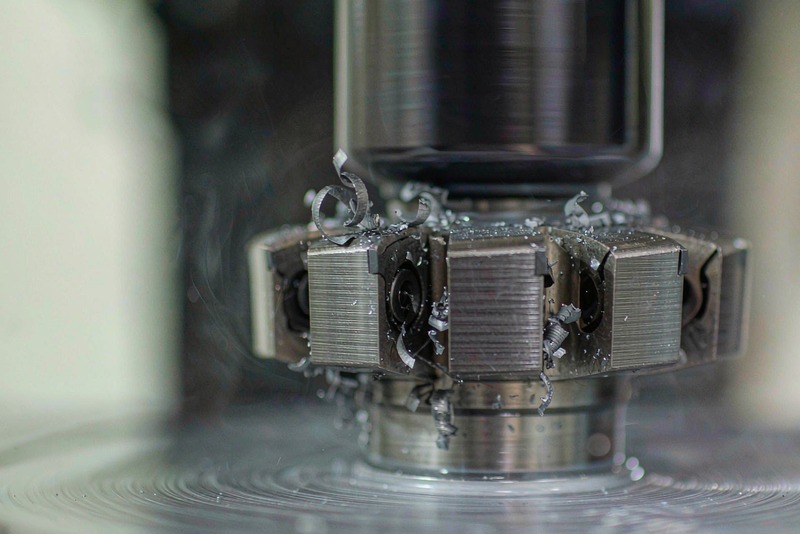
In gray iron the graphite sits as flakes that act like an internal lubricant and split the chip into small segments. Ductile iron, also called nodular iron, replaces those flakes with nodules, and the matrix around each nodule carries far more load before it yields. The chip still breaks, but the edge pushes through sound metal rather than a network of internal cracks, and that is where the extra cutting force comes from.
The three numbers in a ductile iron designation are minimum tensile strength, minimum yield strength and elongation. A ferritic grade with high elongation tears rather than shears and builds up an edge on light finishing cuts. A pearlitic grade with lower elongation breaks the chip cleanly and holds a better surface, at the cost of faster flank wear.
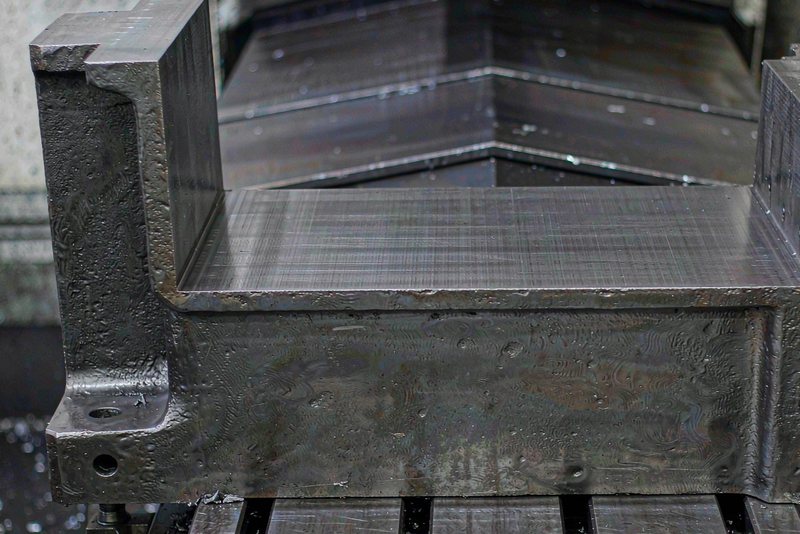
Then there is the surface: castings arrive with sand, oxide scale and sometimes a chilled skin, so the first pass is an interrupted cut through abrasive material.
Grades and Hardness: What Ductile Iron Machining Sees
The grade symbol sets minimum mechanical properties; casting hardness is the figure a programmer works with. Section thickness changes cooling rate, so a heavy boss and a thin rib in the same casting can land at different hardness while both still meet the grade. Ask for the hardness band on the surfaces that will be cut, and ask where it was measured.
Heat treatment moves that band. A ferritizing anneal softens the matrix; normalizing raises the pearlite fraction and improves strength at the expense of tool life.
Batch spread matters more than the average. Several tens of Brinell points of spread across a lot means parameters tuned to the soft end cut slowly on the hard end, and edges indexed on the easy castings fail early on the difficult ones.
Tooling and Parameters for a Scaled Casting
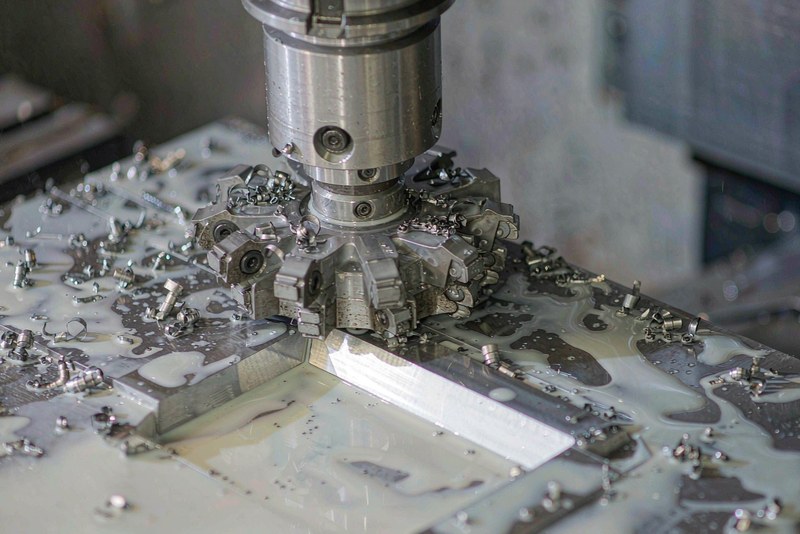
Typical practice is a tough coated carbide insert with a honed edge for the skin pass, then a sharper geometry once the cut is in clean metal. Harder substrates buy wear resistance but chip on sand inclusions.
Speed sits below what the same shop would run in gray iron, because the matrix is stronger and the edge carries more load. Feed goes the other way: heavy enough to keep the edge under the scale instead of rubbing along it, so the second pass measures metal rather than casting surface.
Coolant is a routing decision. Many shops run ductile iron dry with dust extraction, since the graphite powder collects easily and dry chips recycle cleanly. Wet cutting helps dimensional control on thin sections but needs steady flow and clean fixtures afterward.
Fixturing, Allowance and Movement After Clamping
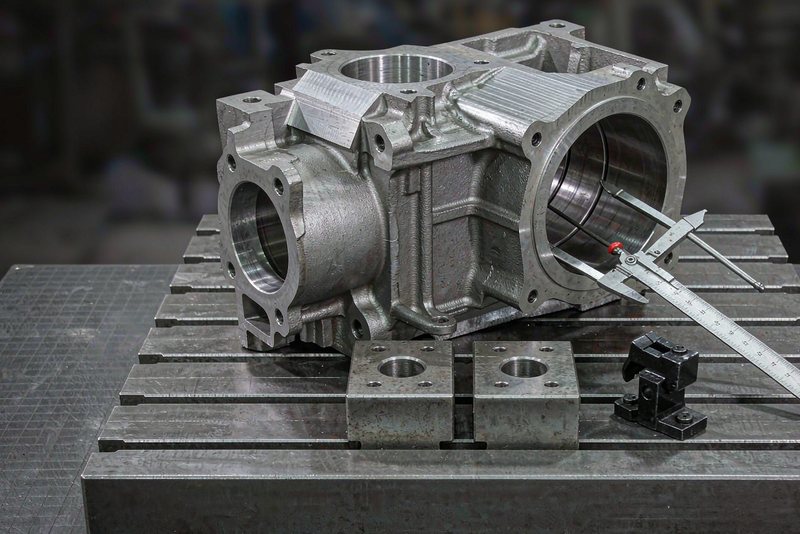
A casting is not a sawn block. Draft angle, parting line mismatch and core shift all mean the as-cast surfaces are not where the model puts them. Clamping on a draft surface pushes the part sideways; locating on three pads and clamping over ribs keeps the setup repeatable.
The usual sequence is to machine the datum pads first, then use them for every later operation. Where wall sections change sharply, roughing releases residual stress and the part moves before finishing, so stress relief between the two is common.
Machining allowance deserves the same attention. Two to three millimeters of stock gives the roughing pass something to remove; less than that and the tool cuts through scale and into tolerance in one pass, which is where scrap starts. What the process can then hold is a separate question, covered in this guide to CNC machining tolerances that can actually be achieved.
Cost, Inspection and What Belongs on the Drawing
A quote for a machined casting is built from four blocks: the casting, the metal removed, the tool consumption that removal causes, and the inspection that proves the result. Wide allowance and a wide hardness band raise the last three, even when the casting looks cheap.
Sourcing casting and machining from one supplier keeps porosity accountable to one party; split them and a discovery at the boring operation becomes an argument about who pays.
Put the grade and its standard on the drawing, with a hardness range and where it is checked. State which surfaces are machined and to what finish; the guide to Ra values and tool marks shows how a callout maps to a process. Add the datum scheme, the porosity acceptance criterion agreed with the foundry, and thread callouts per the thread design guide. If the part needs corrosion resistance as well as damping, a precipitation-hardening stainless is a different conversation and a different cost.
FAQ
Is ductile iron harder to machine than steel?
At equal hardness it usually cuts faster than mild steel and finishes better, because graphite lubricates the cut and breaks the chip. Against gray iron it is slower: more cutting force, more edge wear where pearlite is high.
Does a ductile iron casting need stress relief before finishing?
Only where the geometry asks for it. Castings with uneven sections are commonly stress relieved between roughing and finishing; on a stiff housing an extra anneal often costs money without changing the outcome.
Why does a quote ask which foundry the casting comes from?
Because the shop controls the cut, not the metal. Hardness spread, sand inclusion, chill and core shift come from the casting source, and knowing the pattern and heat shortens the trial cut. That gap is the difference between a blind number and a ductile iron machining price that holds.