Quick Answer
The short answer to deburring CNC machined parts is that the method follows the edge, not the part. A hand tool is enough for a few corners on a one-off bracket, while a thousand small fittings with cross-drilled holes need a batch process. What decides the result is the specification rather than the method: a note reading "remove all burrs" gives the shop nothing to work to, while an edge break callout of 0.3 mm at 45 degrees is measurable.
Key Takeaways
- Burrs appear where the cutting edge exits the material, so cross-hole intersections and thread exits carry more risk than an outer profile.
- Deburring removes material, and on a small part it can pull a functional edge out of tolerance after the last dimensional check.
- A dimensioned edge break is auditable; "remove all burrs" transfers the decision to whoever is holding the tool.
- Ask where deburring sits in the process route before comparing quotes, because it is often left out of the piece price.
Where Burrs Come From in CNC Machining
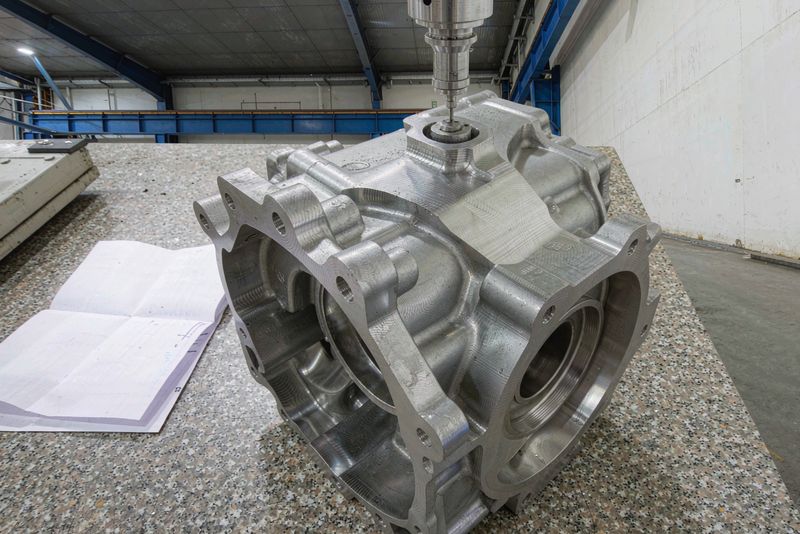
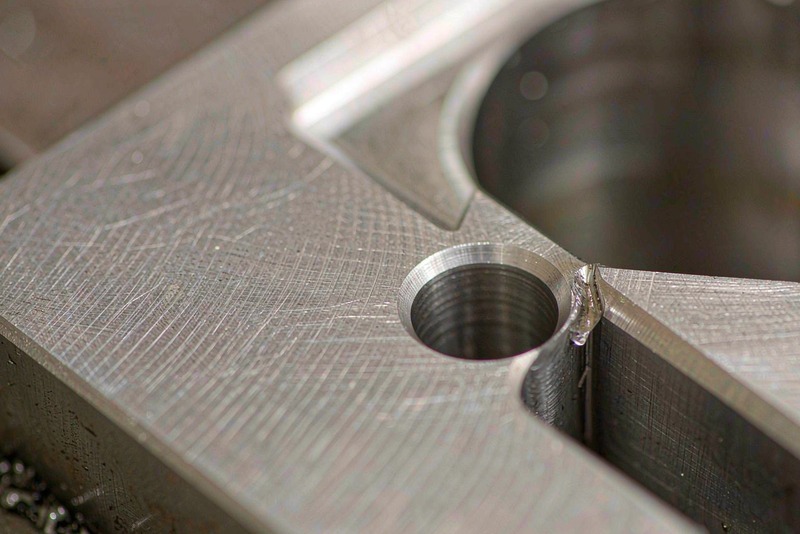
A burr is metal that deformed instead of shearing. As a drill or end mill reaches the exit face, the remaining wall becomes thin enough to bend before it fractures, and the bent material stays attached to the edge. Ductile materials such as aluminum, brass and the softer stainless grades form larger burrs than gray cast iron, which crumbles at the exit.
Geometry drives burr risk more than any single cutting parameter, and the troublesome edges are usually the ones nobody drew: where a cross-drilled hole breaks into a bore or pocket, the far side of a through hole in a thin wall, the last thread of a tapped hole, and the rim of a slot where the tool leaves the cut. Lowering the feed as the tool exits, using a sharper cutting geometry or chamfering the exit before drilling reduces the burr, and typical practice is to plan that condition in the CAM setup.
Deburring CNC Machined Parts: Four Method Families
Hand deburring with a file, scraper or rotary carbide tool is the default at low volume. It reaches edges a machine cannot and costs almost nothing to set up, but it depends on the operator's judgment, which is why the result varies between shifts.
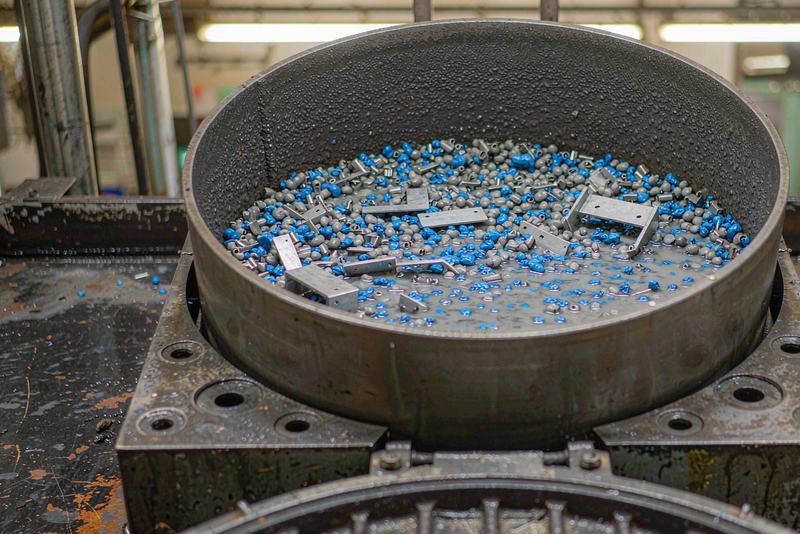
Mechanical batch processes are the workhorses at volume. Vibratory and barrel finishing run parts through abrasive media and leave a consistent small radius on every exposed edge.
Thermal energy deburring burns the burrs off in a pressurized chamber and reaches internal intersections that no media can enter, at the cost of acting on every exposed edge in the batch. Electrochemical deburring targets defined intersections with part-specific tooling.
No process removes the burr alone. Every mechanical method also takes some parent material, so the finished edge break ends up larger than the burr ever was.
How to Specify Edge Condition on the Drawing
"Remove all burrs" is not a specification. It states an intention without a limit, and two suppliers can satisfy it with visibly different parts. The workable alternative is a general note covering edges that do not matter, plus a callout wherever the edge is functional.
Use the chamfer convention from the governing drawing standard — width by angle, such as 0.3 x 45 degrees — or the edge indication symbol for edges of undefined shape, where the form is not critical but the size is. Our guide to preparing a 2D drawing for CNC machining covers where these callouts belong in the notes stack.
A sealing face, a bearing seat, a thread entry and a sliding surface all behave differently if the edge is broken too heavily, so the callout has to match the function. Where the break carries a limit, state whether it is a maximum, a minimum or both; where it does not matter, one general note is enough.
What Drives the Cost of Burr Removal
On a simple bracket, deburring is a few minutes of bench work and disappears into the piece price. On a small, complex part with many cross-holes the arithmetic changes, because every edge has to be reached, handled and checked, and that handling can become the second-largest cost element after machining.
The drivers are the number of edges needing attention, their accessibility, part size relative to the available media, whether in-cell deburring needs a fixture, and the inspection time that follows.
Design decisions move all of these. Reducing cross-hole intersections, spacing features so a tool can reach each edge, and avoiding deep narrow slots all lower the work. Our guide to internal corner radius design covers the geometry side of the same problem, and the surface finish guide to Ra values and tool marks explains how edge condition and surface texture are commonly quoted together.
Inspecting and Accepting Edge Condition
Edge condition rarely appears on a CMM report, and not because inspectors are careless. A probe cannot read a rolled-over burr reliably, so edge condition is usually a visual item, judged against a boundary sample, a comparator plate or a magnified view.
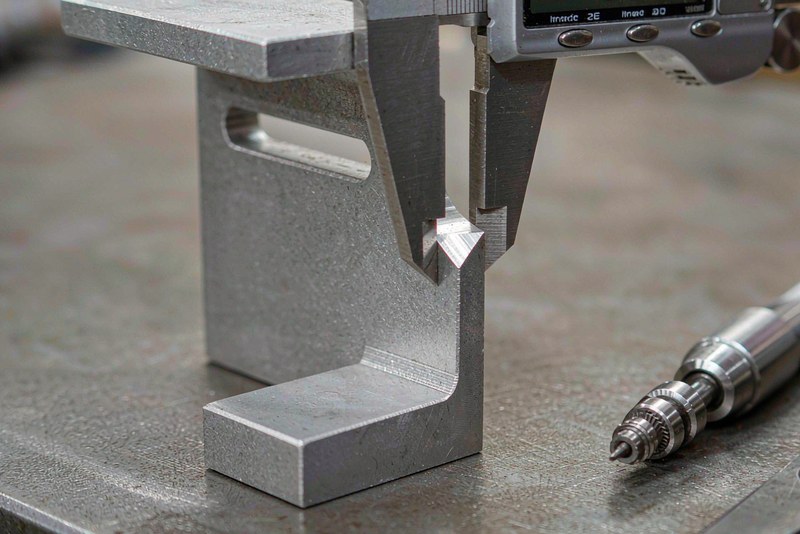
That puts the weight on the acceptance criterion, which has to be agreed before production: define the magnification, define what a conforming edge looks like, and sign off a first-article sample both sides keep. Where an edge break carries a dimension, measure it and record the number.
The failure mode to watch is over-deburring on a functional edge: it happens after the last dimensional check, it is difficult to reverse, and it shows up later as an assembly or sealing problem. Recording it in the inspection plan, alongside the checks described in our note on in-process inspection in CNC machining, keeps the two from being confused.
FAQ
Does finishing remove burrs?
No. Anodizing, plating and passivation follow the surface that exists and do not remove metal. A burr present before finishing coordination is still there afterwards, usually with a coating over it.
How much edge break is normal?
Typical practice is a break of 0.2 to 0.5 mm at 45 degrees, but the value has to scale with the geometry. On a part with 2 mm walls, a 0.5 mm break removes a meaningful share of the wall.
Is deburring included in the piece price?
Often it is not. One shop absorbs light hand deburring into its machining rate, another quotes it separately. Stating the edge requirement in the RFQ makes suppliers price the same scope.