
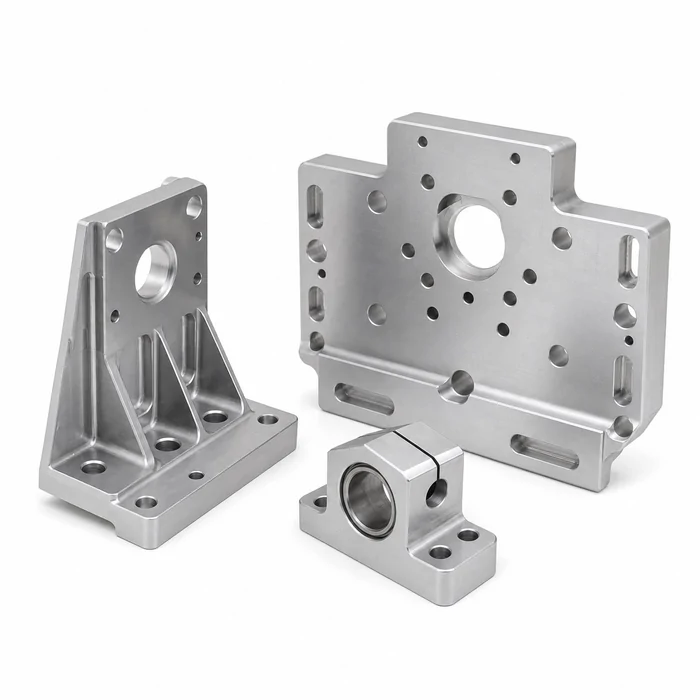
How to compare CNC machining suppliers starts with the evidence needed for your particular part. Piece price is important, but a purchasing decision also depends on whether the supplier understands the drawing, proposes a credible route, communicates exceptions, and can provide the agreed inspection records. A machine list or polished factory photograph cannot answer those questions by itself. This article gives procurement teams a practical way to evaluate suppliers for industrial brackets, housings, shafts, and related components, using a small number of documented decisions instead of a long scorecard filled with assumptions.
How to compare CNC machining suppliers on a common basis
Send the same controlled RFQ package and evaluate the same deliverable. Differences in revision, quantity, material, finish, or inspection can make one supplier appear better even when the offers are not comparable. Resolve those differences before calculating a ranking.
Define the business need in plain terms. A replacement shaft for a stopped machine needs a different review emphasis from a stable bracket scheduled for recurring releases. The former may depend on confirming worn mating dimensions and a delivery milestone. The latter may depend on repeatable location, fixture retention, packaging, and revision management over time.
Choose evaluation criteria before reading the prices. Otherwise, it is easy to adjust the weighting until a favored offer wins. Use mandatory gates for conditions the project cannot compromise, such as the correct material and acceptance of the controlling drawing. Use comparative criteria for matters that can reasonably trade off, such as communication format or release flexibility.
Start with the supplier's questions about the drawing
Drawing-specific questions show whether a supplier has engaged with the part. The number of questions is less important than their relevance. Asking about an inaccessible feature, a mating bore, or an ambiguous finish boundary can be evidence of useful engineering review.
For a housing, a meaningful question might identify which face establishes assembly location or whether a bore is accepted before or after treatment. For a shaft, it might address the relationship between bearing journals, shoulder faces, and an external thread. A generic request to relax all tight tolerances does not demonstrate the same understanding.
Keep a clarification log with the question, the affected characteristic, the proposed interpretation, the owner's answer, and the revised file reference. This record makes the review useful even if you choose a different supplier. It also prevents a technical answer given during a call from disappearing before the purchase order is released.
Evaluate a proposed route at its difficult handoffs
Ask how the part moves from raw stock to its finished acceptance condition. Focus on reclamping, outside processes, and final inspection because these are places where requirements can be lost or misinterpreted. You do not need to dictate every cutting tool.
The CNC machining service overview provides a starting point for discussing geometry and process selection. A supplier should be able to explain which features establish location, how the workpiece is held without damaging them, and which requirements are checked after the last operation that can change them.
If the route includes an external finisher, clarify responsibility rather than assuming subcontracting is automatically a weakness. Who communicates masking requirements? Who checks the returned parts? Who handles a dimensional issue discovered after treatment? A well-defined outside operation can be more credible than an unsupported claim that everything happens under one roof.
Request evidence that corresponds to the actual risk
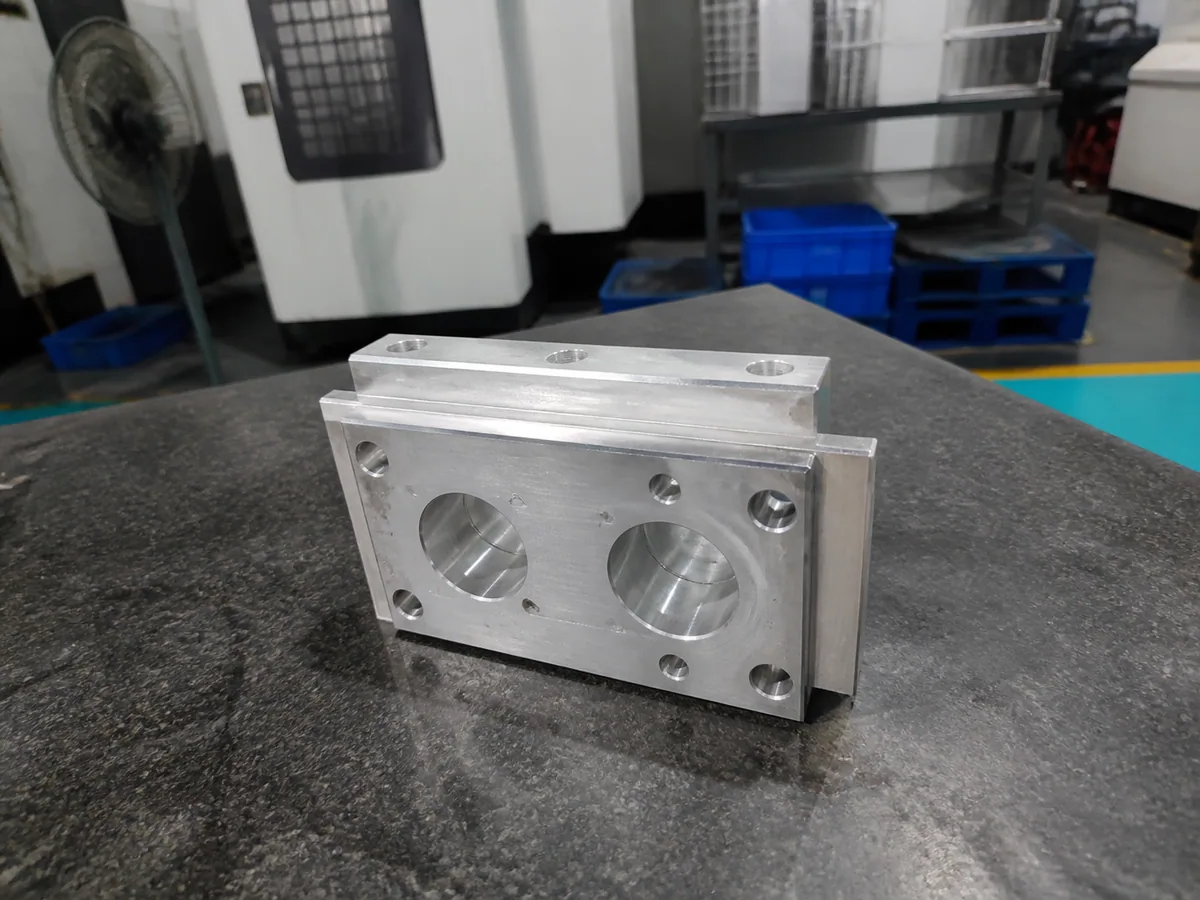
The strongest evidence answers a specific question about the part. A photograph can show a type of component, but it cannot establish its material, tolerance, rejection history, or ownership. A sample inspection report can demonstrate format, but it cannot prove current measurement capability unless its context is understood.
| Project question | Useful evidence | What the evidence does not establish alone |
|---|---|---|
| Can the critical bore be checked? | Proposed method, access, and datum setup | Guaranteed capability for every bore geometry |
| Will the finish protect a mating area? | Defined masking and acceptance plan | Appearance consistency across unspecified batches |
| Can repeat releases follow the same definition? | Revision and fixture identification procedure | Future demand or guaranteed capacity |
| Can shipped parts be linked to records? | Agreed part, batch, and report identifiers | A universal traceability system |
| Is a sample representative? | Its material, revision, route, and inspection scope | Conformance of an unrelated production order |
Ask to see evidence within appropriate confidentiality limits. A supplier does not need to reveal another customer's proprietary drawing to demonstrate a reporting format or explain a measurement method. An anonymized example can be useful if it is clearly described as an example and its limits are acknowledged.
Turn inspection promises into an acceptance agreement
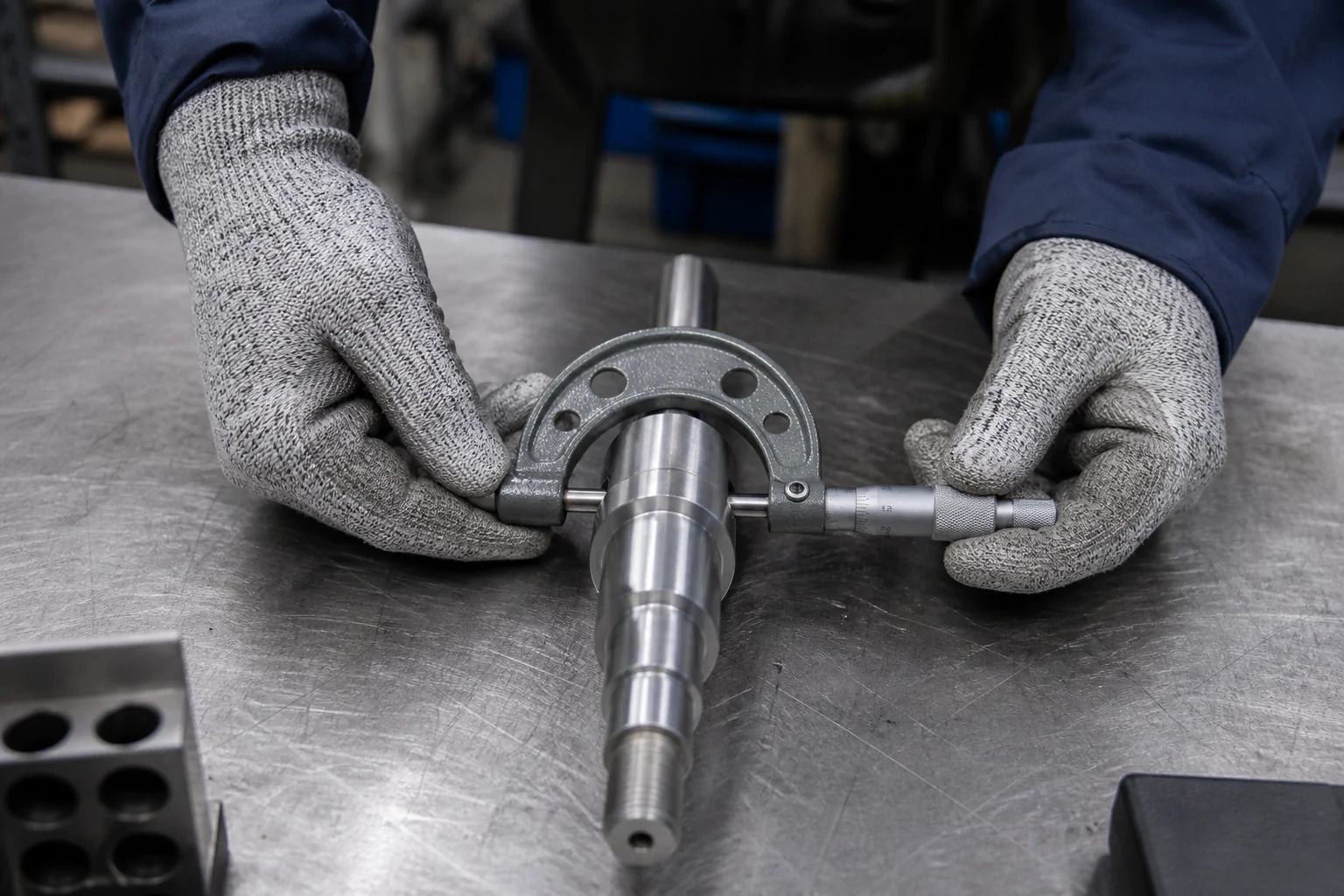
Agree on critical characteristics, measurement condition, sampling, and record format before production. A statement such as full inspection is ambiguous: it could mean all pieces, all dimensions, or a final visual review. Spell out the intended meaning.
The quality control page identifies information needed for a drawing-specific inspection discussion. For supplier comparison, ask the same practical questions of each bidder: which features are measured, when they are measured, how the datum system is established, and what happens when a result is close to a limit or fails acceptance.
Also define how discrepancies are communicated. A useful plan identifies who can accept a deviation and whether production pauses while the decision is pending. The supplier should not ship nonconforming parts simply because a verbal conversation sounded positive. Procurement, engineering, and quality need one documented disposition linked to the affected quantity.
Use a sample order to test the right assumptions
A sample order is most useful when it has explicit learning objectives. It can test a difficult interface, an inspection format, packaging protection, or the clarity of communication. It is less useful when everyone treats an attractive sample as proof of future production performance.
Select the sample scope around the uncertainty. If the concern is a mating fit, identify the actual mating condition and evaluation method. If the concern is cosmetic handling, define the visible surfaces and shipment protection. If the concern is a repeatable datum relationship, request the relevant measurements instead of an unrelated dimensional checklist.
Record whether the sample uses the intended material, finish, fixture concept, and production sequence. A sample made with extra hand fitting may establish feasibility while leaving production repeatability unresolved. That does not make it worthless; it means the next decision needs additional evidence. The prototype versus production guide explains this distinction in greater detail.
Compare commercial resilience without invented risk scores
Evaluate the practical consequences of release quantities, revision changes, and schedule dependencies. Avoid turning every uncertainty into a numerical risk premium when the underlying information is missing. A fabricated score can look precise while concealing a major unresolved issue.
Ask what happens if a planned release is smaller, if the drawing changes after stock purchase, or if a first article requires an approved correction. Confirm the treatment of dedicated fixtures and unfinished inventory. These questions are especially useful when a quotation assumes a stable annual demand that purchasing has not actually committed to buy.
For delivery, compare milestones and dependencies. A promise measured from engineering approval cannot be compared directly with one measured from order receipt. Identify material procurement, external treatment, and final inspection dependencies. Ask who will report a change and at which milestone it becomes visible. A realistic conditional date is more useful than an unconditional statement unsupported by a route.
Assess communication through a small working exercise
Use one representative clarification to observe how the supplier handles technical information. Send a concise question containing a part revision, feature reference, and required decision. Evaluate whether the answer addresses the issue, identifies assumptions, and reaches the right person.
Response speed alone is not enough. An immediate answer that overlooks the drawing can create more work than a considered answer that arrives at an agreed time. Look for clear ownership and closure: who is reviewing the question, what information is missing, and which document will record the final decision.
Avoid turning the exercise into unpaid detailed process development. The purpose is to establish a workable communication pattern, not to extract a supplier's proprietary programming or fixture design. For more extensive development, define the deliverable and commercial arrangement before asking for it.
Build a short, defensible decision record
Use a one-page record with mandatory gates, comparative observations, unresolved items, and the reason for selection. Separate verified evidence from statements that still need confirmation. This helps another buyer understand the decision when the project changes hands.
A practical record might say that Supplier A accepted the drawing and proposed a clear post-finish inspection method, while Supplier B remains pending on a protected bore. That is more actionable than assigning A ninety points and B eighty-four without explaining the difference. Numbers can support a decision, but they should not replace the underlying observation.
Before award, close the mandatory gates and attach the accepted technical clarifications to the order. Carry remaining manageable items into a defined first-article or production milestone. If a condition is essential and cannot yet be verified, record it as unresolved rather than quietly assuming compliance to keep the schedule moving.
Frequently asked questions
Does a longer equipment list mean a better CNC supplier?
No. Equipment must match the part, route, and inspection requirements. A smaller relevant capability set with a clear process can be a better fit than a broad list that does not explain workholding, feature access, or acceptance.
How many suppliers should receive an RFQ?
There is no useful universal number. Choose enough qualified candidates to compare meaningful alternatives, while retaining time to answer technical questions consistently. Sending an incomplete package widely usually produces more incompatible offers rather than better evidence.
Is a successful sample sufficient for a large order?
It supports the characteristics and conditions actually tested. Confirm what changes for production, including material lot, fixtures, inspection frequency, finishing, and packaging. A sample should close defined questions rather than imply unlimited future capability.
Should certifications replace a part-specific review?
No. Any required credential should be verified for its actual scope, but it does not replace drawing review, process suitability, or agreed acceptance evidence. Do not infer a certification from a logo, photograph, or general quality statement.
Choose the supplier whose offer you can explain
A defensible choice connects the part's requirements to specific evidence, a credible route, and clear commercial terms. To start that comparison with HongKe CNC, submit the controlled drawing package and your evaluation priorities, including critical interfaces, expected releases, finish, and required inspection records.