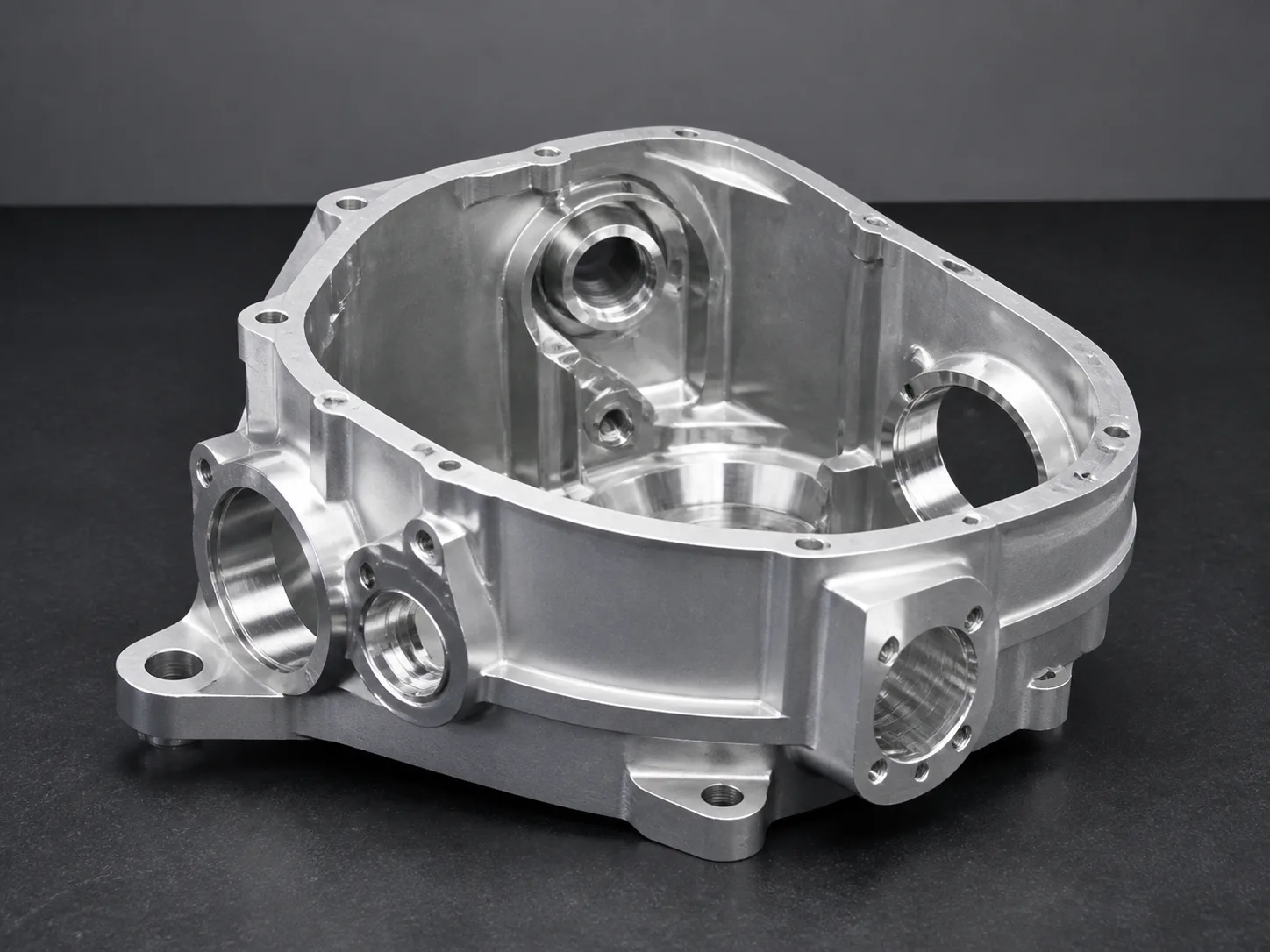
5 axis CNC machining cost should be evaluated against the complete route needed to finish and accept the part. A higher machine rate can be worthwhile when additional axes remove fixtures, handling, long tool reach, or difficult datum transfers. It can also be unnecessary when a straightforward part is easy to make in conventional setups. The useful purchasing question is not whether five axes are inherently better, but which operations they replace on your geometry. This article explains how to compare the alternatives for industrial housings, brackets, and multi-face components without assuming a universal price premium or accuracy advantage.
What determines 5 axis CNC machining cost?
The cost depends on programming, setup, cutting, workholding, verification, and inspection across the whole process. Additional machine motion has value only when it helps execute the required geometry or removes other work. Count the complete route, including any operation that still needs a second machine or fixture.
Separate indexed machining from simultaneous motion. In indexed, or 3+2, machining, the workpiece is positioned at an orientation and cutting proceeds with the rotary axes held for that operation. Simultaneous five-axis machining coordinates changing tool orientation during the cut. A part with holes on several faces may benefit from indexing without requiring a simultaneous contouring strategy.
This distinction matters in an RFQ because a requirement for five-axis machining can be interpreted too broadly. Describe the geometry, access, and relationships that need to be achieved. Let the supplier identify whether three-axis work, indexing, simultaneous motion, turning with secondary milling, or a combination is appropriate.
Count setups that establish the same functional relationship
Fewer setups can reduce handling and avoid transferring a critical reference between fixtures. The benefit is most relevant when several features must maintain a relationship to the same locating surfaces. Simply reducing the number of times an operator touches the part is not the whole argument.
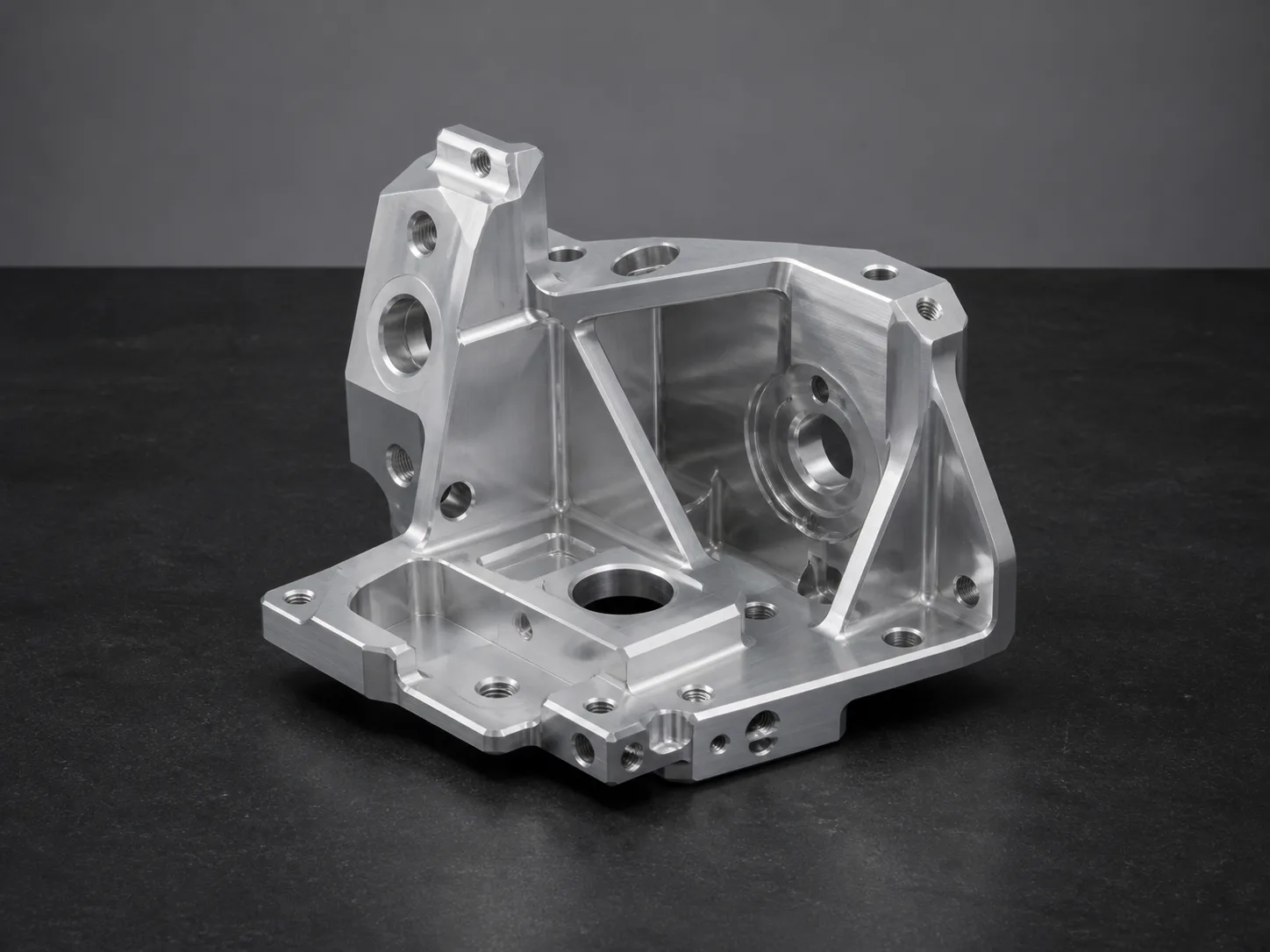
Imagine a bracket with a mounting face, two locating bores, and an angled side feature. If conventional machining needs multiple reorientations, each setup requires secure location and verification. An indexed route may reach more features while retaining the original clamping. Whether that helps depends on clearance, fixture rigidity, and the material left available for gripping.
The five-axis machining service page provides the context for this discussion. During quotation review, ask which features share one setup and which remain outside its reach. A proposal described as one setup may still need an earlier blank preparation step or a later operation to remove the gripping section.
Compare complete routes, not machine labels
Ask each supplier to describe the route at a level that exposes handling and acceptance differences. A concise sequence is enough; proprietary toolpaths and internal rates are not necessary. Keep the same material, revision, finish, quantity, and inspection scope in both scenarios.
| Comparison item | Conventional route question | Indexed or five-axis route question |
|---|---|---|
| Initial preparation | How is the first datum made? | What blank and clamping allowance are needed? |
| Feature access | Which faces require reclamping? | Which faces remain blocked by the fixture? |
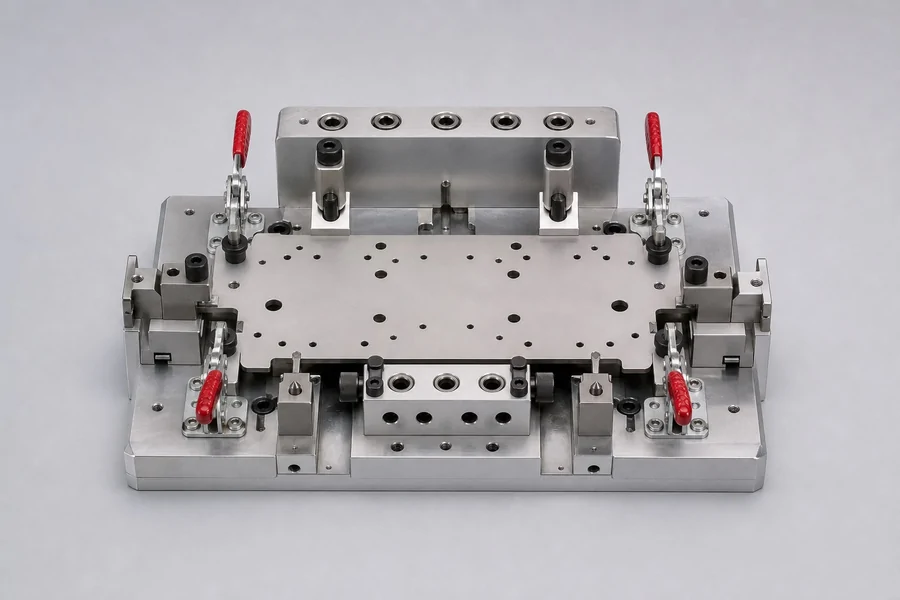
| Workholding | How many fixtures or jaw sets are required? | Is a dedicated fixture or clearance strategy required? |
| Finishing operations | What happens after the final reclamp? | How is the gripping area removed and finished? |
| Inspection | How are cross-face relationships checked? | What evidence verifies the same relationships? |
Do not assume that a more capable machine automatically produces a shorter total process. It may need additional preparation or more involved programming. Conversely, do not dismiss it because its hourly rate is higher. The relevant comparison is the cost of accepted parts under a credible route.
Tool access can matter as much as setup count
Orienting the workpiece can improve access to a feature and sometimes permit a shorter tool. That can change the cutting strategy, but it is not a promise that every deep pocket becomes easy. Fixture clearance, holder interference, chip removal, and the remaining wall geometry still need review.
An angled approach can help reach a side feature while creating a new collision concern near the clamp. A compact part may be difficult to grip without obstructing the surfaces that need machining. A tall component may exceed the useful clearance envelope when rotated even if it appears to fit the machine in one orientation.
Ask the supplier to identify the limiting approach or collision envelope. If a small design change opens access, evaluate it separately and have engineering approve it. The internal corner radius guide explains one common access constraint that extra axes do not automatically remove: a rotating cutter still leaves geometry determined by its shape and approach.
Programming and verification are real cost items
A more complex route can require additional programming, simulation, fixture definition, and machine-specific verification. These steps support a usable process; they should not be treated as free simply because software offers automation. Initial effort may be reusable on a stable revision, while changes can require renewed checks.
Autodesk's July 2026 Fusion update introduced 3+2 Clearing with cutting directions and fixture-aware limits. That release illustrates how planning tools are developing; it does not establish a universal cost reduction for a particular part or confirm a supplier's installed software.
For purchasing, ask whether the quote includes the first programming effort and how a revision would be handled. A minor change to an accessible hole may have different consequences from a change to stock geometry or a surface that controls tool clearance. The drawing revision, fixture arrangement, and verified program should remain linked.
Quantity changes the value of fixture investment
At low quantity, avoiding multiple dedicated fixtures can be valuable. At larger quantity, a conventional route with efficient repeat workholding may become competitive. Either outcome depends on the actual geometry and time saved, so quantity should be evaluated with the route rather than as a separate discount assumption.
Ask for the quantities you might actually release. If an offer assumes one large batch, do not apply its unit price to many small releases without confirming recurring setup costs. If a dedicated fixture is proposed, identify ownership, retention, expected reuse, and the effect of a revision.
The prototype versus production guide discusses what changes when a part moves into repeat manufacturing. For five-axis cost review, the key is whether the proposed investment removes recurring work at the intended batch size. A technically elegant fixture can still be poor value if the part will change before it is reused.
Understand what fewer setups cannot guarantee
Retaining a part in one clamping can reduce some datum-transfer concerns, but it does not remove tool deflection, workpiece movement, machine errors, temperature effects, or measurement uncertainty. A component can remain clamped throughout machining and still fail its finished requirements.
The final gripping surface may also require another operation. Removing that material can release stress or change access to a datum. Finishing and handling after machining can affect an interface that was acceptable earlier. Ask when the relevant characteristic is checked relative to the last operation that can change it.
The tolerances guide explains why capability must be tied to the feature, material, setup, and measurement method. Do not replace a required inspection plan with a machine-axis specification. The purchase agreement should describe the accepted part and evidence, while the supplier proposes the route that can produce them.
Recognize parts that may not need the extra axes
Simple flat plates, accessible pockets, and straightforward turned components may have little to gain from additional rotary motion. If the important surfaces can be reached with ordinary tooling and a small number of stable setups, a conventional route may remain the economical choice.
Look for complexity that is functional rather than merely visible. A bracket with many holes on one face may be simpler to produce than a sparse part with one difficult angled bore. A turned shaft with a small cross hole may need a secondary operation, but that alone does not prove a full five-axis milling route is appropriate.
Ask for a reason whenever the proposed process seems more elaborate than the geometry suggests. The supplier may identify a legitimate relationship or access issue that is not obvious from a rendering. If the explanation rests only on a general claim that advanced equipment is always better, request a more specific route comparison.
Structure a useful two-route RFQ
Provide the controlled model and drawing, material condition, quantities, finish, critical relationships, and inspection requirements. Ask whether a conventional route and an indexed or simultaneous route are both feasible. Where they are, request a short explanation of the operations and one-time charges that differ.
Keep engineering alternatives separate from process alternatives. Changing a hole angle or opening a pocket is a drawing change; choosing a different machine to make the same accepted geometry is a route choice. Compare them separately so an apparent process saving does not conceal a changed requirement.
Before selection, confirm the residual operations, finish condition, and acceptance evidence. If a first article is needed to settle an uncertainty, define what it will demonstrate and who will approve it. A route comparison should end with fewer unresolved assumptions, not simply a more impressive machine description.
Frequently asked questions
Is five-axis machining always more expensive?
No. Its machine and preparation costs may be higher, while the complete route may remove enough work to offset them. The outcome depends on geometry, quantity, access, workholding, and inspection rather than a universal premium.
Is 3+2 machining the same as simultaneous five-axis cutting?
No. Indexed machining positions the workpiece for an operation; simultaneous machining changes orientation during the cut. Many multi-face components can be evaluated for indexed machining without requiring simultaneous contouring throughout the process.
Can every part be completed in one setup?
No. Clamping surfaces, inaccessible features, stock preparation, and later treatment may require additional operations. Ask what the supplier includes in the setup count and how the final gripping area is completed.
Should the drawing mandate a specific machine type?
Only when the project has a justified process requirement. Otherwise, define the geometry, material, finish, and acceptance criteria, and review the supplier's proposed route. A machine label alone does not establish conformance.
Choose the route that removes meaningful work
Extra axes are valuable when they solve a specific access, handling, or relationship problem. For a part-specific assessment, send HongKe CNC your multi-face component files and expected quantities, identifying the interfaces and inspection evidence that must be preserved.