
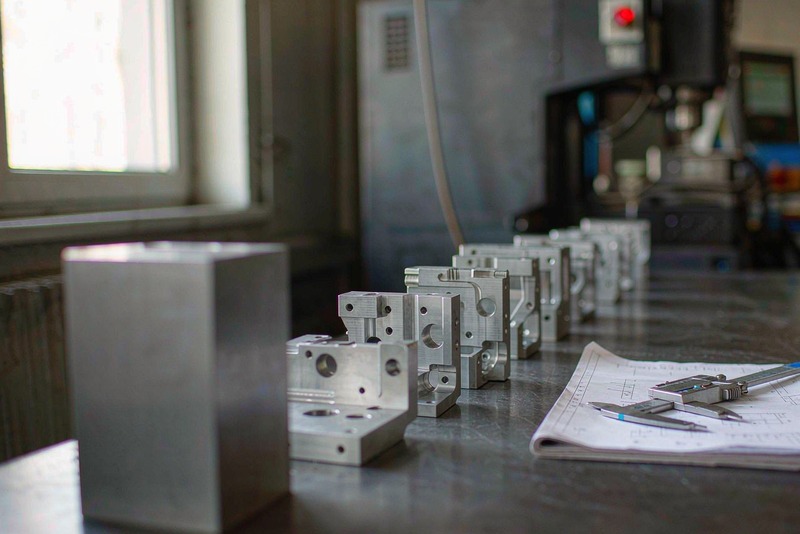
Deciding on CNC machining outsourcing is usually framed as a cost question, and that framing is the first mistake. The same part can be cheaper outside or more expensive outside, depending on volume, geometry, tolerance and how full your own spindles are. Here is how the comparison actually works: the drivers that move the answer, the costs that stay off the quote, and the risks that decide it when the numbers are close.
What the Make-or-Buy Decision Really Turns On
Three variables do most of the work: how many parts you will order, how tight the tolerances are, and whether your own capacity is genuinely available.
Volume spreads setup, programming and fixturing across the batch. A handful of prototypes absorb that cost easily; a steady annual run barely notices it. Complexity pushes the other way: a contoured housing needing simultaneous five-axis work requires either an expensive machine or a supplier who runs one daily. When quantity itself is the moving piece, prototype vs production CNC machining covers what changes as the numbers ramp.
Capacity is where most internal analyses go wrong. Idle in-house hours look free — not free, but cheap, and filling them with work that would otherwise be subcontracted is often correct even when a supplier quotes a lower piece price. Once the machine is loaded, the order competes against everything else in your backlog.
Where CNC Machining Outsourcing Wins
Four situations justify outsourcing, and none of them require the supplier to be cheaper per hour.
- Low or uneven volume. Setup, programming and first-article work are fixed costs; small or bursty orders share a specialist's existing setup instead of rebuilding it.
- A process you do not own. Simultaneous five-axis contouring, fine wire EDM or anything beyond your machine envelope turns the alternative into a capital purchase.
- A capacity crunch. A machine down for repair or a program landing early is better served by a qualified supplier than by dates your own floor cannot hold. CNC machining lead time explains what actually drives those dates.
- Finishing and secondary operations. Anodizing, heat treatment and plating normally run through finishing coordination, and a supplier already running that network tends to return a more predictable part.
Where In-House Still Makes Sense
In-house wins on control and on iteration speed. While a design is still moving, keeping machining close shortens the loop between a change and a corrected part, and every revision is a chance to catch a drawing problem early.
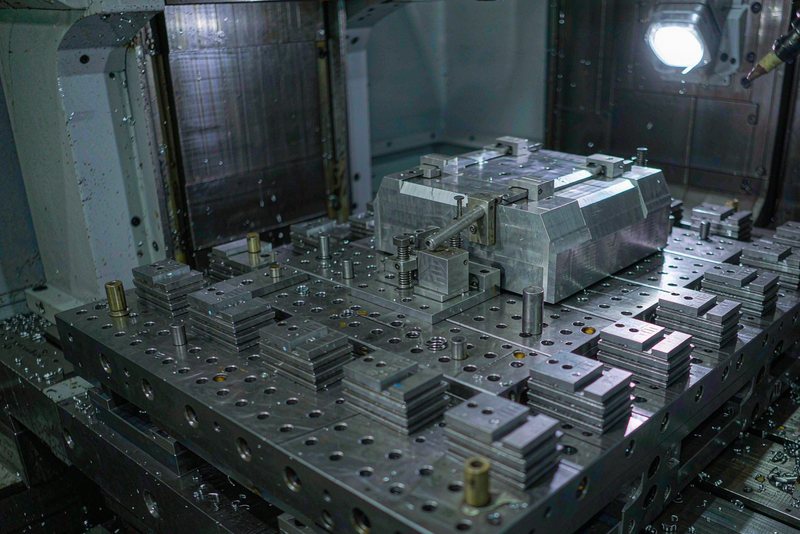
It also wins on long-term, high-volume items that suit a machine you already own. Once the process is stable, internal production removes a supplier's margin and keeps the knowledge — fixtures, feeds, inspection routines — inside the building.
Confidentiality can settle the question outright. Some geometry, tooling or test hardware cannot leave the site, and no agreement changes that. If the part cannot be released at all, the make-or-buy discussion is closed before cost enters it.
Costs That Hide Behind the Piece Price
Piece price is the visible part of outsourcing cost. Several others matter more over the life of a program.
- Freight, duty and packaging on the finished part and on any material you supply
- Incoming inspection — the internal hours spent confirming what arrived
- Interface cost — drawings, revisions and questions crossing a company boundary
- Inventory — larger minimum batches tying up cash and shelf space
- Quality escapes — sorting, rework and schedule recovery after a bad lot
- Tooling ownership — who holds the fixtures, and what happens if you leave
A supplier who is genuinely cheaper is usually cheaper on several of these lines at once. If the advantage shows up only in piece price, the comparison is incomplete.
Protecting IP and Tooling When You Outsource
Intellectual property protection is a process, not a document. An NDA is the starting point, but it does nothing about CAD files sitting on an unmanaged desktop or a fixture that only one supplier can interpret. Evaluating a precision machining supplier covers the capability side of that conversation; the boundary question is separate.
Release only what the job needs. A finished STEP file is enough for most machining work. Native models carrying feature trees, assemblies and internal test criteria are not.
Settle tooling ownership in writing before the first chip is cut: who paid for the fixture, where it is stored, and the conditions for moving it. Then decide whether the part should be single-sourced or dual-sourced, and be honest about what requalifying a second source costs.
How to Run a Side-by-Side Comparison
Build the comparison on total landed cost rather than hourly rate. Ask your team for the internal hours the job would consume — programming, setup, machining, inspection and downtime — and price those at a fully burdened rate, not a bare machine rate.
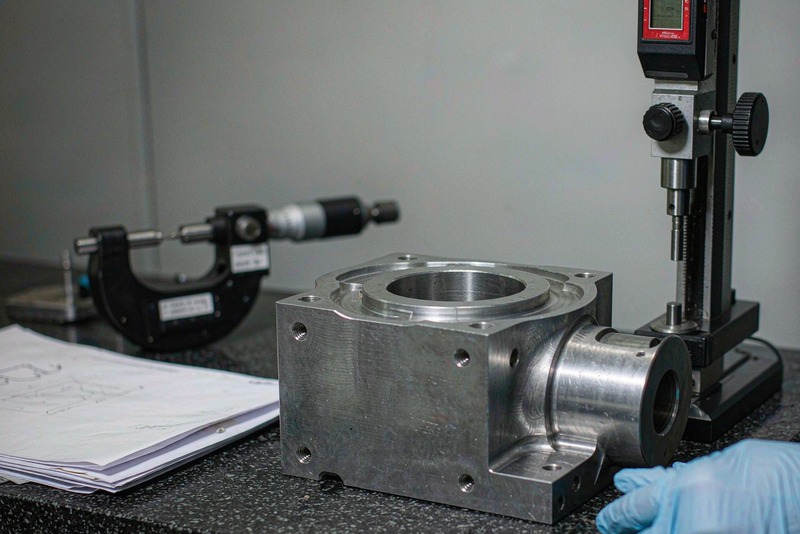
Put the supplier's quote through the same list. When you compare CNC machining suppliers beyond piece price, look at what each quote actually includes, because a low number with exclusions is not comparable to a higher one that carries inspection, finishing and packaging.
Then test the answer against volume. Run the whole comparison at prototype quantity and again at annual volume. If the two answers differ, the real question is which quantity you are planning for.
Common Mistakes Buyers Make
Six patterns show up again and again:
- Comparing piece price without freight, inspection or inventory
- Treating idle internal hours as if they were free
- Assuming a low quote covers the same scope as a higher one
- Releasing native CAD files when a STEP file would do
- Not revisiting the decision as volume or the drawing changes
- Leaving tooling ownership undefined until a supplier change is forced
Choosing a Route
CNC machining outsourcing is a capacity decision before it is a cost decision. Outsource when a process, a volume profile or a delivery window sits outside what your floor can absorb; keep the work in-house when control, confidentiality or available capacity already makes that the better route. Rerun the numbers whenever volume, tolerance or the drawing changes, and record the assumption behind the original call so the next review starts from evidence.