
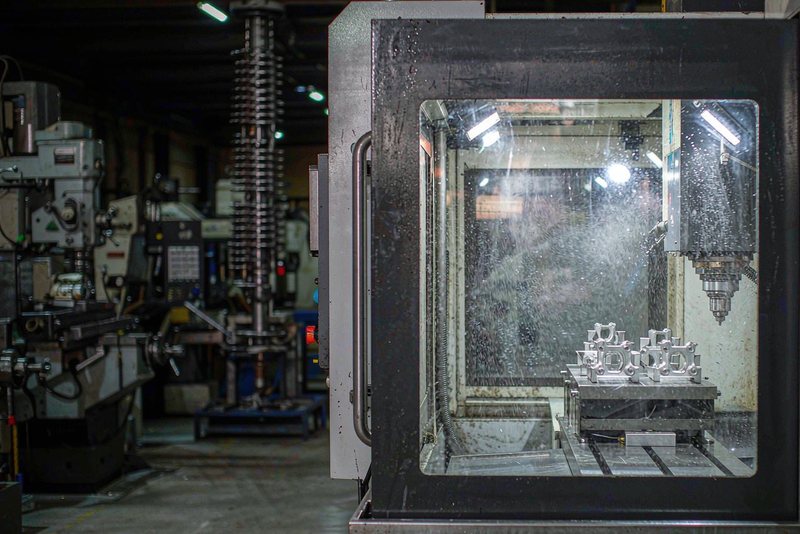
Lights-out machining means running a CNC machine through a block of hours with nobody loading parts, changing tools or measuring features by hand. The name comes from the shop floor going dark because no one is standing at the machine. For a buyer it changes what a piece price is built on: not an operator's attention across a shift, but a machine hour already paid for.
The saving is conditional. Unattended hours spread a fixed machine cost over more productive time, so a shop can quote lower on work that suits the arrangement. On work that does not, it quotes conventionally.
What Lights-Out Machining Actually Means
The phrase gets used loosely. Three arrangements carry the name, and they are not equivalent.
The first is one machine running one cycle with nobody present: a bar feeder, a parts catcher dropping work into a bin. That is unattended machining in the narrow sense, and it buys minutes, not shifts.
The second is a cell working a whole shift on a queue — pallet pool, robot tending, a tombstone fixture holding thirty parts. Someone loads it before leaving; it runs through the night.
The third is a scheduled cell where loading, tool changes and probing happen without a person, and the morning shift arrives to a finished batch.
Most shops claiming the third are running the second. The label matters, because the discount tracks how much of the cycle is free of hands.
Where the Unattended Hours Come From
A machine that cuts metal for 40 percent of a paid shift has expensive hours. Push that to 70 percent and the same machine, floor space and loan payment produce far more parts. That gap is where an unattended price comes from.
The sources are unglamorous. Pallet pools let a second setup happen while the first is cutting. Bar feeders keep a lathe fed overnight. A fixture holding twenty parts turns twenty load-unload pauses into one.
Scheduling matters too. Work that fills one overnight window prices better than work that straddles two, because the second window opens with a setup. How that queue is built, from the gripper side, is covered in this guide to robotic CNC machine tending.
The Conditions a Job Needs Before It Can Run Unattended
Unattended running multiplies whatever the process does. A stable process makes good parts all night; an unstable one makes scrap all night.
- A process that holds its size. If an operator nudges an offset every eight parts, the job drifts out by part thirty. Tool wear has to sit inside the band first.
- Chip control that works unaided. Swarf wrapping a boring bar stops the cycle with nobody there to clear it. Through-tool coolant earns its cost here.
- Tool monitoring that stops the spindle. Tool breakage detection and tool life counters turn a broken insert from six hours of scrap into a stopped machine.
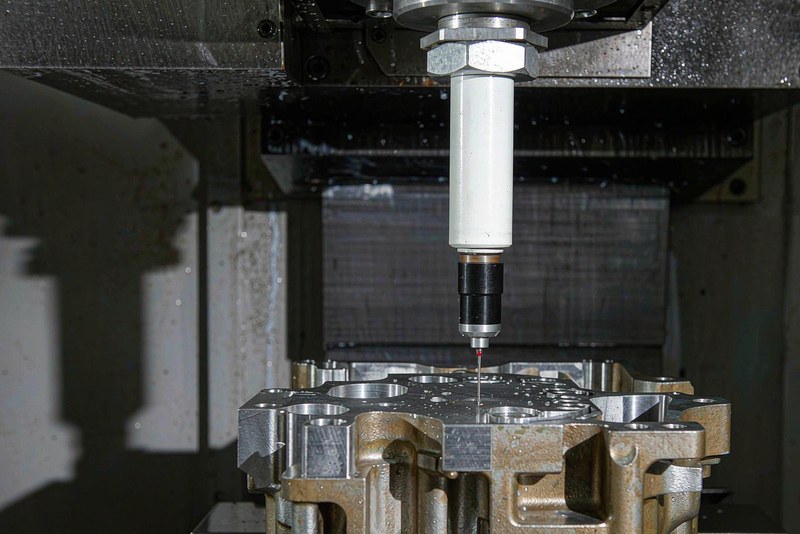
- Feedback the machine can act on. In-process probing that re-datums a fixture separates a monitored process from a hopeful one. What probing cannot replace is set out in in-process inspection in CNC machining.
Why Unattended Hours Change the Cost Conversation
A piece price is a machine hour rate times cycle time, plus material, plus setup spread over the quantity. Unattended hours attack the first term by raising productive hours per paid hour, and the second by letting one setup serve a longer run.
Where a supplier genuinely runs unattended, breaks line up with window boundaries rather than round numbers: 200 pieces may fill one night, while 260 spill into a second and price worse per piece. Where those breaks normally come from is covered in CNC machining cost by quantity.
| Quote element | Manned assumption | Unattended assumption |
|---|---|---|
| Machine hours billed | One shift, with idle gaps | Longer run, thinner idle |
| Setup amortization | One run | Window plus spillover |
| Scrap exposure | Caught in minutes | Caught at end of block |
Where the Risk Sits When Nobody Is Watching
Unattended failures are concentrated. An insert that breaks at hour two can ruin forty parts before anyone looks, and buyers get surprised when the scrap allowance does not stretch that far. A supplier may price the run assuming a small allowance covers unattended losses — reasonable for ten parts, unreasonable for a whole night. Two bounds apply: first-off approval before the block, and a morning check against the first parts off.
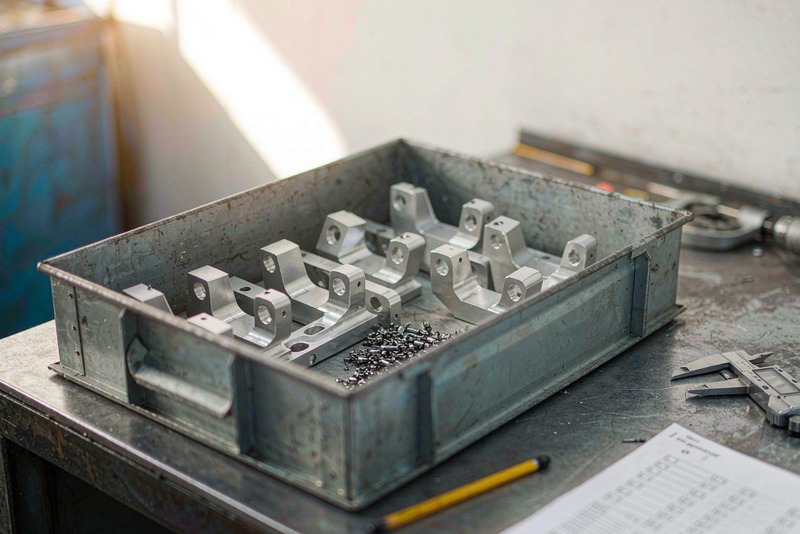
If parts from an unattended block turn out to be drifting, you need to know which ones. Lot marking by block, or serialization on critical parts, makes containment possible instead of an argument about the shipment.
Nothing on the drawing covers the cosmetic side: chips recut by a finishing pass, coolant staining left overnight. None of it is dimensional, and all of it can fail incoming inspection.
What to Ask Before Accepting an Unattended Price
The questions below separate a working unattended process from a marketing one. Ask before the purchase order.
- Which operation runs unattended, and for how many hours at a stretch?
- What stops the program if a tool breaks or load spikes?
- Is there a first-off approval before the block, and who signs it?
- Who inspects the first parts off in the morning, and what is recorded?
- How are parts from the unattended block identified in the shipment?
- If drift is found after the fact, what is the agreed disposition?
A supplier with a working process answers in specifics: a probing routine, tool life limits, a morning check sheet. One without answers in generalities.
When Lights-Out Machining Is the Wrong Fit
Unattended running is a poor match for a fair share of real work, and a good supplier says so rather than discount anyway.
Prototypes are dominated by setup, so there is no long run to protect. High-mix low-volume work loses the window to changeovers: ninety minutes between jobs against an eight-hour night leaves little cutting. Castings with wandering stock allowance, or thin-wall parts that move after the cut, need a human on the first part.
Timing matters too: capacity is planned in blocks, so a job that needs to move fast may end up on a manned machine. How those blocks are allocated is covered in CNC machining lead time.
Read lights-out machining as a capacity strategy with a price consequence rather than a discount scheme. It rewards stable processes, sensible quantities and a supplier willing to show the monitoring behind the night.