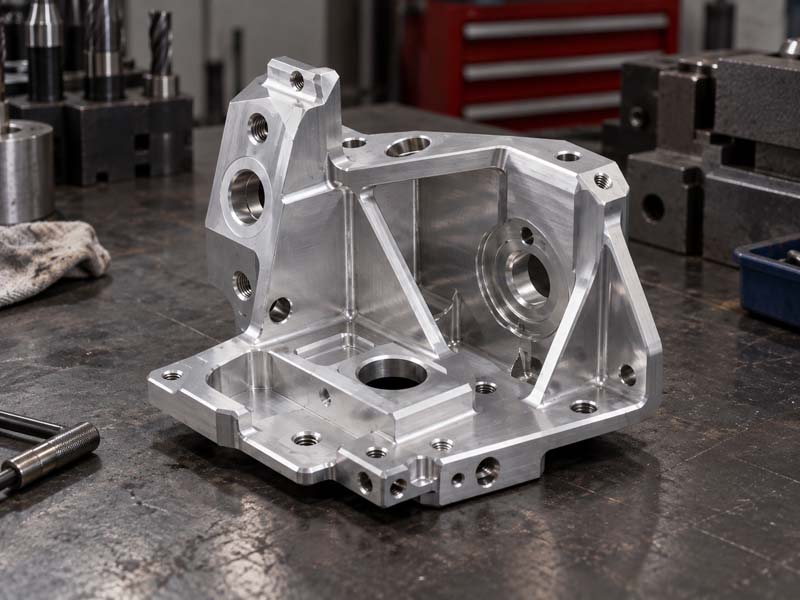
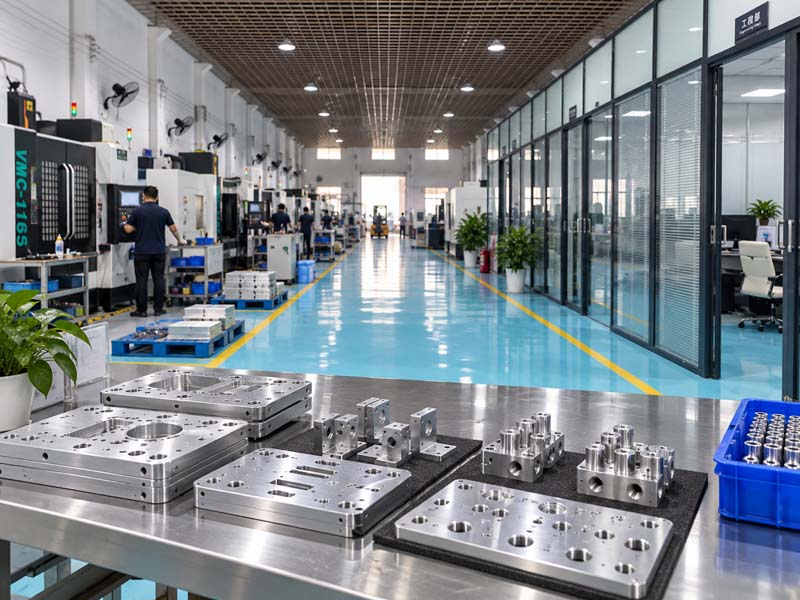
CNC machining is one of the most versatile and widely used manufacturing processes for producing precision metal and plastic parts. However, not all designs are equally suited for the process. Designing parts with manufacturing in mind – a practice known as Design for Manufacturing (DFM) – can significantly reduce production costs, lead times, and defects while improving part quality.
This guide covers the core DFM principles for CNC machining, including material selection, geometric considerations, tolerance specification, and surface finish choices. Whether you are a product designer, engineer, or procurement specialist, understanding these guidelines will help you communicate effectively with machine shops and achieve reliable results.
1. Material Selection: The Foundation of Cost and Machinability
The choice of material directly affects machining time, tool wear, surface quality, and overall cost. For CNC milling and turning, materials are typically classified by their machinability – how easily they can be cut.
Commonly Machined Metals
- Aluminum (e.g., 6061, 7075): Excellent machinability, good strength-to-weight ratio, low cost. Ideal for prototypes and production parts.
- Stainless Steel (e.g., 304, 316): Good corrosion resistance but lower machinability; requires slower speeds and more rigid setups. Higher cost.
- Brass and Copper: Excellent machinability, good electrical conductivity, often used for fittings and connectors.
- Steel (e.g., 1018, 4140): Varies by grade; medium to good machinability. Heat-treated steels are harder to machine.
- Titanium: Difficult to machine due to low thermal conductivity; requires specialized tools and strategies.
Commonly Machined Plastics
- Acetal (POM / Delrin): Excellent machinability, low friction, good dimensional stability.
- Nylon: Good toughness but can absorb moisture; requires sharp tools.
- ABS: Soft, easy to machine but may warp. Often used for prototypes.
- Polycarbonate: Tough, but prone to cracking. Needs chip management.
Tip: When selecting a material, consult your machine shop early. Some shops specialize in certain families of materials, and changing material can drastically alter cycle time and tooling costs.
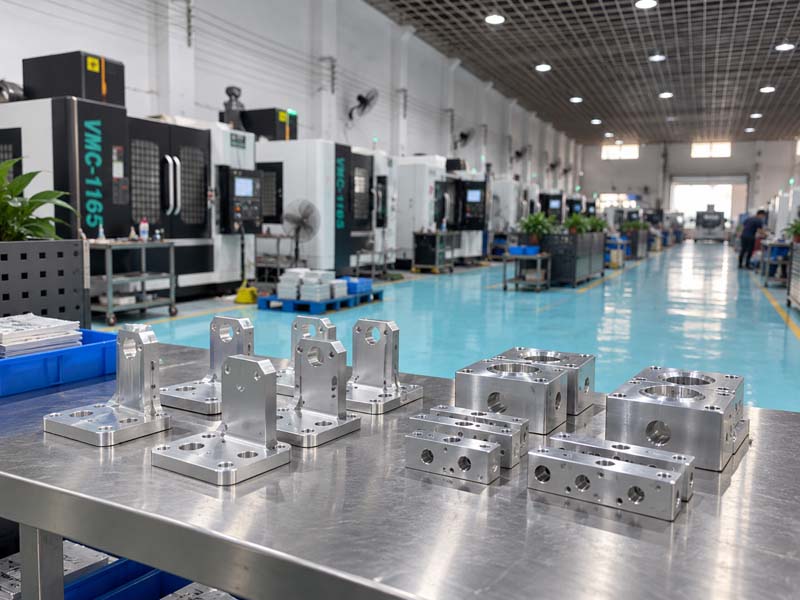
2. Geometric Design Rules for CNC Machining
Part geometry is the most influential factor in machinability. The following rules help reduce complexity and avoid impossible features.
Internal Corners and Radii
- Avoid sharp internal corners (90°). Tools are round, so internal corners should have a radius at least equal to the cutter radius. A general rule: minimum inside radius = 0.8 × tool diameter (but smaller tools are possible).
- For deep pockets, use a larger radius to allow a larger tool, reducing machining time.
Wall Thickness
- Thin walls (< 0.5 mm for metal, < 1.5 mm for plastics) can vibrate during machining, causing poor surface finish or breakage. Increase thickness or add ribs.
- For tall walls, aspect ratio matters. Rule: wall height ≤ 4× wall thickness for aluminum, ≤ 2× for harder metals.
Deep Pockets and Slots
- Deep cavities require longer tools, which deflect and chatter. Maximum depth-to-diameter ratio: 4:1 for end mills, 2:1 for small tools.
- Use variable-depth pockets or stepped walls when depth exceeds these limits.
Undercuts and Complex Features
- Undercuts (features that cannot be reached from the standard axis) require specialized tooling or multiple setups. Avoid if possible, or design them with standard T-slot lollipop tools in mind.
- For five-axis machining, undercuts are easier, but still increase cost. Only use when functionally necessary.
Threads
- Specify standard thread sizes (UNC, UNF, metric). Non-standard threads require custom taps or thread milling.
- Allow enough thread length: at least 1.5× diameter for blind holes, 2× for through holes.
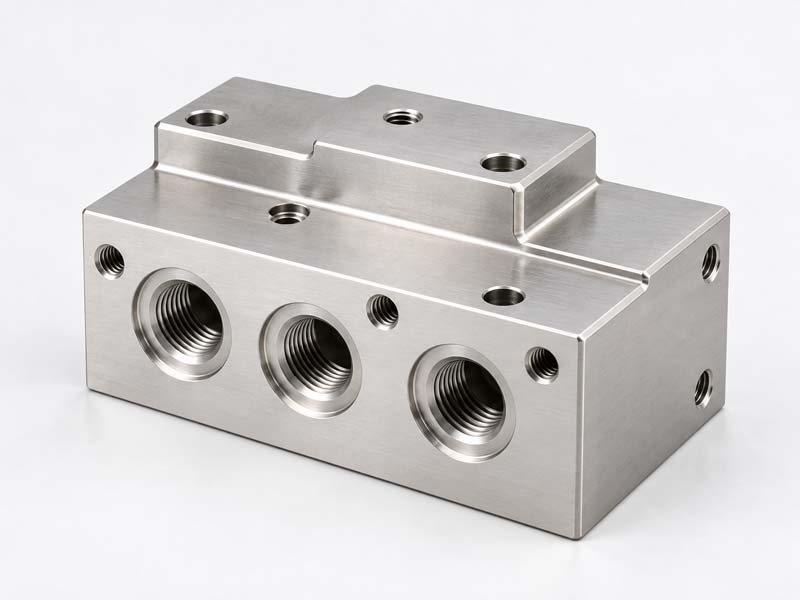
Example: A manifold block with multiple threaded ports is a common part that benefits from DFM – using standard NPT or BSP threads and avoiding extremely close port spacing.
3. Tolerances: Specify Only What You Need
Tolerances directly impact manufacturing cost. Tighter tolerances require more precise machines, slower speeds, extra setups, and frequent measurement.
Standard Machining Tolerances
- Standard (no additional callout): ±0.1 mm or ±0.005 in. Most CNC shops can hold this easily without extra cost.
- Precision: ±0.05 mm or ±0.002 in. Requires careful fixturing and tooling. Moderate cost increase.
- High precision: ±0.025 mm or ±0.001 in. Requires temperature control, special compensation, and often multiple passes. Significant cost increase.
- Very high precision (< 0.01 mm): Only achievable with grinding or specialized processes. Avoid unless absolutely necessary.
How to Specify Tolerances Wisely
- Only tighten tolerances on critical mating surfaces, fit features, and bearing bores. Leave other dimensions at standard.
- Use geometric dimensioning and tolerancing (GD&T) for functional control instead of block tolerances.
- For plastic parts, account for thermal expansion and moisture absorption – tight tolerances may be impossible.
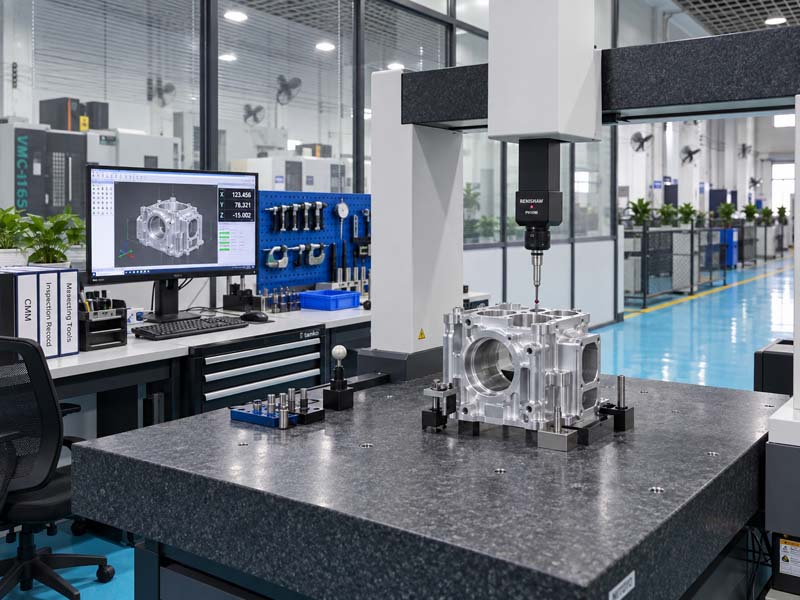
Inspection of tight tolerances often requires CMM (coordinate measuring machine) or specialized gauges, adding time and cost. Discuss critical dimensions with your machine shop early.
4. Surface Finishes: Aesthetics, Function, and Cost
The as-machined surface from a standard end mill typically has a roughness of about Ra 1.6–3.2 μm. Finer finishes require slower feeds, smaller stepover, or secondary processes.
Common Surface Finish Options
- As-Machined (Ra 3.2 μm): Default, suitable for internal components and hidden surfaces.
- Fine Machined (Ra 1.6 μm): Achieved with finishing passes; good for most visible parts.
- Ultra-Fine (Ra 0.8 μm): Requires lapping or polishing; used for optical or sealing surfaces.
- Bead Blasting: Creates a uniform matte finish; hides tool marks.
- Anodizing (aluminum): Adds color, wear resistance, and corrosion protection. Type II (decorative) and Type III (hard coat).
- Powder Coating / Painting: Provides a thick, durable layer; may fill in fine details.
Note that specifying a very smooth finish over the entire part is unnecessary and expensive. Only critical surfaces (sealing faces, sliding contacts) need tight roughness tolerances.
5. Common DFM Mistakes and How to Avoid Them
- Overly Tight Tolerances: Leads to rework or scrap. Use functional tolerancing.
- Sharp Internal Corners: Forces small tools and long cycle times. Add radii.
- Thin Walls or Ribs: Vibrate during cutting. Increase thickness or support.
- Non-Standard Threads or Holes: Require special tooling. Stick to common sizes.
- Deep Pockets with Uniform Depth: Combine variable depths to use shorter tools for most of the part.
- Ignoring Material Machinability: Selecting a difficult material without understanding cost impact.
Conclusion
Design for CNC machining is a collaborative effort between designers and manufacturers. By following the guidelines outlined above – choosing machinable materials, designing geometrically friendly features, specifying tolerances wisely, and selecting appropriate surface finishes – you can reduce manufacturing costs, accelerate turnaround times, and ensure part quality.
For complex parts, always discuss your design with a experienced machine shop like Hongke CNC. Their engineering team can review your DFM considerations and suggest optimizations that save time and money without sacrificing performance.
Remember: the best design is one that not only works but can be made efficiently. Apply DFM principles from the start, and your projects will finish faster and within budget.