
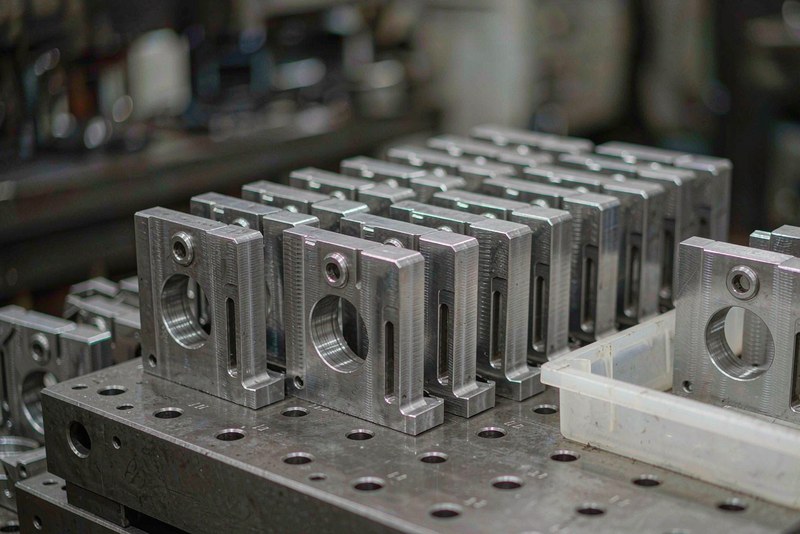
A CNC machining minimum order quantity is not a fixed industry rule. It is an economic break-even point for one shop, on one part, with a given material and finish, so two suppliers can quote the same drawing and land on very different minimums while both are right for their own cost structure. Knowing what sits behind the number makes it something you can plan around.
What a CNC Machining Minimum Order Quantity Represents
A shop standing up a job carries fixed costs that do not shrink with the batch: programming and CAM time, fixture build, machine setup, tooling, first-article inspection, and often a material buy that only comes in full bars, plates or sheets. Spread those costs across five parts instead of five hundred, and the piece price stops resembling what the buyer expected.
The minimum is the shop's way of saying where the fixed cost per part becomes workable for both sides. A minimum of twenty pieces typically means that below twenty, the setup charge would dominate the quote.
Read the minimum as a price-per-part threshold expressed as a quantity. Ask what the quote looks like at several volumes and the floor usually becomes visible.
The Cost Drivers Behind a Minimum Order Quantity
A handful of drivers set most minimums, and they behave differently as volume rises. That is why the shape of a quote matters more than any single figure.
| Driver | Why it sets a floor | As volume rises |
|---|---|---|
| Setup and programming | One-time per job | Falls fast over the first few hundred parts |
| Fixture and workholding | Built or assembled once | Amortizes but does not disappear |
| Material buy | Sold in full bar, plate or sheet | Drops once a batch uses whole lengths |
| Finishing coordination | Outside processes have lot minimums | Plateaus, then steps down at those lots |
| Inspection | Fixed time for first article and sampling | Per-part share falls, sampling adds some back |
Finishing is the driver buyers underestimate most. Anodizing lines, plating baths and heat-treat batches are set up for a minimum load, so a processor may bill a full lot even when far fewer parts arrive, and that cost usually appears as a line item rather than in the piece price. Fixture economics follow a similar logic, covered in this workholding and fixture design guide.
Why Quoted Minimums Differ Between Suppliers
Four structural differences explain most of the spread.
Machine type and scheduling. A shop running high-mix work can slot a small lot between larger jobs, so its minimum may cover only fixture and setup. A shop built for long runs has to interrupt a productive setup to do the same. Small lots also wait behind larger ones, as the CNC machining lead time article explains.
In-house versus coordinated finishing. Where finishing is [supplier-coordinated finishing], the shop inherits the processor's batch minimum plus handling; a shop that ships raw parts only can quote lower, but you carry finishing yourself.
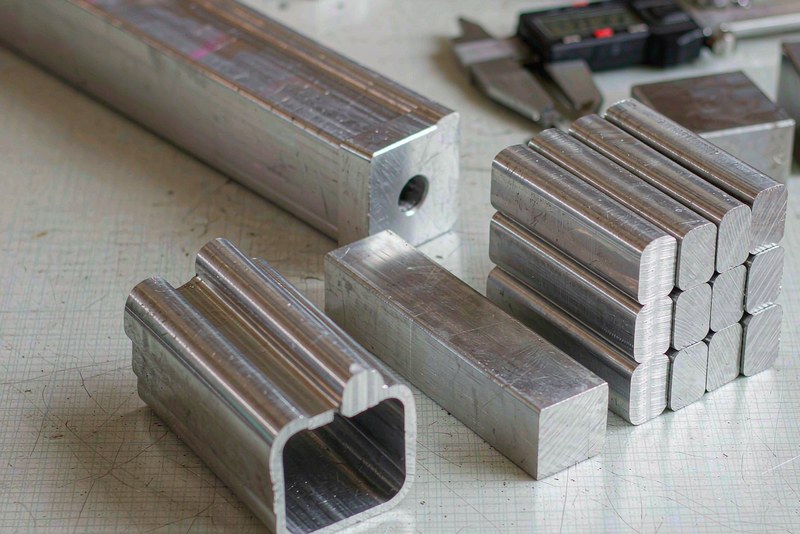
Material sourcing and overhead. A supplier buying mill stock through a distributor may pass along the distributor's minimum buy, while one cutting from remnant stock may not. Overhead per machine hour then varies with region, automation and shift pattern, scaling the whole quote including the setup share that creates the floor.
These differences, not quality, explain why the same drawing yields a minimum of five at one shop and fifty at another.
Where a Minimum Order Quantity Is Firm and Where It Flexes
Firm cases: material sold only in full lengths, a part that needs a hard fixture to be made at all, or a special cutter that has to be ordered in.
Flexible cases: routine prismatic parts on standard stock, jobs that reuse an existing fixture, and parts where the shop already holds suitable material. Here the minimum is often a scheduling decision, not a hard constraint.
One practical test is to ask whether the minimum applies to the order, to the batch, or to the material buy. Those are three different thresholds, and the answer shows where the cost sits.
Five Ways to Get a Low-Volume Order Through
- Ask for the setup charge as a separate line, then decide whether to pay it once or spread it across releases.
- Consolidate a part family, meaning parts that share stock, a fixture or a setup, into a single release.
- Offer a blanket order with staged releases, so the shop buys material once at a better quantity.
- Accept a material remnant charge instead of insisting on full-bar equivalent pricing.
- Combine machining and finishing on one purchase order to remove a duplicate handling minimum.
The CNC machining cost by quantity breakdown shows how these levers move the price curve, and it is worth reading before a negotiation so you know which items are genuinely on the table.
Questions to Ask Before You Accept a Minimum
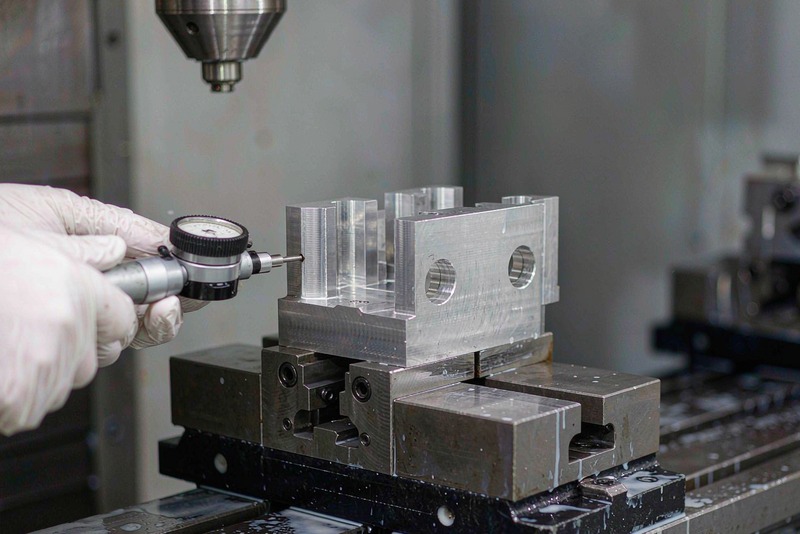
Four questions cover most of it. What does the minimum actually protect: setup, material, fixture or finishing? Is it per order or per part number? What does the same part cost at the minimum and at ten times that? If you supply the material free-issue, does the minimum change? A complete package up front makes those answers easier to get, and the CNC machining RFQ guide covers what to include.
Free-issue material is an underused lever. When the buyer supplies stock, the shop's material minimum disappears and only setup, tooling and inspection remain. It does not suit every purchase, and it shifts responsibility for material certification onto the buyer, but it frequently resets the floor.
When a Low Minimum Is a Warning Sign
A low minimum is not automatically good news. It deserves a second look when a quote offers very small quantities at a price close to the high-volume rate, with no separate setup or first-article charge.
It can be a shop with idle capacity, and genuine idle time is a legitimate reason for a low minimum. It can also mean setup is being skipped or the price will not hold once production starts.
Either way the check is the same: see whether the quote accounts for setup, first article and finishing separately. A CNC machining minimum order quantity built on itemized costs can be trusted and negotiated; one that appears without explanation usually cannot.