
When an engineer or buyer evaluates CNC machining for a new part, the machine type is often one of the earliest decisions. Among the most widely used configurations is the vertical machining center (VMC). It is a workhorse in shops around the world, commonly used for milling, drilling, tapping, and boring operations on prismatic parts.
This guide explains what a VMC is, how it compares to other machining center types, what affects machining cost and quality, and what engineers and buyers should consider when planning parts for VMC production. The goal is to help you make informed decisions, whether you are designing a part or selecting a machining partner.
What Is a Vertical Machining Center?
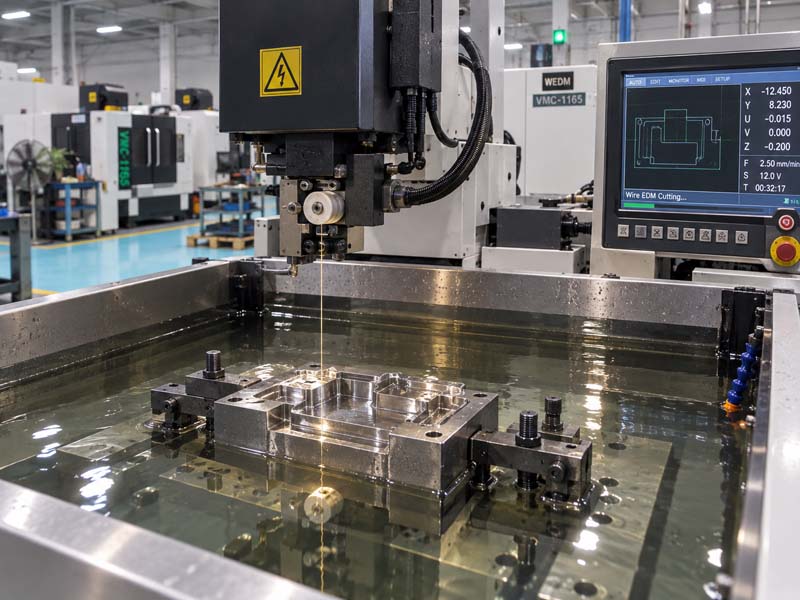
A vertical machining center is a CNC machine tool where the spindle axis is oriented vertically. The cutting tool approaches the workpiece from above, while the workpiece is typically clamped on a horizontal worktable that moves in the X and Y axes. The spindle head usually moves in the Z axis, though some designs move the table in Z as well.
This configuration is well-suited for parts that require:
- Milling of flat surfaces, slots, and pockets
- Drilled and tapped holes on the top face
- Shallow to moderate-depth cavities
- Moderate to high material removal rates
- Rigid setups for steel, stainless steel, aluminum, and engineering plastics
Most VMCs are three-axis machines. The worktable moves in X and Y, while the spindle moves in Z. This three-axis configuration is the most common and often the most cost-effective for prismatic parts that do not require undercuts or complex angled features.
VMC vs. HMC vs. 5-Axis Machining
Understanding how a vertical machining center compares to other configurations helps in selecting the right process for your part.
VMC vs. Horizontal Machining Center (HMC)
A horizontal machining center has a spindle oriented horizontally. The workpiece is mounted on a pallet that rotates, allowing the cutting tool to access multiple faces of the part in one setup. HMCs are typically more expensive than VMCs but offer advantages for complex box-shaped parts that need machining on multiple sides.
For most prismatic parts requiring work on only one or two faces, a VMC is the more practical and economical choice. Parts like flanges, housings, brackets, plates, and covers are commonly machined on VMCs. Chip evacuation is also better on a VMC because gravity pulls chips downward, away from the cutting zone.
VMC vs. 5-Axis Machining
5-axis machining centers add rotational axes, allowing the cutting tool to approach the workpiece from virtually any direction. This is necessary for complex geometries such as impellers, turbine blades, and aerospace structural components.
A standard three-axis VMC cannot tilt the tool. If your part has features on multiple angled faces, tight-tolerance compound angles, or deep cavities requiring long tools, a 5-axis machine or a multi-setup approach on a 3-axis VMC may be needed. For most engineering components, however, a well-planned three-axis VMC setup is sufficient.
Key Engineering Considerations for VMC Machining
When a part is designed for a vertical machining center, several factors determine whether the machining will be straightforward or problematic.
Work Envelope and Table Size
The work envelope of a VMC defines the maximum part size that can be machined. Common table sizes range from 600 x 400 mm to 2000 x 1000 mm. It is important to provide the part envelope to your machining partner early so they can confirm fit and tool clearance.
Spindle Power and Torque
Spindle power affects material removal rate. Machining steel and stainless steel requires higher torque at lower RPMs, while aluminum can be machined at higher speeds with moderate power. When specifying a part, consider whether the material and feature sizes require high metal removal. Deep pockets in tool steel, for example, demand a rigid spindle and adequate torque.
Tool Access and Z-Axis Travel
Vertical machining centers have a Z-axis travel that limits the maximum tool length that can enter a cavity. If the part has deep pockets with small internal corners, long reach tools may be required. Longer tools produce more deflection and vibration, which can affect surface finish and dimensional accuracy. Discussing pocket depth and internal radii with the machining team helps avoid problems.
Workholding and Number of Setups
A VMC typically machines the top face and features accessible from above. If features exist on the sides or bottom, the part must be repositioned. Each additional setup introduces potential for tolerance stack-up. Designing datums that allow consistent relocation and, where possible, reducing the number of setups, improves accuracy and reduces cost.
Common Applications of VMC Machining
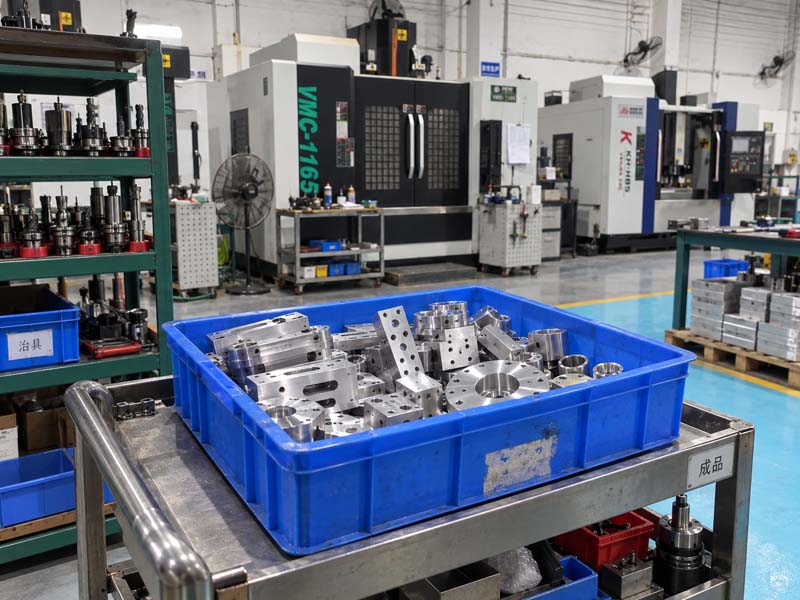
Vertical machining centers are used across many industries for a wide range of parts. Typical applications include:
- Machine frames and bases
- Brackets, flanges, and plates
- Housings and enclosures
- Fixtures and jigs
- Automation and equipment components
- Mold cavities and inserts
- Prototype and low-volume production parts
For custom machined parts that fit within the machine envelope and do not require multi-axis capability, VMC machining is often the most cost-effective and widely available option.
What Affects VMC Machining Cost?
From a procurement perspective, understanding cost drivers helps in evaluating quotes and optimizing designs.
Machine Hourly Rate
VMCs generally have lower hourly rates than 5-axis machines or HMCs. However, programming time, setup time, and fixturing cost must also be considered. Simple parts that can be programmed quickly and machined in one setup offer the lowest cost per part.
Material Removal and Cycle Time
Cycle time depends on the volume of material to be removed, the number of tool changes, and the cutting parameters. Hard materials reduce cutting speed. Deep pockets require multiple passes. Tight tolerances may require additional finishing passes. All of these increase machining time and cost.
Tolerance and Surface Finish
Tighter tolerances and finer surface finishes require careful machine selection, tool condition monitoring, and sometimes additional inspection time. On a VMC, achieving general tolerances of ±0.1 mm is usually straightforward. Achieving ±0.025 mm on critical dimensions often requires more controlled conditions and may increase cost.
Number of Setups
Each time a part must be repositioned, setup time, fixturing cost, and alignment risk increase. Designing parts that can be machined in one or two setups on a VMC is a practical DFM goal. For parts requiring features on five or six faces, a 5-axis machine or a series of VMC setups with precision fixtures may be needed.
A Practical Guide to Selecting a VMC Machining Partner
When choosing a supplier for VMC-machined parts, consider these points:
- Machine inventory and capabilities: Confirm the available work envelope, spindle RPM, and tool changer capacity.
- Experience with your material: Some shops are more experienced with aluminum, others with stainless steel or engineering plastics.
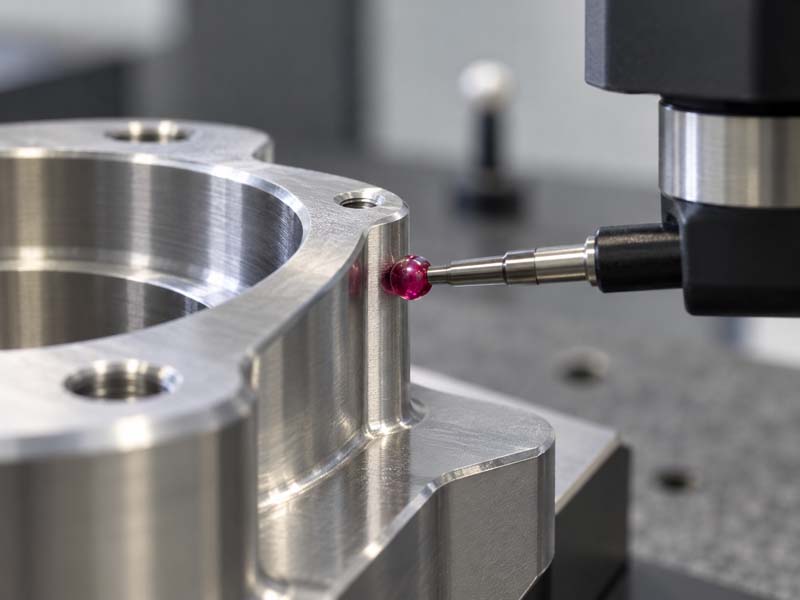
- Quality inspection capability: Does the supplier have CMM, height gauges, and surface roughness testers? This is essential for verifying critical dimensions.
- Engineering support: A good partner reviews your drawing and suggests DFM improvements before production.
- Communication and responsiveness: For custom parts, rapid feedback on manufacturability and lead time is valuable.
At Hongke Precision Machining, our engineering team evaluates each part drawing to determine the most suitable process. Many prismatic parts are well-suited to VMC production. For more complex geometries, we also offer 5-axis CNC machining. We recommend discussing your part geometry, material, and tolerance requirements early to optimize the machining approach.
Final Considerations for Engineers and Buyers
A vertical machining center is not a universal solution, but it is the right choice for a very large percentage of custom machined parts. Understanding its capabilities and limitations helps you design better parts, obtain more accurate quotes, and select the right manufacturing partner.
When preparing a drawing for VMC machining, include the material grade, critical tolerances, surface finish requirements, and a clear definition of datums. A 3D CAD model helps the shop visualize the part, but a 2D drawing with properly marked tolerances remains essential for quality control.
If you are evaluating a supplier for VMC work, ask about their typical tolerance capabilities, how they handle thin-wall parts, and what inspection equipment they use. A supplier that asks questions about your drawing during the quotation stage is usually one that understands the machining process well.
For more information on machining processes and design guidelines, explore our Technical Guides. If you have a part ready for quotation, contact our team to discuss your project.